
110. Bon Iver steps into the light
I.
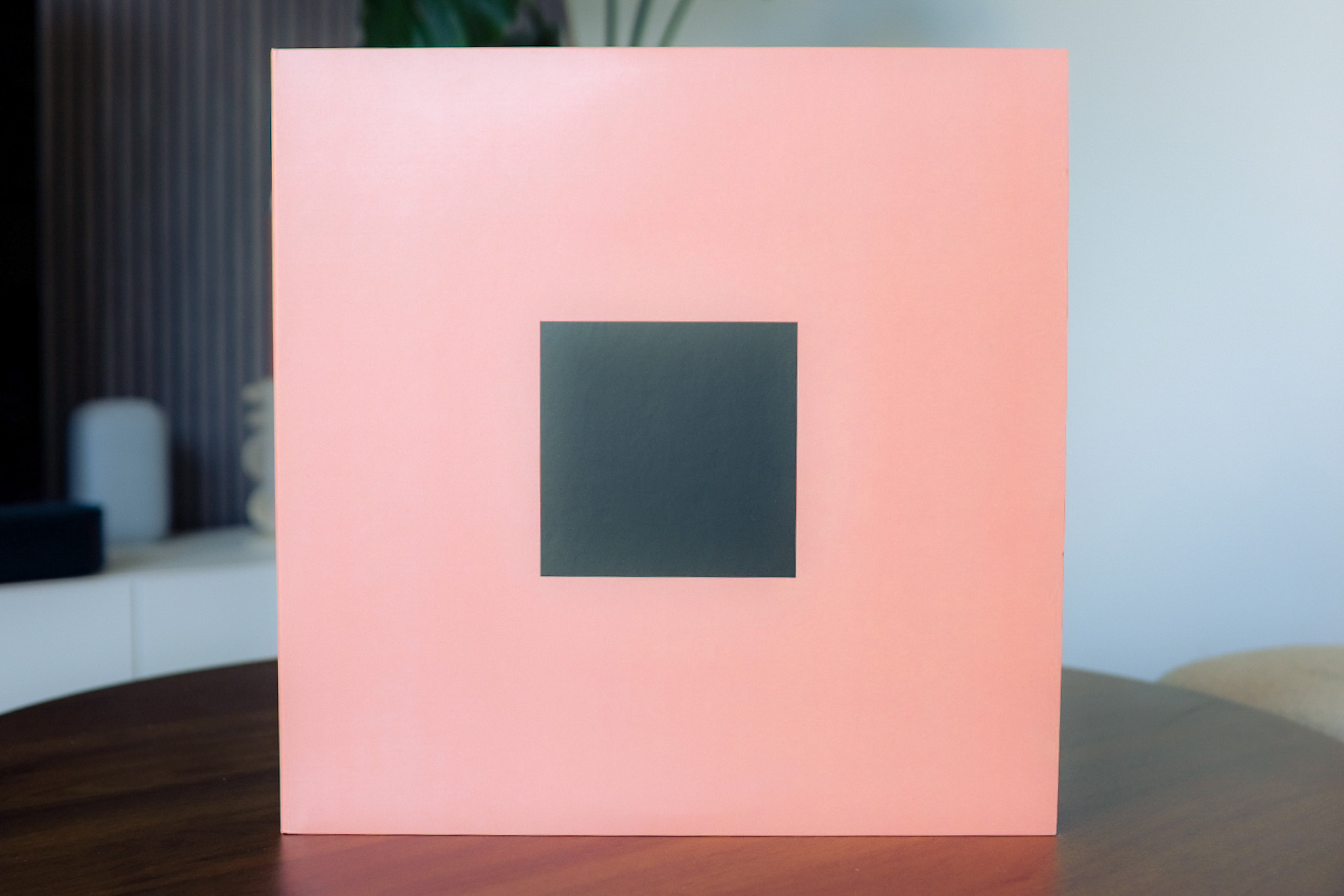
As far as I’m concerned, already a strong contender for album of the year: SABLE, fABLE by Bon Iver*. Really it is two parts: SABLE (four tracks) came out last year as an EP, and nine new tracks in the form of fABLE have now been added. I love how the first (restrained, more acoustic) part is blown open by the second (more joyful, musically varied).
On SABLE, Vernon looks back on recent years, which were apparently quite difficult and dark for him. “I chose for a long time to stay sitting in the dark,” he says. “I wasn’t quite ready to step into the light. fABLE is what happens when you finally do.”
Putting that off for so long has partly to do with the fear of change and being at odds with yourself. To truly know yourself, you have to go deep and peel back every (mental) layer. In THINGS BECOME THINGS BECOME THINGS he explores that idea.
I am afraid of changing And when it comes a time to check and rearrange shit There are things behind things behind things And there are rings within rings within rings
On this album, Vernon ultimately finds his way back to himself. I think you are a brilliant artist if you can convey that through music. In the magnificent AWARDS SEASON he sings about the path upward:
Oh how everything can change In such a small time frame You can be remade You can live again What was pain now’s gain A new path gets laid And you know what is great Nothing stays the same
Then Short Story begins, a song of barely two minutes that acts as a bridge between dark and light. “Oh, the vibrance,” Vernon sings. “Sun in my eyes (it gets brighter).”
It’s a gem of a song, in which the month January in the line “January ain’t the whole world” stands as a symbol for winter. “Sometimes winter can be very bad,” says Vernon in an interview with BBC Radio 1. “And I wanted to tell myself: it’s not gonna last forever. The spring will come. It’s a long ways away, but it’s not the whole world.”1
You can hear it. Everything is Peaceful Love is probably the track with the most hit potential on the album, and above all it radiates pure joy in life. Like a love hanging in the air that you cannot resist. Vernon surrenders to it. Giddy with childlike enthusiasm: “Damn if I’m not climbin’ up that tree right now”.
It all feels a little unfamiliar, this being in the light. But on There’s A Rhythm he feels somewhat at ease, even though the darkness is always lurking. “Stay lighter, stay lighter,” Vernon sings like a mantra. “There’s a rhythm, there’s a rhythm.”
II.
My colleagues sometimes tease me about it: a tech journalist who increasingly reaches for pen and paper. On my desk there are always at least two notebooks with different pens. Throughout the day I scribble in my Field Notes that fits in the breast pocket of my jacket. It’s an obsession and I can’t help it.
To go even deeper into this rabbit hole, I have been reading The Notebook: A History of Thinking on Paper by Roland Allen. The book traces the history of notebooks. From Roman clay tablets to today’s bullet journals, it covers everything. Allen lingers longest on Florentine bookkeeping, because that’s where it all began. “What makes the ledger of Giovanni Farolfi a key moment in European history — or really world history,” Allen writes, “is that this battered notebook is the first place where we see abstract concepts of accounting and the practical techniques by which they were managed being applied for the first time.” It is the first surviving example of the double-entry bookkeeping system, the calculation of profit and loss.
What I find most interesting is reading about what people actually put in their notebooks. What do they write down? Leonardo da Vinci — the first person I think of when it comes to classic greats with a notebook — once wrote this: “Make a note. With small pen strokes in a small book that you always carry with you. Preserved with great care; for the forms and positions of things are so infinite that the memory is not capable of retaining them. Therefore keep the sketches as guides and masters.”
Da Vinci sketched in order to learn. Not only did he draw human proportions and skeletons, he was also fascinated by water. He made thousands of scrawls of waves, bubbles, currents and eddies.
The Netherlands, incidentally, also has a rich notebook history. Browse online through the Visboeck by Adriaen Coenen, a highlight of the Dutch Royal Library. In the sixteenth century, Coenen described countless fish and made all sorts of illustrations to accompany them. He even described fish he had never seen. And the book contains mythical creatures too, such as mermaids and sea monks. Fascinating.
And then there’s the friendship book, another very Dutch thing. At least, the album amicorum became popular here in the sixteenth century at Leiden University, where students filled each other’s books. They would often draw the coat of arms of their family in it and record the ‘spiritual bond of two kindred spirits’ on the page. Later, poems, songs and portrait sketches were added.
It is interesting that these kinds of initiatives take off at universities. Hundreds of years later, in 2004 to be precise, a digital version of the friendship book was created at Harvard University. On TheFacebook, students from universities could become friends and send each other messages. Social media are the friendship books of our time (with the crucial difference that they are no longer really about friendships, but about holding on to your attention for as long as possible).
PS.
This is a fantastic video, YouTube at its best. Someone called ‘Globert’ spends thirty days in There.com, an online virtual world that was once buzzing with life but has been abandoned for over ten years. Yet the servers are still online, and for about ten euros you can step into the deserted game. Globert tries to round up some people with the aim of organising a party at the end of the month.
Director Ryan Coogler (of Black Panther and Creed) explains the difference between film formats. Handy if you’ve always wondered what IMAX or 70mm actually means. His new film Sinners is shaping up to be a must-see.
Two and a half hours of the phenomenal Nick Cave and his Bad Seeds at the Accor Arena in Paris. Bob Dylan was somewhere in the audience during this concert, just imagine that.
Directors David Cronenberg and Jim Jarmusch sit down for Interview Magazine. A few minutes before they log on to Zoom, somewhere in January, the news breaks that David Lynch has died. Jarmusch calls Twin Peaks: The Return “one of the best things he had seen in years,” and I can only agree.
Fontaines D.C. release a stripped-down piano version of the absolute banger Starburster and… In Heaven (Lady in the Radiator Song) by David Lynch, the song he made for the film Eraserhead. It works wonderfully.
This is the first proper trailer for the new Fantastic Four film, featuring among others Pedro Pascal. I’m looking forward to it and I get the sense that Marvel itself understands how much is riding on this film. The studio is building toward the mega-blockbuster Avengers: Doomsday (scheduled for 2026), with Robert Downey Jr as the iconic Fantastic Four villain Doctor Doom.
I wanted to close with this warm piece of news: three hundred Americans forming a human chain to pass 9,100 books one by one to help a local bookshop move.
This was Nº109 of this newsletter. I send new editions to your inbox free every Sunday.
[1](#footnote-anchor-1)To which Saunders says: "January being the start of a new year… so horrid isn't it? For the beginning of something new. What an awful way to start things." Indeed, who ever came up with that? Why doesn't the new year start in April?