
111. In their own world
I.
After the death of Pope Francis, people quickly turned to the film Conclave. The film from last year starring among others Ralph Fiennes and Stanley Tucci is back in cinemas everywhere. Conclave has timing on its side since it is fresh in people’s minds, but actually I would recommend watching The Two Popes (again) first. In that 2019 film, Jonathan Pryce and Anthony Hopkins play popes Francis and Benedict respectively, with the spotlight primarily on the life of Francis.
I would call The Two Popes a cosy pope film about two men who, despite their radically different worldviews, ultimately find common ground. We stroll through the summer residence of Pope Benedict, listen to a discussion in the Sistine Chapel and continue talking in the Apostolic Palace. You might say not much happens, but Pryce and Hopkins are such extraordinary actors that dialogue alone is enough to hold your attention.
The cardinal and the pope are beautifully played off against each other. Benedict confesses that he often feels lonely in Vatican City. He can no longer even sense the presence of God. In contrast, Francis (then still known as Jorge Mario Bergoglio) is already chatting with the gardener within five minutes of arriving. He strikes up a conversation with everyone. Benedict may have recorded a piano album at Abbey Road, but he cannot name a single Beatles song. “Eleanor Rigby,” says Bergoglio. To which Benedict replies: “Who? I don’t know her.”
That makes it clear how Bergoglio would eventually become the “people’s pope.” The film is at times rather effusive about Francis, but I enjoy it thoroughly all the same. If only for the scenes in which the religious gentlemen eat pizza in their vestments or watch Germany versus Argentina in the 2014 World Cup final together.
II.
After King’s Night I’d had about enough nationalism, so on King’s Day I stayed home and had the perfect excuse to watch the nearly three-hour Japanese film Onoda: 10,000 Nights in the Jungle. Director Arthur Harari’s film is based on the life of Hiroo Onoda, who as a young man was trained as an intelligence officer in the imperial army during the Second World War. He was sent to the Philippine island of Lubang in late 1944, where with a small team of soldiers he tried to keep the enemy at bay while waiting for further orders.
That waiting lasted until 1974. All that time Onoda kept believing the war was still ongoing, even when he occasionally came across newspapers reporting on the end of WWII. The reports had been tampered with to lure him out, he thought. Eventually Onoda lost his men and was left alone — until he was found by a tourist who managed to convince him that the war had truly ended nearly thirty years earlier.
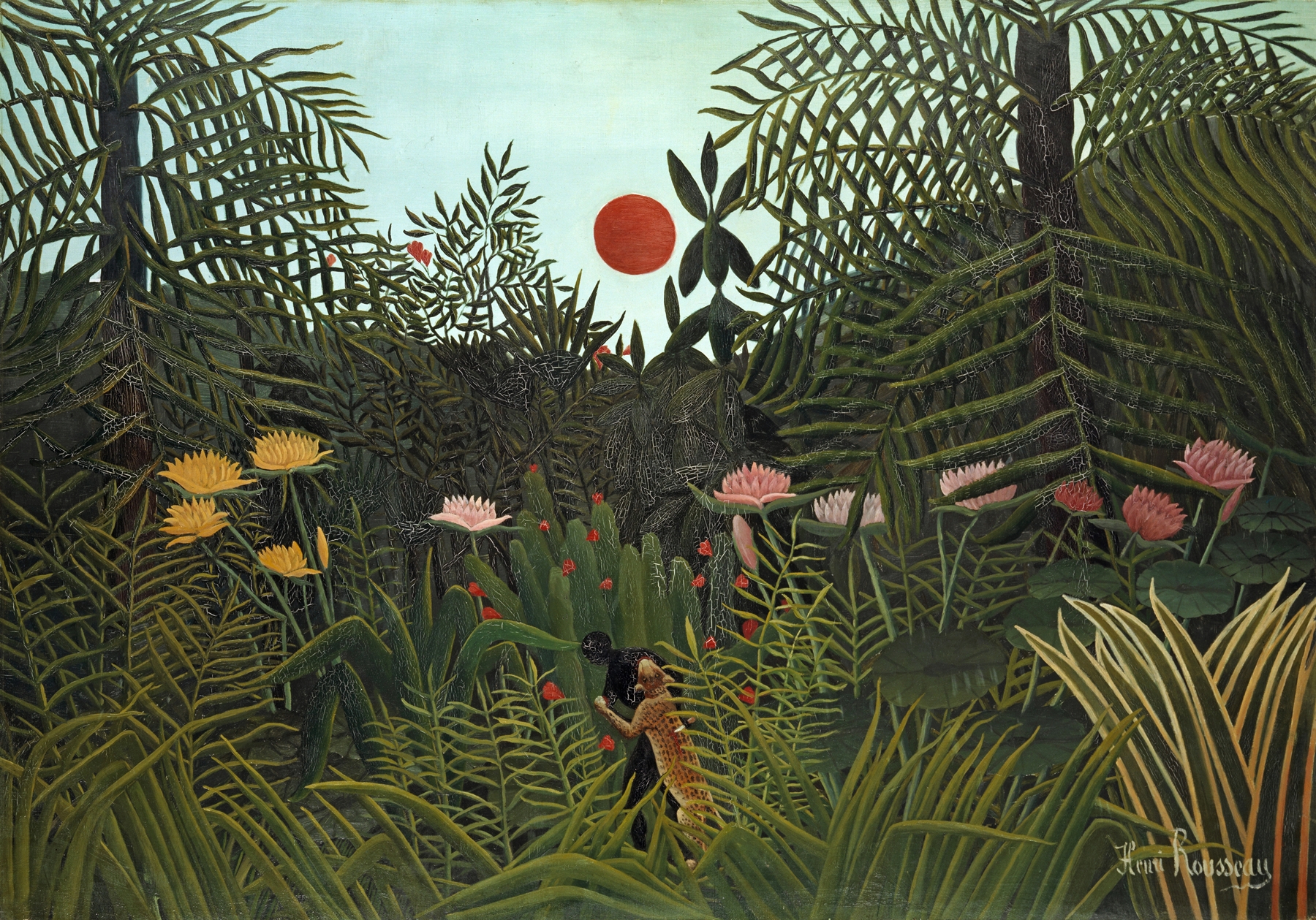
Just imagine that. Living for decades in the jungle in a war that no longer exists. Other wars have been fought and won, people have walked on the moon. In 1959 Onoda was declared dead; he had become a legend in Japan. He had been given up and left behind, yet he fought on.
He sounds like a Werner Herzog character, but the director never made a film about Onoda’s life. He did write a book about Onoda’s years in the jungle, which I read a few years ago. Herzog once declined a conversation with the Japanese emperor (quite something for the Japanese to swallow) but was very keen to speak with Onoda. From those conversations Herzog wrote his book, published in the Netherlands under the title Het schemeren van de wereld (The Twilight World). You’ll read it faster than you’ll watch the film.
It remains an extraordinary and almost unbelievable story, which usually ends with Onoda’s return to Japan, where he was welcomed by thousands of cheering people. But how do you pick up your life again in a world that has changed so completely? It didn’t come easily to Onoda — he left for Brazil to build a new life as a farmer. Eventually he returned to Japan, where he ran survival schools. He died in Tokyo in 2014 at the age of 91.
PS.
Larry David (of Curb Your Enthusiasm and Seinfeld) submitted a satirical essay to The New York Times. The paper published the short piece, titled My Dinner With Adolf. “He was wearing a tan suit with a swastika armband and gave me an enthusiastic greeting that caught me off guard,” he writes. “Frankly, it was a warmer greeting than I normally get from my parents, and it was accompanied by a slap on my back. I found the whole thing quite disarming.” Delightful.
The NYT Opinion editor also wrote a brief explanation of how the essay came about, with some background.
I read this blog by Whitney Mallet about a song by Towa Tei and Kylie Minogue from 1997. In it, Minogue sings from the perspective of a typeface: “My name is German Bold Italic”. (Still a more normal name than X Æ A-12 Musk.)
Thomas Heerma van Voss is invited to a school writing day in Roosendaal. While his fellow authors charm the students with their magnetic egos, things don’t go quite as smoothly for Heerma van Voss. A pleasingly tragicomic read.
HBO has a two-part documentary about Paul Reubens, a.k.a. Pee-Wee Herman, coming next month.
Tim Rogers is finally back after two years with a new video. It runs 10 hours (!) so I haven’t started it yet. It doesn’t appear to be a game review like his other videos, but a full playthrough of the detective game L.A. Noire at a higher production level than you’d expect from this genre. I’ll be sitting down for this one soon.
I saw Sinners, Ryan Coogler’s new film. A blues horror. I had considered writing about it, but the less you read about it beforehand, the better. Go see it, preferably on the biggest screen you can find. And let That One Scene wash over you.
This was Nº111 of this newsletter. I send new editions to your inbox free every Sunday.