152. Freedom
I.
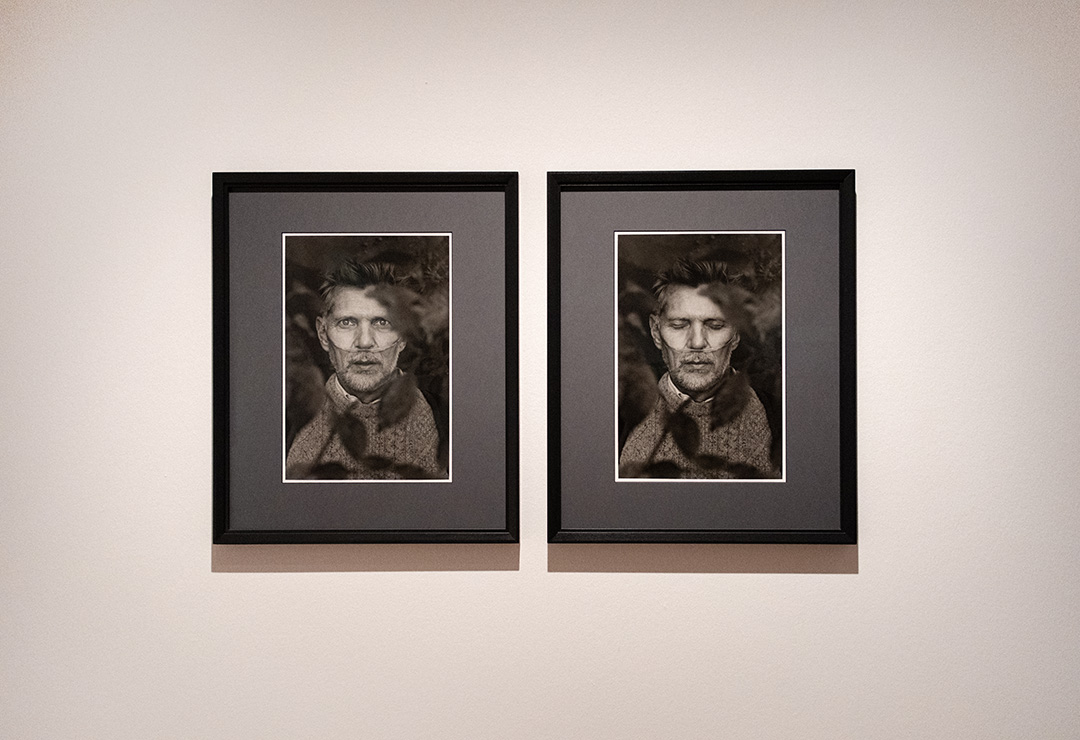
During his lifetime, photographer Erwin Olaf dreamed of a major exhibition at the Stedelijk Museum. But to his frustration it never happened. Only after he died in 2024 did the Stedelijk announce plans for a retrospective. “Posthumous recognition for a photographer the museum kept at arm’s length for thirty years,” wrote de Volkskrant following the announcement.
This month is the last chance to see the exhibition Freedom. I recommend going, as it is a beautiful journey through the life’s work of one of the Netherlands’ finest photographers. It begins with reportage photographs taken on the street and the dance floor, then you follow Olaf into the studio. There he photographs people of all shapes and sizes, in dignified and in jarring poses.
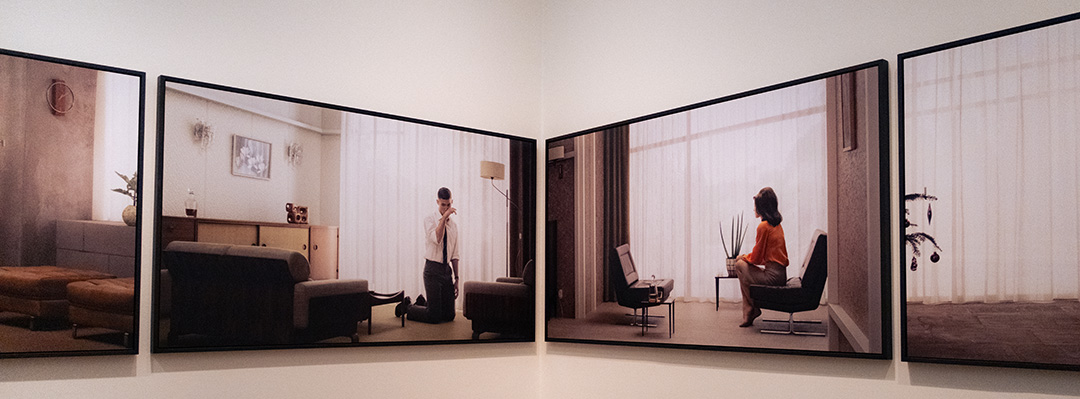
What I love most are his color series Grief Series, April Fool, and Palm Springs. You can feel centuries of art leading up to them. Painters like Rembrandt worked with light that photographers still draw inspiration from today. Olaf perfected lighting and color in his work, making his photographs look like lifelike paintings. They almost always tell a story about identity and mortality.
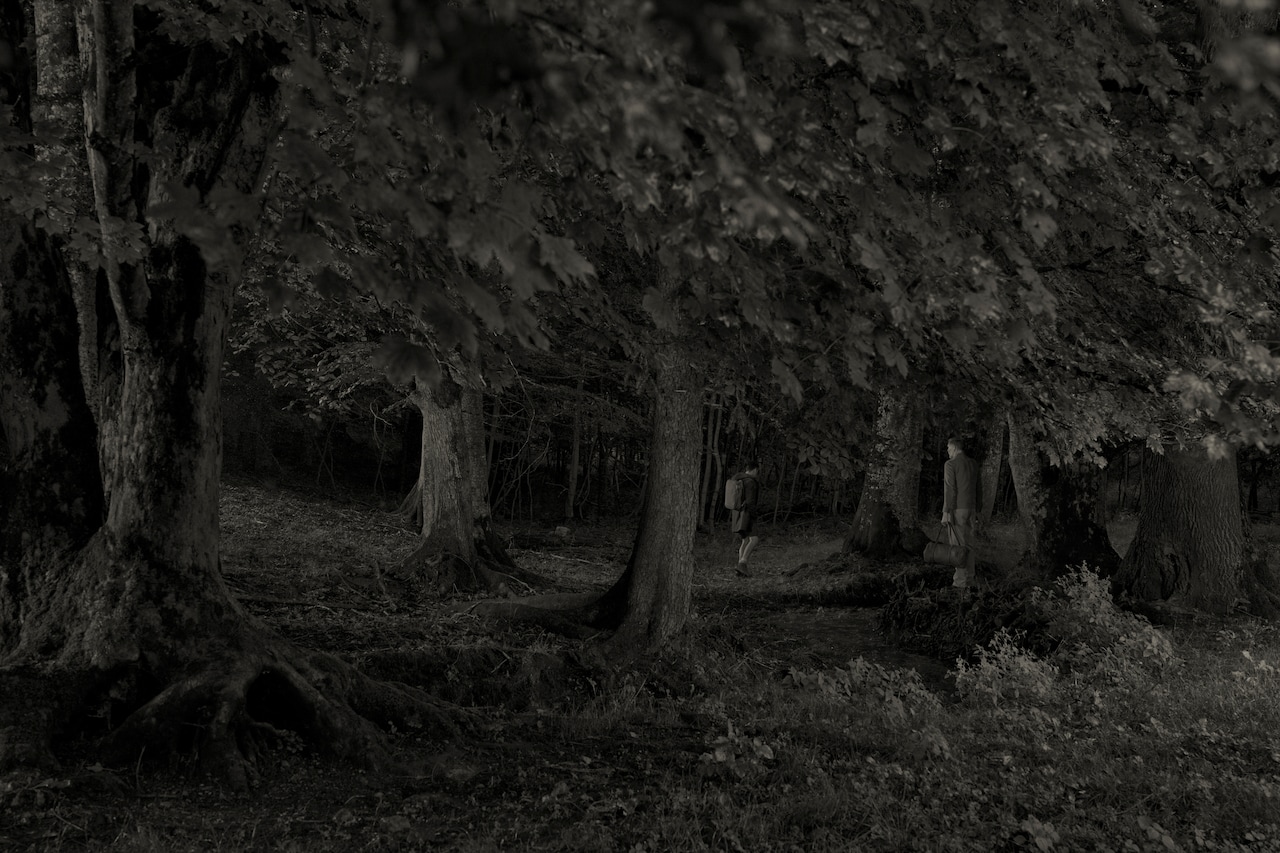
Another stunning series: Im Wald. These are photographs in somber black and white, printed at overwhelming scale for the Stedelijk Museum. The portrait with his partner Kevin moves you the moment you stand before it. We see the two as small figures standing in a dark forest, both viewed from behind. Erwin stands with a bag in his hand, watching Kevin walk away with a rucksack on his back.
Olaf is looking at his partner and at the same time at a younger version of himself. The two were nearly 20 years apart in age. Olaf sees the youthfulness of someone who wants to go out into the world, while he himself seeks stillness. “That’s what this photo is about,” Olaf said at an exhibition in 2021. “We are part of a caravan and I am slowly beginning to notice that I’m falling behind, while my partner moves ahead. That is how it should be, and that is what I want — that he just keeps going and makes the most of it.”
II.
There is a good chance you are reading this via Substack. I use the service to reach people a little more easily, but I am not really a fan. With every update, Substack is less about writing newsletters and more about interaction. There is a timeline, you can livestream, repost. Recently, Substack newsletters have been pushed to the top of the app with Instagram Story-like icons and orange notification bubbles demanding attention.
I don’t write my blogs to read them in a casino. That’s why my personal website is still the place where I publish them first. Then I copy everything to Substack to send to subscribers’ inboxes. That still works perfectly well.
But then there’s that website of mine. I’ve been putting work into it recently through vibecoding. For years my blog was parked at Wix, a service that lets you build a site for a fee without too much hassle. Like Squarespace and Wordpress.
I got tired of Wix. The downside of these kinds of platforms is that you quickly hit their limits when you want to customize them exactly as you like. So after hearing Ernst-Jan Pfauth and Alexander Klöpping raving about Claude Code, I decided to just build my own website. And exactly the way I want it.
That means: a simple front page with a list of weekly blogs. If you’re on desktop, you’ll find some widget blocks on the side with fun extras. On mobile you need to click the smiling moon emoji for those. You can follow live what music I’m listening to (thanks to a connection with Last.fm), what books I’m reading (via Goodreads), and what films I’m watching (via Letterboxd). And there’s a list of my most recent articles for NU.nl.
Not much more than that. I built a CMS and a search function. Put together an about page. And I made sure linked text is highlighted in color when you hover over it. What I’m most happy with is the margin notes¹. On desktop I can place a note in the margin beside paragraphs in my blog posts. Every time I see that, it makes me happy. It’s the little things.
PS.
The website Printing Films collects old videos showing the technology behind printing, journalism, and typography. (via Kottke)
Paulie B walks through Amsterdam with street photographer Matt Stuart.
The Halide app is the best way to photograph with your iPhone. Not the standard Camera app, which in my opinion already applies too many edits on its own. With Halide you take photos without algorithmic enhancement and in RAW, so you can adjust the image yourself. The third major update is now out, including the ability to crop photos in a panoramic format. All the improvements are listed in this delightful blog post.
The whole interview with Ian McKellen on Stephen Colbert is worth watching, but in the final few minutes (from 22:18 onwards) the 86-year-old actor delivers a monologue that stops you cold. The speech was written 400 years ago by William Shakespeare and is about a revolt by Londoners against the arrival of immigrants.
You read blog №152, written in the week of 2 to 8 February 2026. Subscribe to my newsletter and you’ll receive it every Sunday free in your mailbox.