
27. I finished the hefty Elon Musk biography in three days
I.
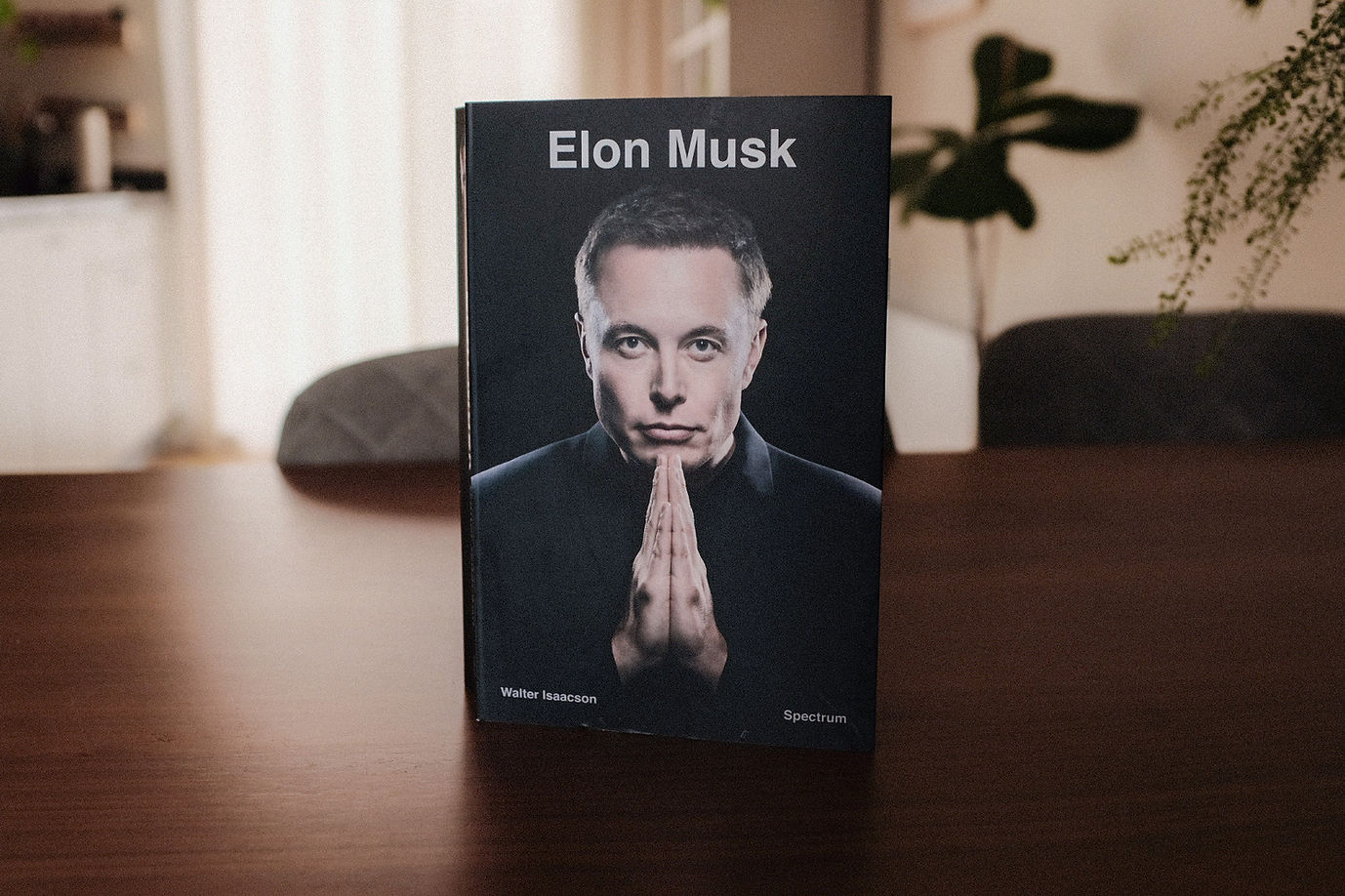
Already in the prologue to Walter Isaacson’s biography of Elon Musk, an attempt is made to explain how the world’s richest man came to be the way he is. As a child Musk already had no capacity for empathy, was frequently bullied and could not count on support from his father. Years later he would buy Twitter. To settle scores with his past and finally become the boss of the playground, the author suggests.
Isaacson seeks roughly the same answers to questions that he posed in his famous biography of Apple co-founder Steve Jobs. In Musk’s case the main question is: could he have been a bit more laid-back and still launched us toward Mars and toward a future with electric cars?
It cannot be denied that Musk pioneered the electric car with Tesla. And that with SpaceX he pulled American space exploration out of the doldrums. The companies grew out of ideals intended to advance the world and humanity. The risks he takes to achieve his goals are both admirable and dangerous. “Never take your chips off the table”, he says in the book. Keep betting until you win.
With the companies mentioned above, but also with PayPal and Zip2, Musk managed to transfer his boundless drive into enthusiasm among his employees. He expects them to work just as hard as he does, 24/7 if necessary. It is a touch inhumane, but it usually works: through his seemingly unrealistic deadlines and constant insistence on working more efficiently (the usefulness of every single screw is examined), he gets teams to deliver remarkable results.
Isaacson is clearly full of admiration for this. The downside of Musk’s manic work style is regularly touched upon briefly, but as you read the book you are expected to understand where Musk is coming from and to get on board with his world and way of thinking. The admiration for Musk’s results takes precedence over the trail of destruction he left to get there, such as burnouts, the belittling of employees and casually dismissing anyone who pushes back.
II.
The final two hundred pages of the book are almost entirely devoted to Musk’s takeover of Twitter. Isaacson spent two years shadowing Musk, was given extensive access to interviews and meetings, and landed in the thick of it.
For anyone who has been following the Twitter saga, the broad strokes are familiar. But Isaacson does provide more insight into what the takeover was like behind the scenes. He didn’t have to rely on rumours; he had a front-row seat.
Musk decided to buy Twitter on impulse. He had regrets and tried to back out of the deal. “I think Twitter might possibly go off the rails”, he told Isaacson. “It could work out favourably at a much lower price, I mean literally half or something.”
He also unburdened himself to a Tesla team: “I don’t know why I did it. It basically came down to the judge saying I have to buy Twitter or else, and now I think: okay shit.”
But ultimately the sale went through and Musk set about reshaping Twitter with a firm hand. The name has since been changed to X and the goal is to make it an all-in-one app, starting with a social network that supports financial transactions. That had already been his plan decades earlier with PayPal and X.com. In the book Musk says he will need at least five more years to transform Twitter into what he has in mind.
Isaacson describes a series of hallucinatory events following the Twitter takeover. Musk stormed through the company like a bull in a china shop. He fired thousands of employees, had Slack messages searched to determine which workers were untrustworthy, and started sharing conspiracy theories.
Perhaps the most troubling thing is how he treated Yoel Roth. In the period after the takeover Roth had emerged as the reasonable conscience of Twitter and was able to work well with Musk. Until he could no longer stomach Musk’s darker side and decided to leave. Later Musk threw Roth under the bus on Twitter by insinuating paedophilia. This meant Roth had to be placed under security protection for a time, because of idiots who tracked down his address.
III.
A few fun facts from the biography:
-
As a teenager Musk fell into what he calls an “existential depression”, partly fed by books by philosophers such as Nietzsche, Heidegger and Schopenhauer. The Hitchhiker’s Guide to the Galaxy by Douglas Adams helped pull him out of it.
-
SpaceX was originally called Space Exploration Technologies.
-
Musk is an accomplished gamer and is, according to acquaintances, “frighteningly good” at games such as Quake III Arena, where his username was Random9.
-
When SpaceX received a NASA contract, Musk changed his computer password to ‘ilovenasa’ (which is a terrible password, by the way).
-
Musk tried to persuade Amazon CEO Jeff Bezos to write a review of his ex-wife’s new book, a horror thriller about human-demons. Bezos had nothing to do with that, but wrote a friendly customer review in his own name.
-
Musk went with his girlfriend Grimes to see Alita: Battle Angel. They had no 3D glasses for the film, but watched it to the end despite the blurry image.
-
The iPhone game Polytopia is, according to Musk, “the single greatest game in history”.
-
Musk became angry at Bill Gates when it emerged that Gates had been betting that Tesla shares would lose value.
PS.
Meanwhile Jack Dorsey appears to have deleted his account on Bluesky. That is a surprising move, since he is a founder and board member of the Twitter alternative. He gave no reason for leaving, though he writes on the decentralised social network Nostr: “Cleaning up a lot of noise.” From Bluesky, silence.
I read about a new Sony initiative that allows people to donate their discarded Aibo robotic dogs to, for example, hospitals and care homes. There the dogs get a second life as emotional support for patients and residents.
Years ago I watched a New York Times video that has stayed with me. In it you see how Aibos are part of Japanese families. At the time there was talk that Sony was going to stop repairing the devices, meaning people would have to say goodbye to their robotic friends. Since 2018 Sony has been making new Aibos again.
The iPhone 15 was unveiled and, long story short: it was a bit of a letdown. The biggest news is that the Lightning port is being replaced by USB-C. Apple is bowing to European requirements with this. The upside is that in a few years no one will have to ask specifically for an iPhone cable anymore.
In 2020 the painting Lentetuin by Vincent van Gogh was stolen from the Groninger Museum. Art detective Arthur Brand tracked down a drug gang from Amersfoort that claimed to have the painting. After negotiations the work was returned in an IKEA bag.
New music: two tracks by Spinvis and yet another third album from Nas this year.
A lot of text this week! Here is a cat photo in compensation.

Thank you for reading! I’d love it if you subscribed — you’ll receive this newsletter every Sunday for free in your mailbox.