
35. The Dutch internet began with a group of mischievous lads
I.
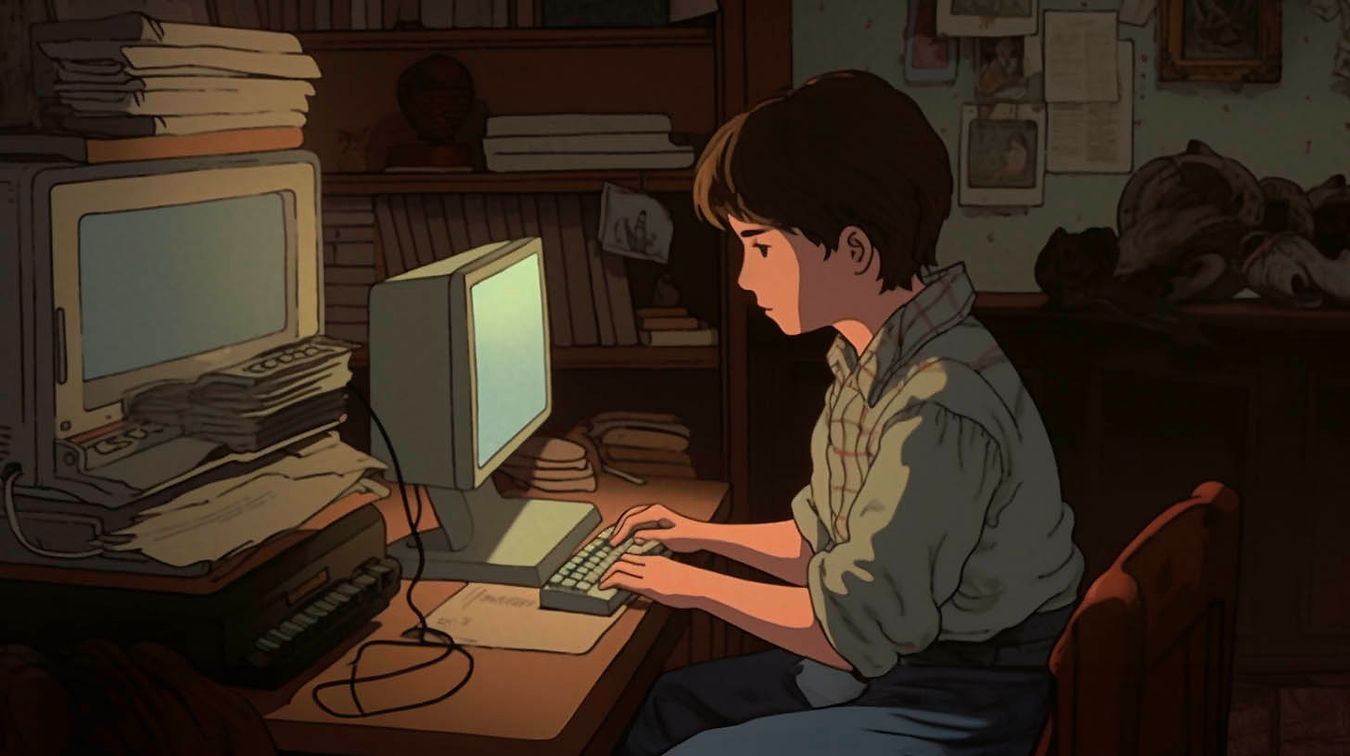
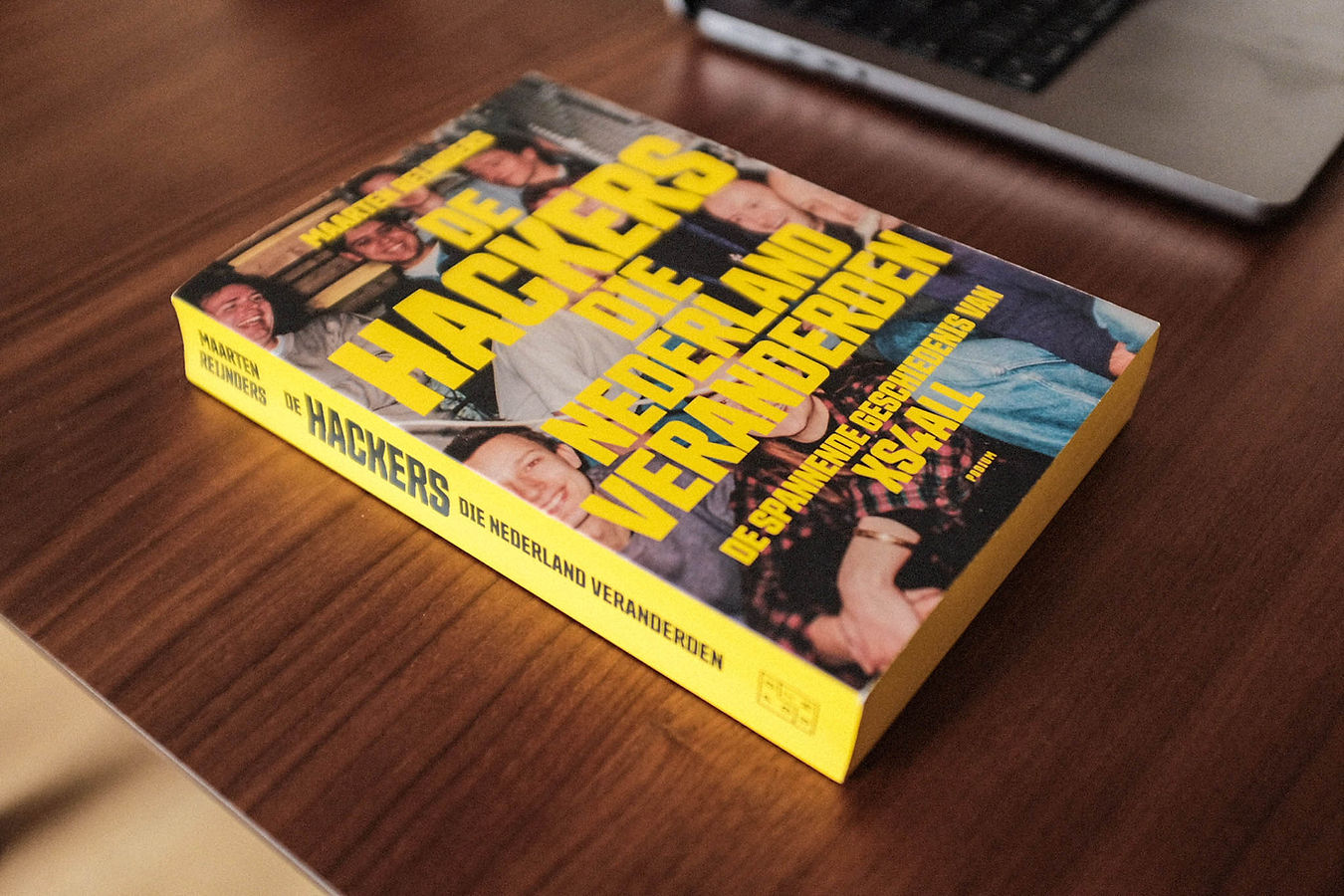
My former colleague Maarten Reijnders has written a new book, which I thoroughly enjoyed. In The Hackers Who Changed the Netherlands, you follow a group of young hackers who would eventually go on to found the internet service provider XS4ALL. Not only do you read about wildly exciting adventures, but you also get a clear picture of the rise of the internet – and the friction that came with it.
It all began in the 1980s, when teenagers made a sport of hacking into computers. There were no laws prohibiting it yet. The hackers devised all sorts of creative ways to gain access. Mostly to companies and universities, because in the early days only they were connected to the global computer network.
For those who don’t remember (or have forgotten): back then, you accessed a computer network via a telephone line. In the book, you’ll therefore read stories of lads who got round expensive charges by sending special beeps. This allowed them to dial in for free – or ring up surprised Americans who suddenly found themselves on the line with Dutch people.
The book is about mavericks who know exactly how computers work and are therefore ahead of the rest of the world. This group of Dutch people had grand ideals. Everyone in the world should be able to talk to one another easily, and all information must be available for free. “Computer networks can help human society move forward,” wrote hacker Rop Gonggrijp, who serves as a central thread running through the book. He started out as a teenager making prank calls online, founded the hacker magazine Hack-Tic and later helped launch XS4ALL.
Has the advent of the internet helped society move forward? These days, one is increasingly inclined to question this. Somewhere along the line, a wrong turn was taken, resulting in a handful of Big Tech companies now pulling the strings. They hold a great deal of our personal data (and time) in their hands and do not handle it with the utmost care. In addition, we are grappling with the spread of fake news, online hate and threats.
Although Reijnders does touch on this, reading his book doesn’t leave you feeling disheartened. It remains, above all, an inspiring story: the emergence of the Dutch internet at a time when anything was possible and all avenues were open. And what I really love: it’s so wonderfully Dutch. The hackers have names like Rob Gonggrijp, Richard Ronteltap, Onno Tijdgat and Koen Hottentot. You couldn’t make it up.
In hindsight, I realise just how skilfully Reijnders has described this time capsule. You don’t just follow a few hackers who later went on to found XS4ALL; the book also branches out to include hackers and their stories from abroad. Everything is interconnected. When XS4ALL was wound up, it was the perfect moment to write a book about both the likeable provider, which fought for the privacy and security of its customers, and the Dutch hacker scene. It reads like a dream, even if you’re not particularly tech-savvy.
II.
Hack-Tic is frequently mentioned in The Hackers Who Changed the Netherlands. It was the first Dutch hacker magazine, or as its creators themselves call it, the magazine for techno-anarchists.
It’s great that the 25 issues published haven’t completely disappeared. An online archive containing scans of all issues is available. The very first issue of Hack-Tic already contains a detailed explanation of how to trick telephone lines. These ‘telephone tricks’ recur regularly.
In the seventh issue, the editors felt compelled to emphasise that the information in Hack-Tic is intended solely for educational purposes. “If we publish an article about making free calls in phone boxes by cutting the earth wire, that is NOT a call to go and sabotage phone boxes across the country,” it states. “However, we do believe that people should know how the technology (e.g. behind the telephone network) works so that they can draw their OWN conclusions about the security of the whole thing.”
Although Hack-Tic isn’t always bothered if the consequences turn out badly for certain parties. “If large companies fall victim to a single hacker who ‘travels’ abroad at their expense via Datanet-1; well… And if the PTT’s annual profit turns out to be slightly lower? A typical case of bad luck.”
PS.
Robin de Puy, one of our country’s finest photographers, is working on a series for de Volkskrant in which she portrays Americans. In the text, she explains her quest. In the fourteenth instalment, there are beautiful photos of a six-year-old girl from Idaho.
Nico Dijkshoorn once signed a book for me and thought I hadn’t started reading it yet. But I’d already finished it. I’m just very careful with books. Even more so as a child; back then I hardly dared open the pages for fear of creasing the spine. These days I think it’s fine for books to show they’ve been read, though I’d never dog-ear the pages or fold a paperback in half.
Wired made a video about book restorer Sophia Bogle. I call her a hero; she calls herself a book surgeon. You understand why when you see her at work. You also immediately understand why she doesn’t let customers watch. “Nobody needs to know what I’m doing,” she says. Then she turns to the viewer. “Only you will find out.”
---The first images from the European space telescope Euclid are stunningly beautiful and razor-sharp. The space telescope’s main mission is to capture cosmic vistas and thereby create a gigantic map of the universe. This will be used to investigate two mysteries: dark matter and dark energy.

Following Band of Brothers and The Pacific, producers Steven Spielberg and Tom Hanks are bringing us a new war series: Masters of the Air. We follow the crew of a group of bombers during the Second World War, who became known as The Bloody Hundred. Starring actors including Austin Butler and Callum Turner. Available on Apple TV+ from 26 January, but a trailer is already out. It relies heavily on CGI and digital imagery, but I’m curious to see it.
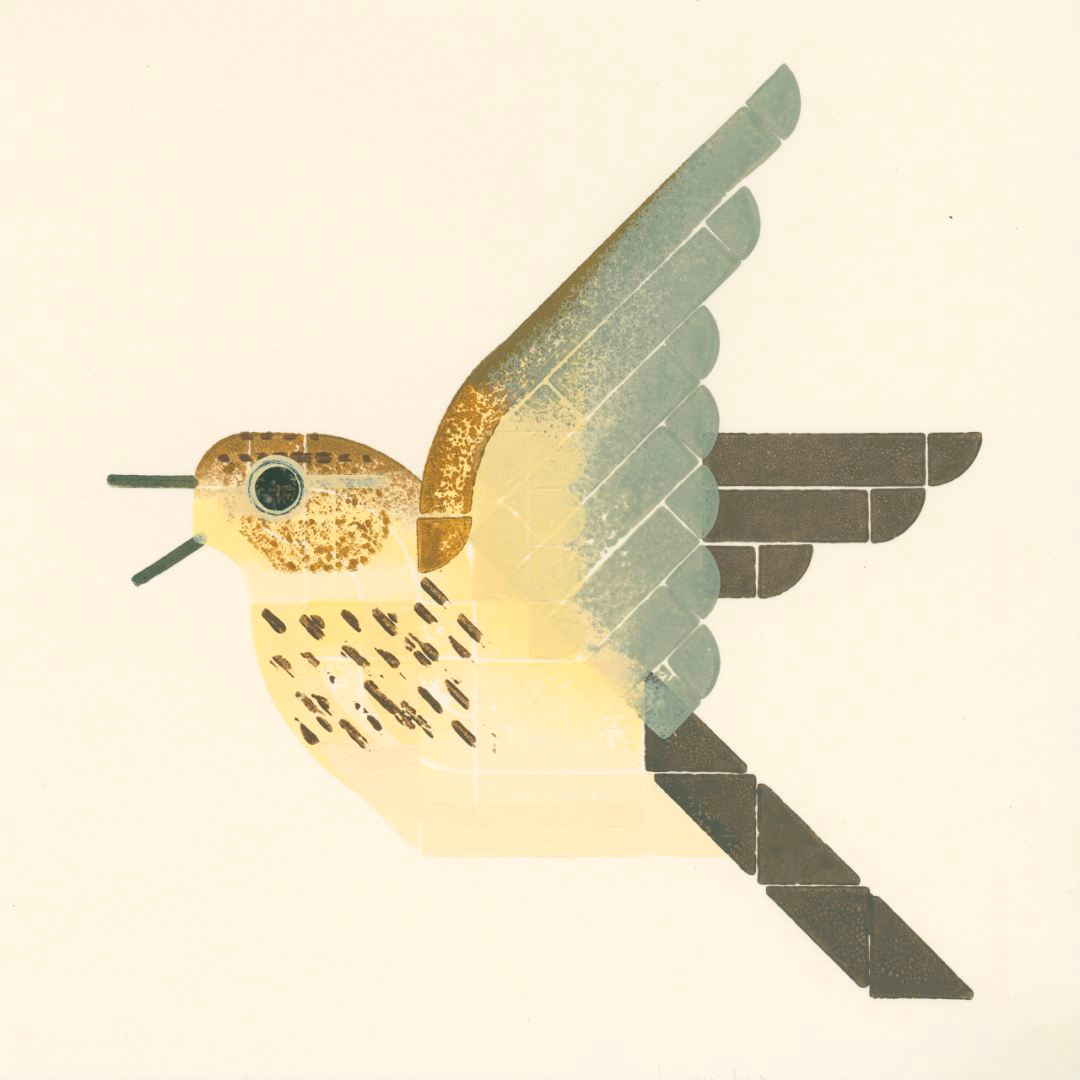
---You can make anything with LEGO, including printed matter. Roy Scholten uses a homemade LEGO letterpress, which uses LEGO bricks to print Dutch birds. He has made almost fifty of them; then his project will be complete. I love it.
Thanks for reading! I’d love it if you subscribed; you’ll then receive this newsletter in your inbox every Sunday for free.