56. Most people are decent

I.
I read in a study that almost one in five Dutch people have at some point held a meeting whilst driving. This also happens in the film Evil Does Not Exist (the new film by Drive My Car director Ryusuke Hamaguchi). The director of a glamping company joins a video meeting from a car park.
At least the director isn’t driving; he deserves credit for that. But it still highlights a certain lack of interest on his part. He dials in between tasks just to tick a meeting off his list, whilst saddling two project leaders with a mountain of trouble. It is up to them to convince a village to allow a glamping site in their nature reserve. It is a poor plan that is peeled away layer by layer, like an onion, by the residents. When the meeting is later discussed during an online session, the director brushes aside the objections. “Just go back and sort it out,” he says. “I have to move on to the next online meeting.”
In short, capitalism is seeping into an independent village where the residents still enjoy the silence and live in complete harmony with nature. The glamping site is intended for city dwellers who want to unwind for a while. Yes, the villagers might experience a bit more disruption, but it surely won’t amount to much. Right?
The project leaders return to the village and are charmed by the slow pace of life. A bit of wood-chopping, picking wild wasabi, scooping drinking water from the stream. But every idyll has its downside. Even the calm deer, grazing so beautifully amongst the trees, may choose to attack if hunted. Just as any endangered species can become dangerous.
---II.
The very first Superman story (Action Comics #1 from 1938, a copy of which was auctioned this week for 6 million dollars) devotes just one page to his origin story and the explanation of his superhuman powers. After that, you are immediately plunged into Superman’s first adventures, with which writers Jerome Siegel and Joe Shuster laid the foundations for the superhero comic.
They are little more than a few dated vignettes. Superman saves a woman from an unjust death sentence, we see Superman’s alter ego Clark Kent as a journalist, and Superman shakes a couple of crooks out of a car. That final scene provided the famous cover image. “And so begin the sensational adventures of the most sensational comic book character of all time: Superman,” the writers conclude that first story. A somewhat self-important stance, which, with the benefit of hindsight, is hard to argue with.
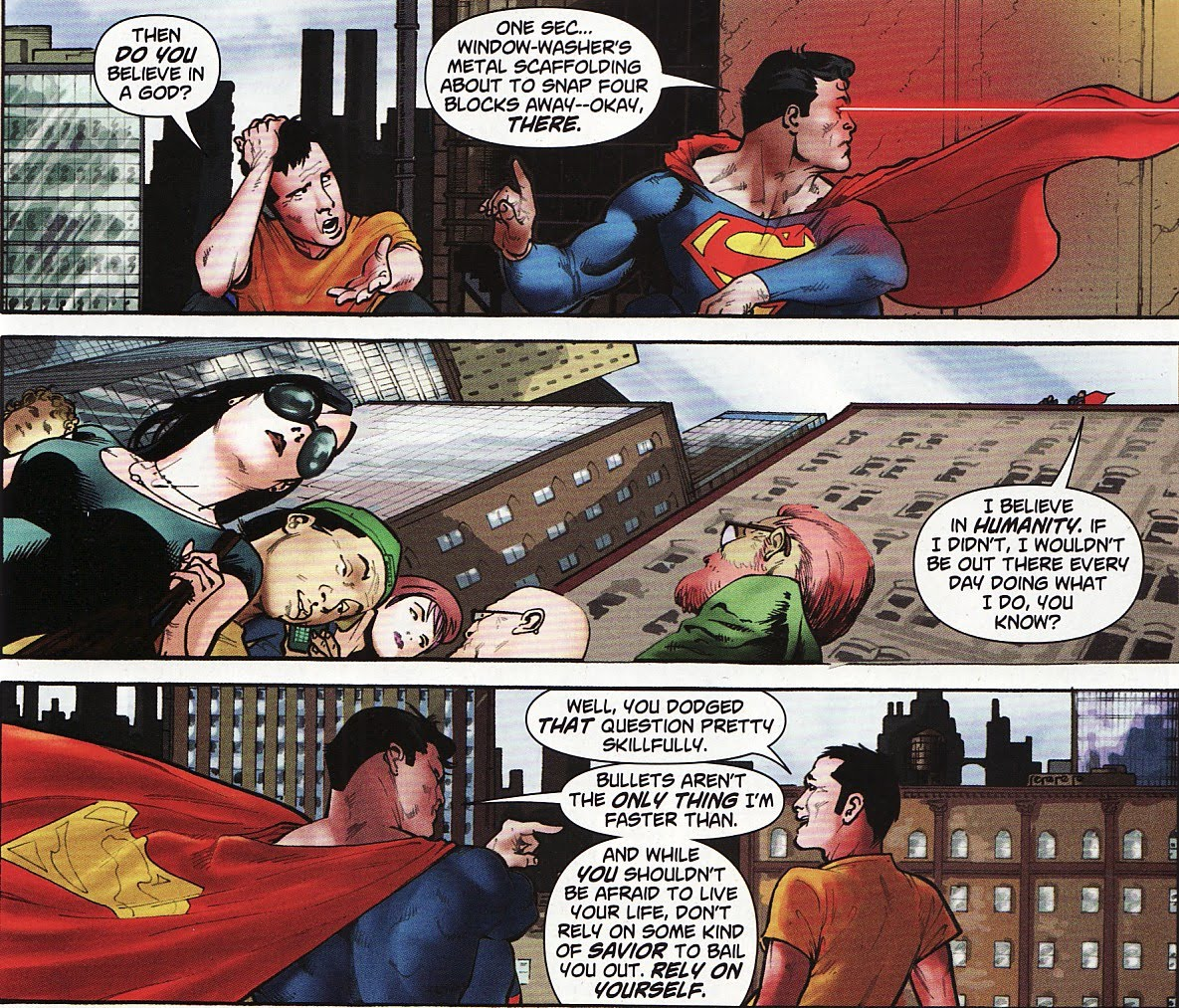
Superman is the most powerful hero. He has only one weakness: kryptonite. That makes him almost invincible, but not boring. This week, Nick Cave preaches in his Red Hand Files about Jesus in the New Testament. But also a little bit about Superman. “Jesus’ miracles add a strange and wonderful aspect to the stories,” writes Cave. “Yet it wasn’t Jesus’ supposed supernatural powers that moved me, but rather his humanity – his vulnerability and fragility.”
This combination of factors has been at work for thousands of years in the creation of heroes.You can also see these traits in Harry Potter and Spider-Man, to name but a few. The chosen hero who must save the world always has a human side, with doubts and struggles in which every reader recognises themselves.
“What binds us, what makes us worthy,” Cave concludes in his prayer, “are the small acts of everyday kindness and courtesy. Or the simple gestures of appreciation for one another, through which we say to the other: I believe in you.”
Thanks for reading this newsletter! Subscribe to receive it free of charge in your inbox every Sunday.
---PS.
Thirty years after Kurt Cobain’s death, Peter van der Ploeg has written a lovely personal essay about the Nirvana singer. “I’ll never really know why my great hero couldn’t cope with life, whilst mine was made so much better by his.”
Lots of great new music this week. Vampire Weekend and Khruangbin, for example. Not on streaming services, but available to listen to and download for free here: a new (surprise) album by Pharrell Williams.
Enjoy it while you still can – music made by people. Because with AI tools like Suno, you can generate an album in half an hour. I wrote on NU.nl an article asking whether there is music in AI. The best quote comes from punk-ballad artist Jan Modaal: “As an artist, I want to be the source of my work and remain authentic. If you throw an algorithm into the mix, that can dilute it. It’s a bit like passive smoking. If you do that too much, your lungs will turn black of their own accord.”
I love my Fujifilm X100F. It’s nearly seven years old and still takes stunning photos. So I don’t need a new one, even though every new camera in this series looks at me like a puppy in a shelter, ready to be taken home. Fortunately, they usually sell out in a flash, so I’m not tempted. My favourite camera reviewer, Becca Farsace, discusses the latest Fuji: the X100VI. And after watching the video… I want a Ricoh GR IIIx.
---Journalist Thomas Harding recalls conversations with Brigitte Höss, who passed away last year. She was the daughter of Rudolf Höss, the commandant of Auschwitz. This was the family who lived next to the concentration camp, as you see in The Zone of Interest. Harding had a painful conversation with the woman who, even in her old age, could not bring herself to see her beloved father as a monster. A striking photo, too, of laughing children playing in the swimming pool in the summer, right next to the walls where a million people met their deaths. That image was not exaggerated in the film.
Ten years ago, when apps were still a novelty, Yo! popped up. With the app, you could only send the word ‘Yo’ to friends. That was it. No photos, likes or reposts. For a short while, Yo! was a huge hit. It even spawned a whole host of copies, my favourite of which was Bark. With that, you could send a ‘bark’ notification to people nearby. Everyone who had the app received it, even if you weren’t friends. NiemanLab has a great piece on the craze for minimalist communication apps that was sparked by Yo!, and which then fizzled out just as quickly.
Lars and I recorded our penultimate podcast (of this season?) about the book Lessons by author Ian McEwan. Every week we discuss two chapters on our podcast Kaftwerk. Think of it as a mini book club. Next week we’ll finish the book. We’d love it if you listened!