
61. A monster to love
I.
The first Godzilla film was released in 1954, nine years after the bombings of Hiroshima and Nagasaki. Nuclear tests carried out after the Second World War brought Godzilla to life from the depths of the ocean. You could say that the invention of atomic bombs literally created a monster. The remarkable thing is that over the years, Godzilla (I actually prefer the Japanese name, Gojira) has been transformed from a symbol of Japanese trauma into an iconic national figure.
Godzilla Minus One was released last year and is probably the best Godzilla film to date. It centres on the protagonist Koichi, a kamikaze pilot who came up with an excuse so he wouldn’t have to crash-land. When he returns after the war, he finds a wasteland and no one is happy to see him. He is told that his ‘cowardly’ act has led to many deaths. He must learn to live with that burden and try to come to terms with himself. He gets that chance when Godzilla sets his sights on Tokyo.
I saw Godzilla Minus One in black and white; it’s also available in colour. But this version works very well, if only because it makes it more like the 1954 original. It even features music from that first film. The highlight is Godzilla’s attack on Tokyo. Never has the monster’s destruction looked so imposing. You feel the weight of his tail smashing through the buildings and the impact of the lumbering monster striding through the streets.
The Second World War is never forgotten. Koichi is asked when his war will finally be over. For whilst a war may be officially over, when does the struggle fade from the minds of those who lived through it?
---A brief housekeeping note
I’ll be in Japan with my girlfriend for the next few weeks. We’re travelling from Tokyo via Lake Kawaguchi and Matsumoto to Kyoto and Osaka, and will then fly back to Amsterdam from Tokyo. I’ll do my best to keep blogging, but I’m not quite sure yet in what form, and it might be a bit later than you’re used to. Stay tuned!
II.
In The Roads to Sata, Alan Booth (1946–1993) describes a part of Japan that I’m unlikely to see. In 1977, the Briton, who lived in Tokyo, travelled on foot from the northernmost to the southernmost point of Japan. Some 3,300 kilometres in 128 days. This resulted in this account, in which he describes in particular rural areas and conversations with Japanese people. During his journey, Booth sleeps in ryokans (local inns) and is often turned away there as a gaijin (foreigner). The Japanese generally have little patience for language barriers, even though Booth speaks fluent Japanese.
Booth’s days and accounts are repetitive, but never boring. That is an art in itself. He writes without spelling things out. Or as someone on Goodreads puts it: “The book is funny without jokes, sad without tragedy and beautiful without romance”.
At one point, Booth arrives in Hiroshima. A man follows him through the building and at one point says, unjustly: ‘Your country caused this’. You can feel the helplessness and discomfort of a Westerner in Hiroshima, less than thirty years after the bomb. It was a different kind of Japan from today. Even if Booth had walked through the cities I am about to visit, I would not find the same thing. Foreigners are no longer a curiosity, but rather a nuisance.
Aside from being a historical document and a remarkable travelogue, Booth writes not only with respect for Japanese culture, but also in a typically British manner (with humour).
> “Look, it’s a Frenchman!”, said one little boy to his school friends with an assurance that worried me for several days. > >
Ultimately, Booth says he has not come any wiser from the journey. A Japanese man says at the end of the book that you do not get to know the country by walking through it, talking to people or observing it. For it is impossible to understand Japan.
PS.
Phew, a rather tone-deaf advert from Apple. In the promotional video for the new iPads, musical instruments are compressed until all that remains is a tablet. Apple wants to show what a handy all-rounder the iPad is for artists, but you can also interpret the advert exactly the other way round. As a dystopian vision in which you witness the destruction of traditional art forms and the passing of human creativity. Sebastiaan de With (creator of the Halide camera app) writes that he is particularly interested in the Japanese reactions because of their concept of tsukumogami, the idea that creative tools are imbued with a spirit. “To destroy them is truly malicious.”
Apple later apologised, but is leaving the advert online. Just how sorry is Apple really? It’s certainly generating plenty of attention for the new iPad Pro, at any rate.
###### ([This ](https://www.youtube.com/watch?v=yk6UVnMn9ts)*[Star Wars](https://www.youtube.com/watch?v=yk6UVnMn9ts)*[advertisement from Apple is actually quite nice, by the way.](https://www.youtube.com/watch?v=yk6UVnMn9ts))Blur are releasing a documentary about their reunion for the album The Ballad of Darren (2023). The best quote from the trailer comes from Damon Albarn: “Success will mess you up far more than failure”. That’s a comforting thought. Spinvis has his own take on it: “Losing is good; it gives you more than winning ever does”.
---The original Let It Be documentary by director Michael Lindsay-Hogg, about the writing and recording of The Beatles’ eponymous album, is available on Disney+. It remains fascinating to see those hugely famous songs come to life, but as a viewer you miss quite a bit of context with the footage. In that respect, Peter Jackson’s Get Back documentary, which he made using the wealth of footage shot at the time, really is the ultimate film to accompany the album.
David Lynch apparently still has some ideas for a fourth Twin Peaks season. That’s according to Lynch’s producer, Sabrina S. Sutherland during an online Q&A with fans. She doesn’t give any further details, but the door for a future season is therefore left slightly ajar.
You don’t see this every day on the auction site Catawiki: a genuine electric chair. From the collection of Henk Schiffmacher. That thing was once featured in a sketch by Jiskefet, in which Michiel Romeijn is electrocuted. The proceeds will go to Médecins Sans Frontières.
---One thing I’m definitely taking to Japan is my new favourite gadget, the Boox Palma. A pocket-sized e-reader. It runs on Android, so you can install other apps too. It even plays YouTube videos, on an e-ink screen! Not that you’d want to, but it’s possible. I’ll review it in more detail after my holiday.
The ABBA holograms were on display during the much-hyped Eurovision Song Contest. I saw the virtual Swedes perform in London over a year ago and wrote this report about it.
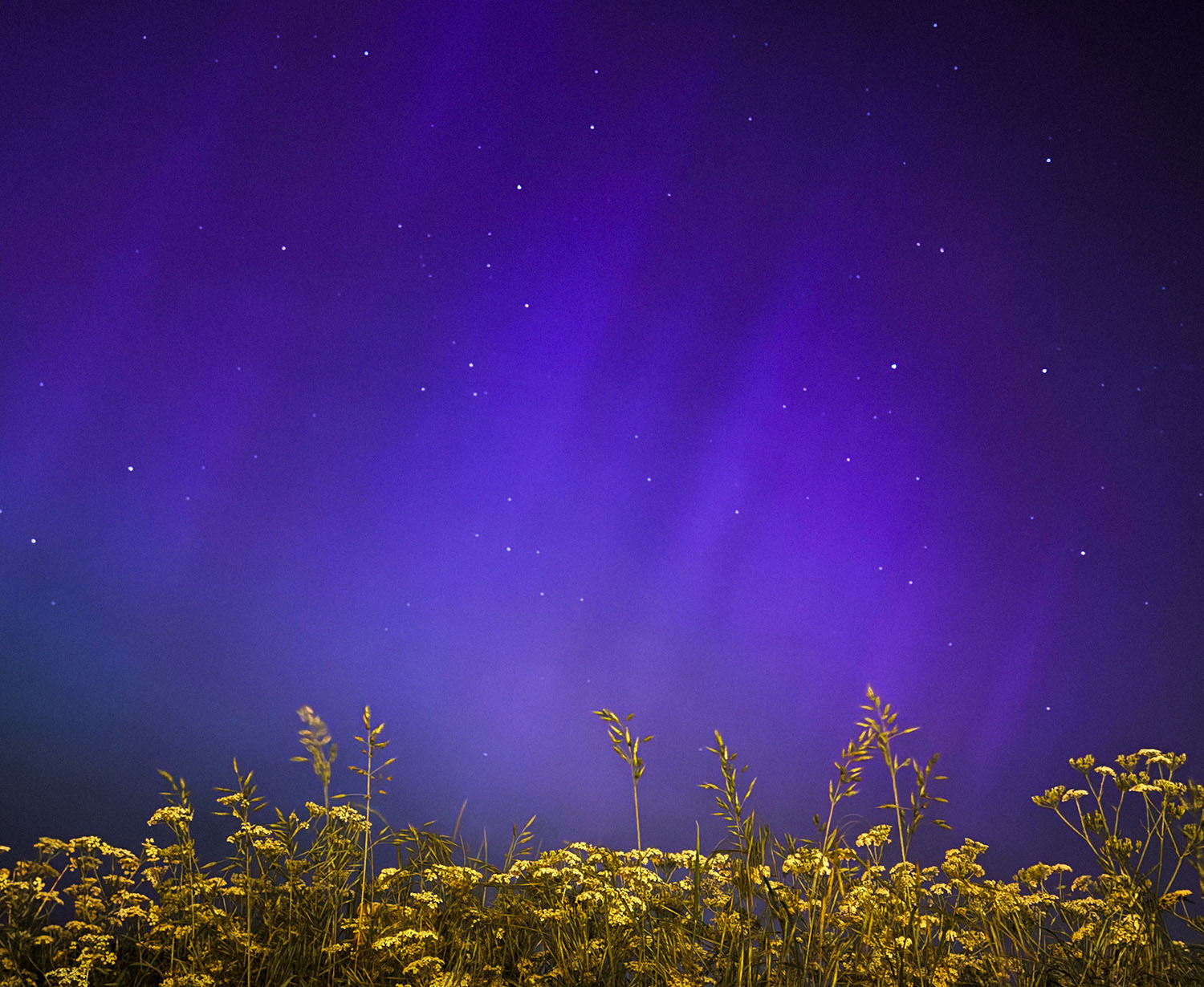
To conclude: this was the Northern Lights over Utrecht.
Thanks for reading! Did you enjoy it? If so, I’d really appreciate it if you subscribed. Every Sunday, I send out a new edition for free.