64. Japan (Part 3 – Conclusion)
Osaka is just half an hour’s journey from Kyoto. We leave the kimonos and old buildings behind and find ourselves in the Dotonbori district, amidst life-size billboards, flashing neon lights, rows of pachinko parlours and loads of street food.
There’s a massive Don Quijote, the department store where tourists spend hours buying souvenirs at so-called ‘discounts’. If TikTok were a physical place, you’d end up in this shop. A new dopamine rush around every corner, because what strange items are we going to find here now?
“Princess Mononoke!”, someone shouts behind us. We don’t pay any attention at first, but then we hear it again. I turn round and a Japanese man is pointing at my bag. I’m wearing a pin of the anime character No-Face. He’s not from Princess Mononoke, I tell him, but from another Studio Ghibli film: Spirited Away.
The man asks where we’re from and then rattles off a whole list of famous Dutch people. “Prime Minister Roette!” I give him a thumbs-up and can’t be bothered to explain the current political situation in the Netherlands to him. Partly because I’m a bit out of the loop myself.
“Johan Cruijff!” he shouts, as we both move further and further apart. He makes a kicking motion to go with it. “Very good,” I say just before I take the turn into another aisle with a new load of knick-knacks.
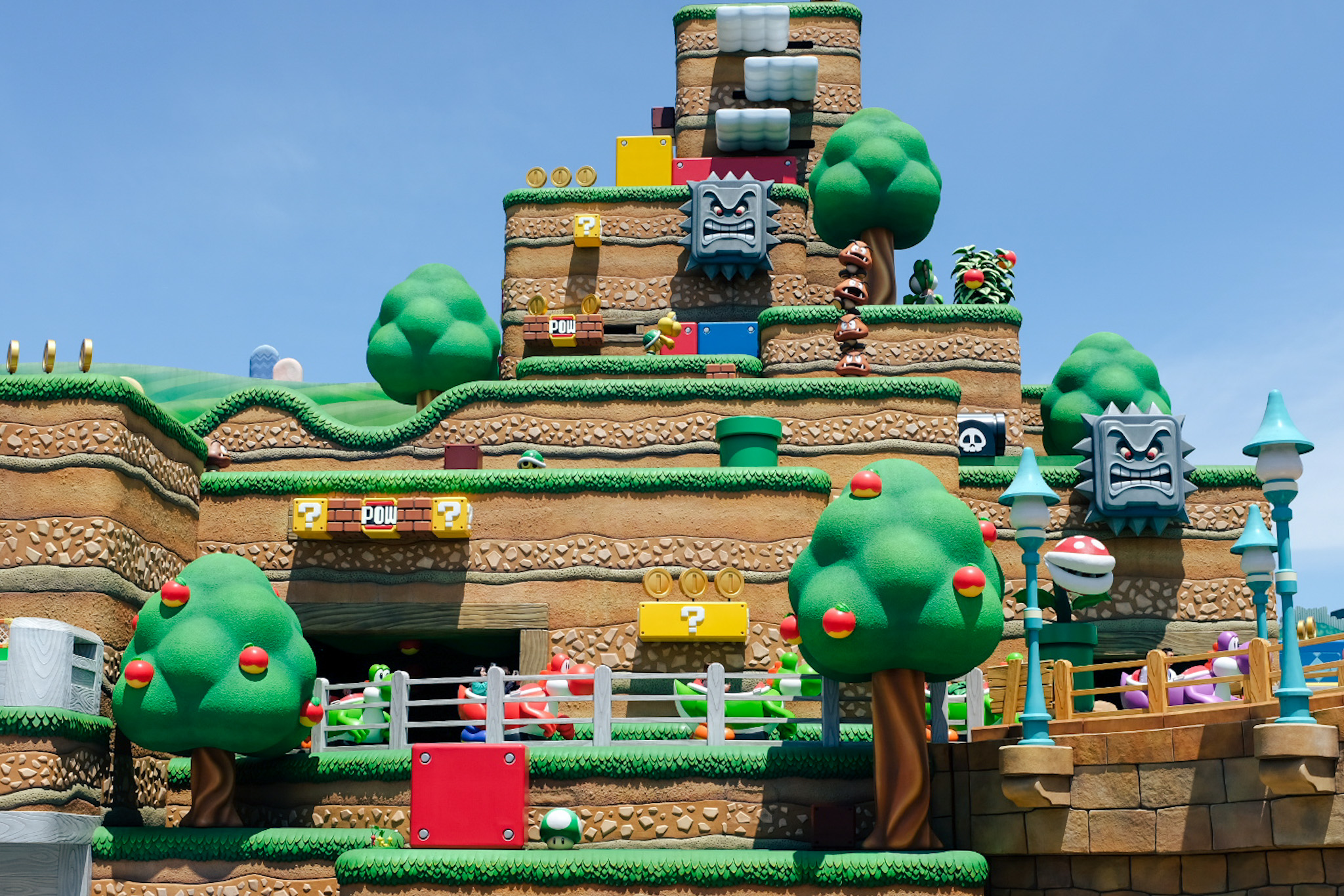
The alarm goes off the next day at what feels like an inhumanly early hour by holiday standards. But with good reason, because today we’re visiting Universal Studios in Osaka. There, you’ll find Super Nintendo World – currently the only place on earth where you can experience it. How often did I dream as a child that I could step through the TV or the screen of my Game Boy to discover the world of Super Mario for myself? Here, that childhood dream comes true.
We walk through Princess Peach’s castle and then see the famous game series come to life. Giant green pipes, moving Koopas, Goombas and life-size Piranha Plants. There are question mark blocks hanging on the walls that you can hit. We hear the sounds of power-ups and collected coins. Ping! Ping! Further on, we see Yoshi’s Island and Bowser’s castle. If you don’t like this, you’re more sour than the sourest sour.
Before you step into the Mario Kart ride, you’re guided through a queue that’s hardly boring thanks to the decor. There are racing suits of Mario characters on display and you visit Bowser’s library. The ride itself uses augmented reality. You race in a kart along a fixed track, whilst images of enemies are projected onto a screen right in front of you. Using a button on the steering wheel, you try to fire as many virtual shields at them as possible. This does come close to the chaos of the games.
The rest of the Universal Studios park is also well worth a visit. If only to see the original Jurassic Park gate, which has been installed there. We have another butterbeer in the Harry Potter section (it tastes caramel-like and does indeed have a very buttery head) and are then completely knackered.
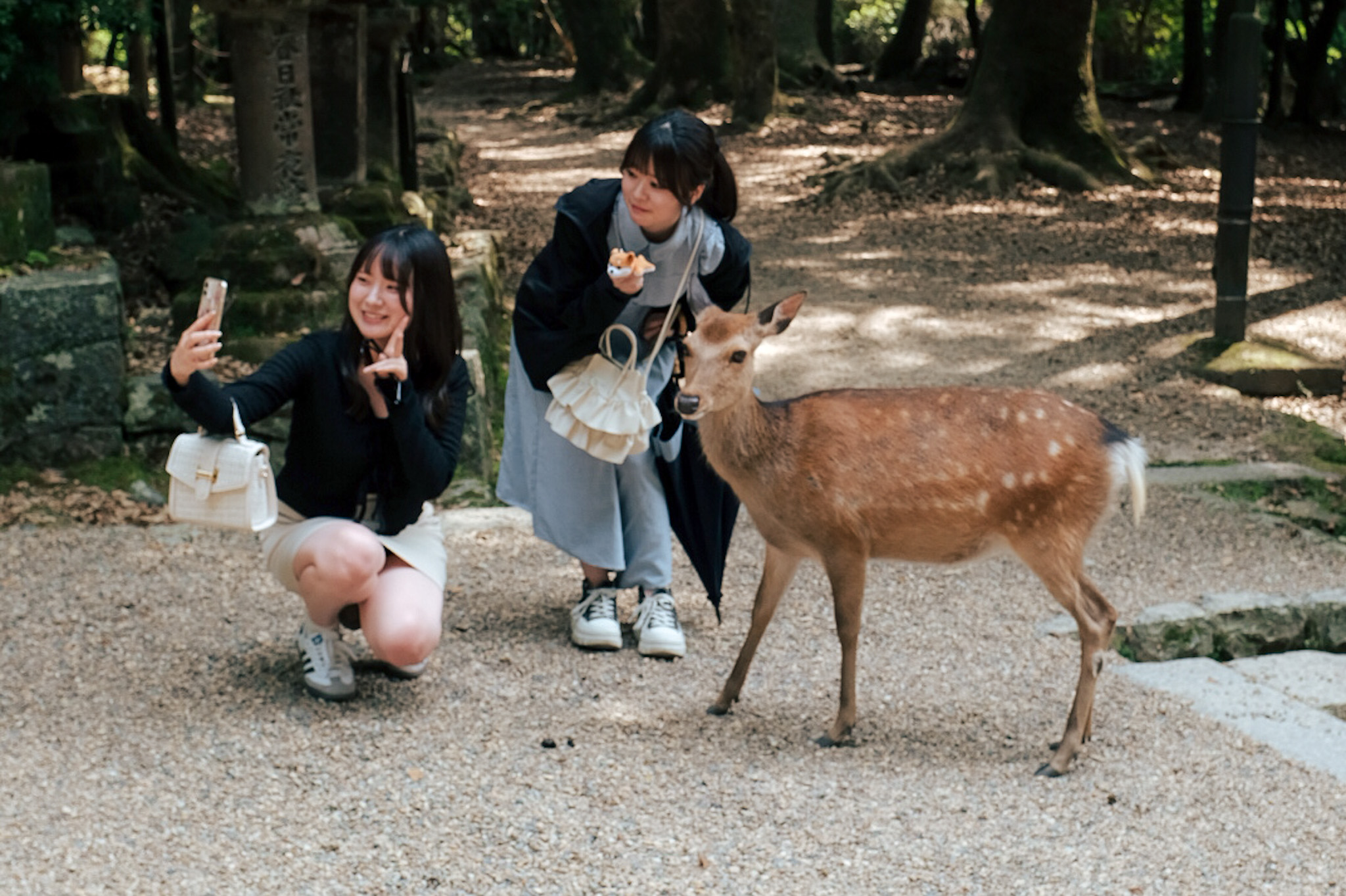
In Nara, we relax a bit amongst the tame deer. For 200 yen, you can buy a packet of light crackers that they eat straight from your hand. As a thank you, they (sometimes) bow. We walk past busloads of tourists and end up in a dark, cool forest with a shrine.
I find the deer endearing and the tourists annoying. I often see people holding a cracker in front of the deer but only giving it to them once they’ve taken a good selfie with the animal. Others refuse to give the biscuit until the deer have bowed to them. Sometimes, on the other hand, I see deer bowing to people who are then unable to make it clear that they have no food. I can’t quite make up my mind what exactly I think of this attraction.
The Shinkansen takes us back from Osaka to Tokyo. It took us two weeks to get from Tokyo to Osaka, but now we’re whizzing back in a few hours. These last few days feel like the icing on the cake: a four-day victory lap before we fly back to the Netherlands.
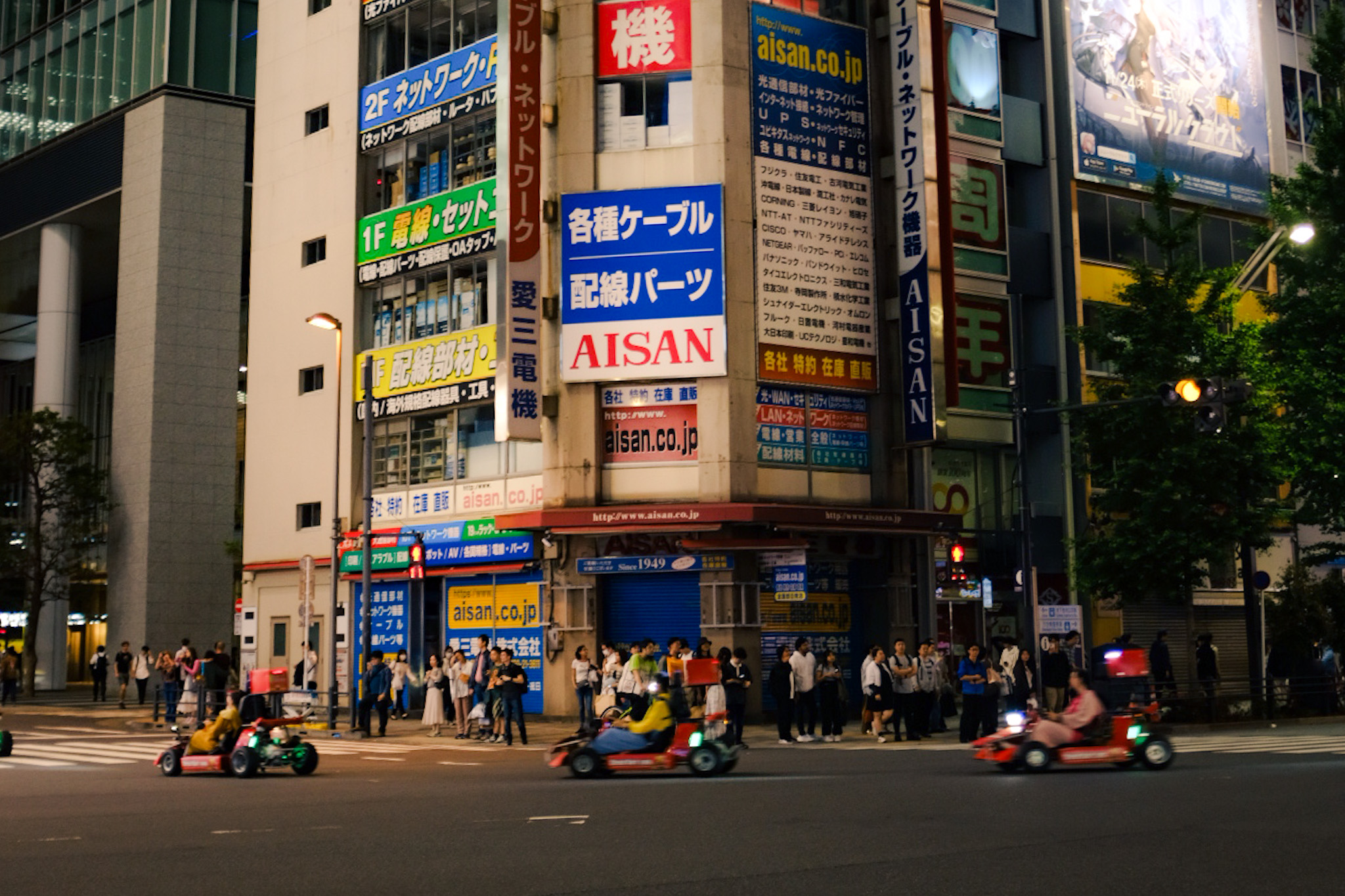
We visit the famous Akihabara district, a mecca for anime and gaming enthusiasts. In a shop full of figurines from famous anime series, I hear an American father say the following to his son, whilst pointing at a Gundam model: “Look, Japanese Transformers!”
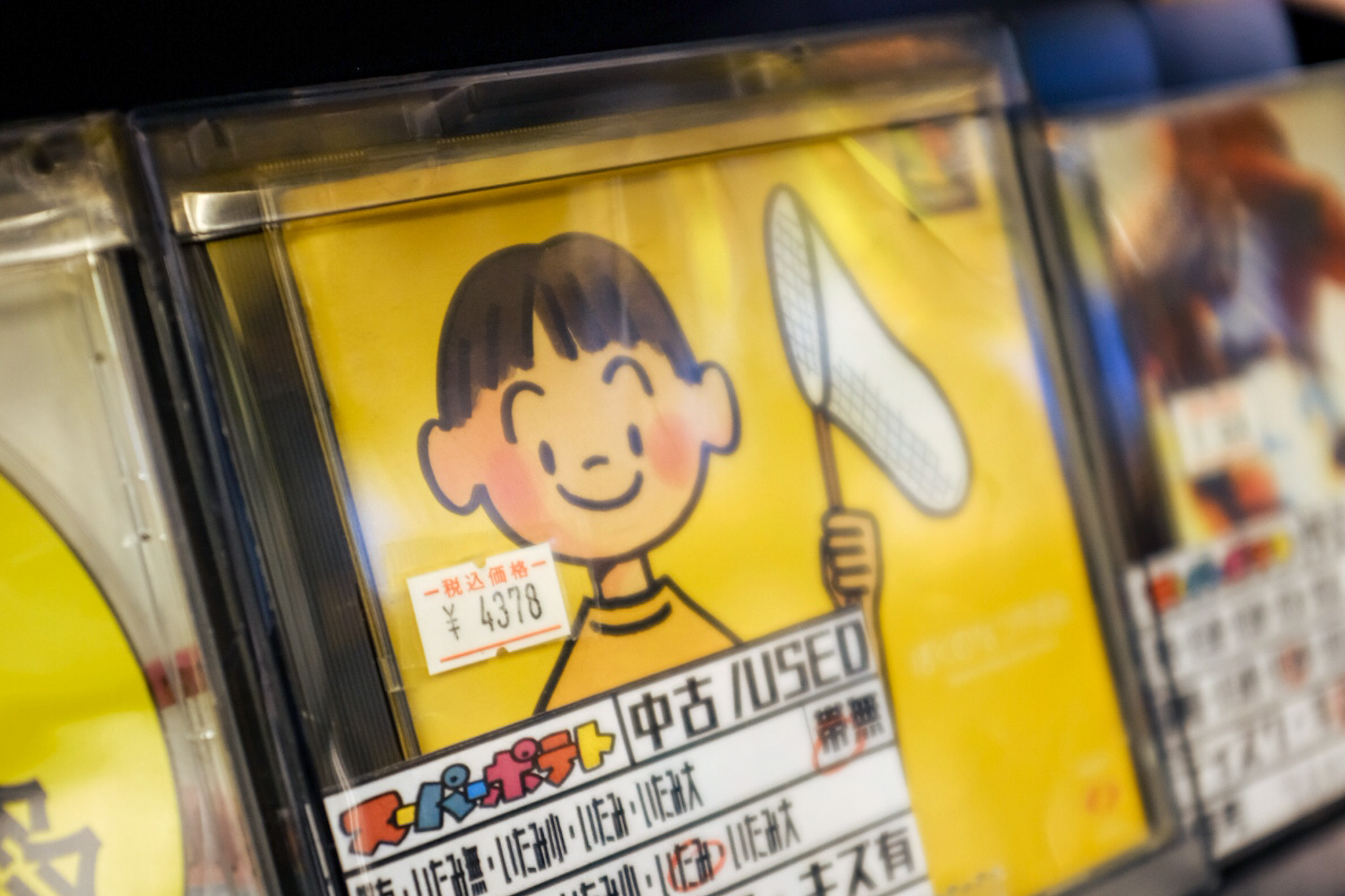
For me, the Super Potato shop is the highlight of the district. Super Potato is legendary among gaming enthusiasts because it stocks thousands of retro games. In good condition, sometimes even in their original packaging. It’s almost like a mini-museum.
For a shop with an almost mythical status, it’s hard to find. You can only get there via an inconspicuous little hallway off the street and then have to take a narrow staircase or a rickety lift to the third floor. It’s like stepping into a block of flats. But one crammed full of amazing games from the NES, SNES and Megadrive eras. An overdose of nostalgia. There are even old game guides! It takes a lot of willpower to leave empty-handed.
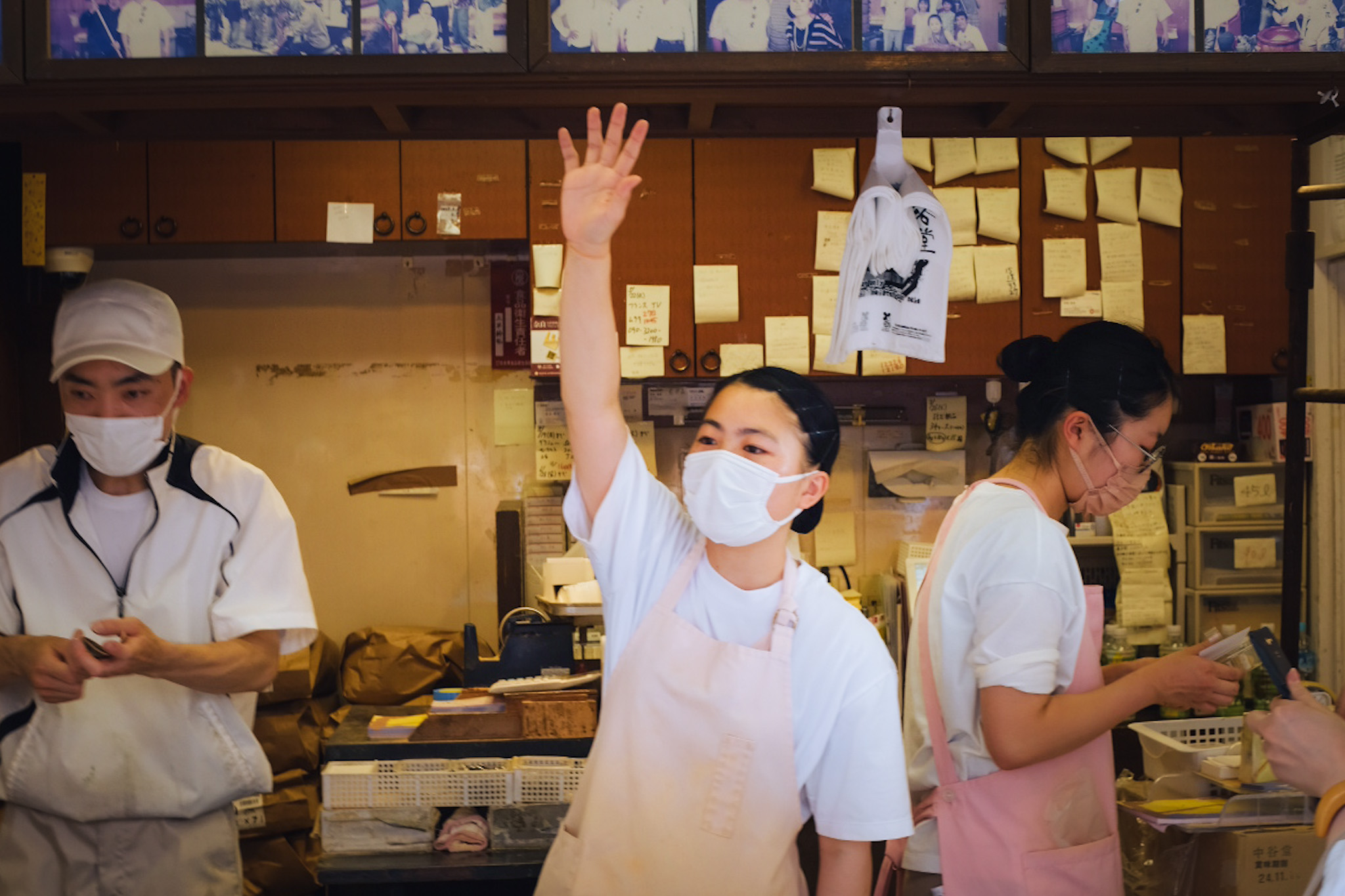
Outside a small, charming ramen shop called Kyushu Jangara, there’s an A4 sign hanging on a board with a huge chunk of text. This year, the restaurant is celebrating its 39th anniversary. The owner is grateful to his customers for helping him keep going for so long. After difficult years of the pandemic, he is once again seeing customers from all corners of the world walking through the door. “That is a very moving thought when we look back on the difficult times behind us.”
The text touches me deeply. No one else seems to be reading it, but it is such a lovely, open and positive message. The owner writes about how hard he works to keep his restaurant running, but also how much he believes in the power of a smile. As long as he can do his work with a smile, he’ll keep going.
(The windows are delicious!)
We leave the bustling city one last time and spend an afternoon on Kamakura beach. At Kokomae station, dozens of people are photographing a railway crossing with Sagami Bay in the background. This crossing is the setting from the intro to the classic basketball anime Slam Dunk. I have no idea if all the tourists standing here know that, but it’s simply a beautiful sight. Especially when the barriers come down and the train passes by. The colours of those carriages! Dark green with a beige stripe along the windows. With the yellow barriers in front and the bright blue sky behind. I can’t get enough of these kinds of Japanese colour combinations, which seem to hit the mark everywhere, as if by chance.
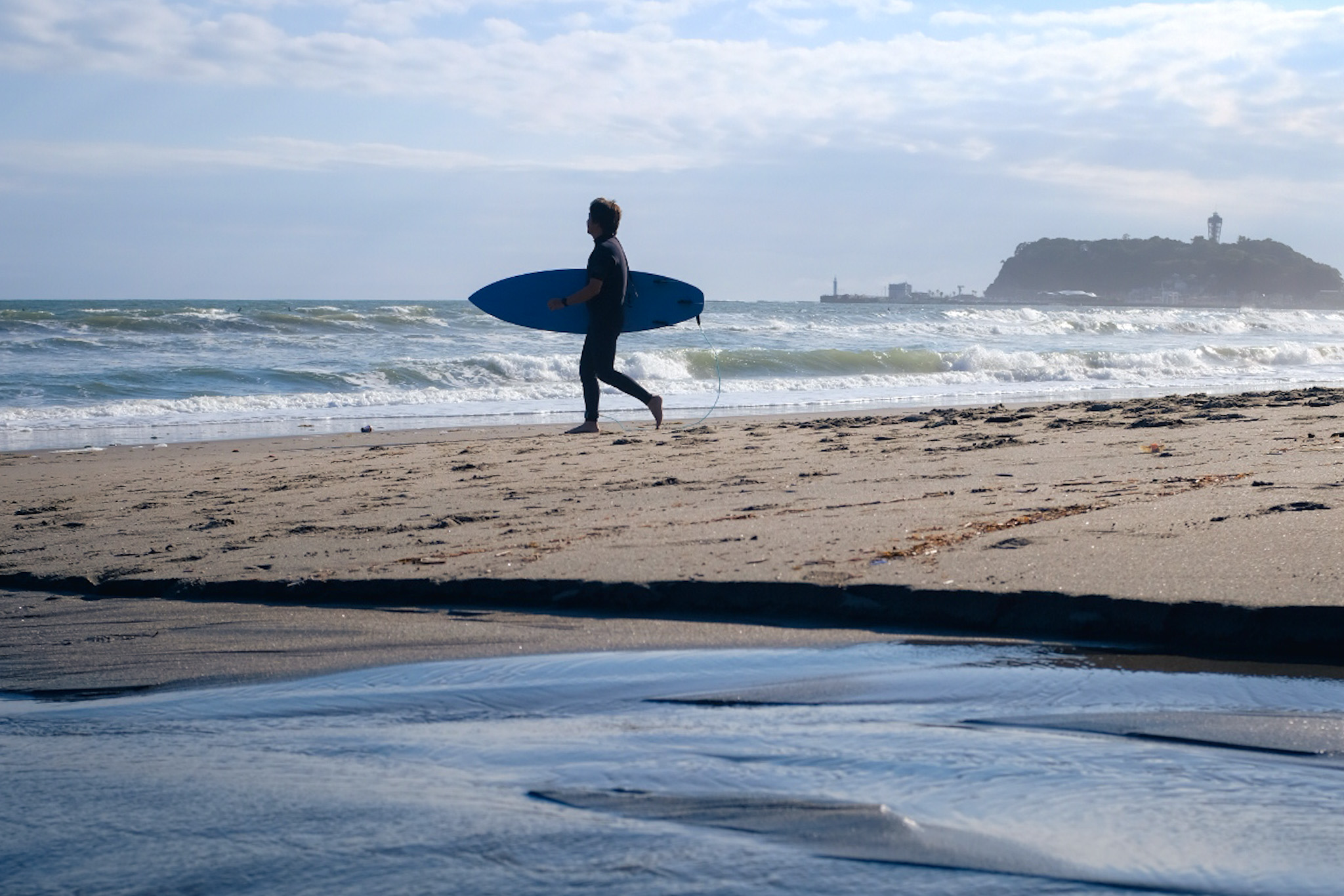
The dark sand on the beach glistens in the warm sun. Men with grey hair walk into the water in wetsuits, their boards under their arms. They’re not the youngest anymore, but they can surf. What a life. They laugh, wave and shout to each other. We plough past them with a touch of envy.
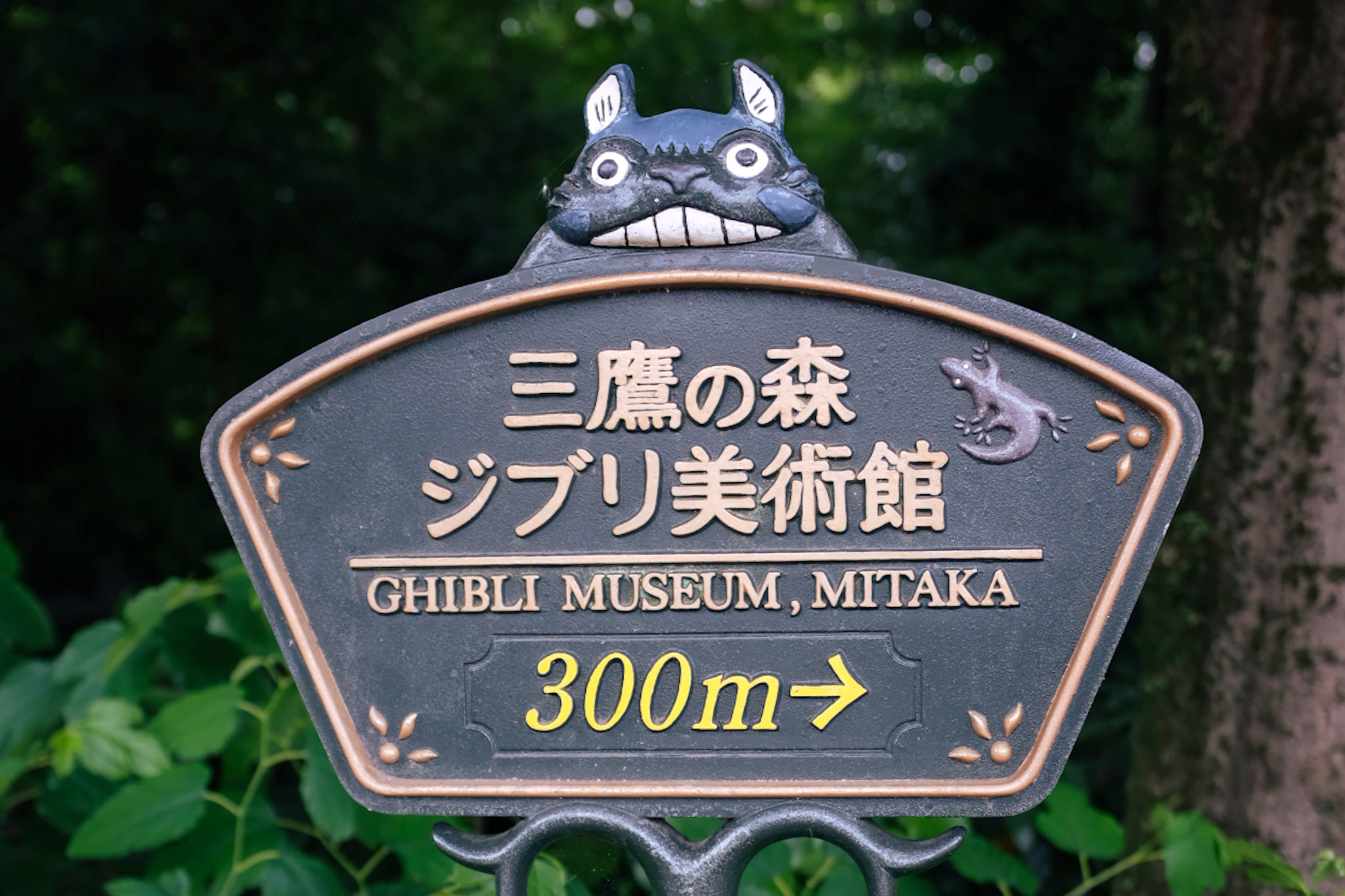
Our last full day in Tokyo (and Japan) is a special one. In the Mitaka district, we visit the Ghibli Museum. It’s special even from the outside. The building stands in the middle of a quiet park where an old man is practising his tai chi; it has colourful rounded walls and is largely overgrown with ivy. At the entrance, you’re greeted by Totoro at a ticket counter.
Inside, it’s even more beautiful. The museum is largely furnished as a living and working space. It’s as if you’re visiting Studio Ghibli founder Hayao Miyazaki. Everywhere there is furniture, tables and cupboards covered with papers, books, sculptures and pencils. I find a book with photographs of plants, flowers and European buildings. A collection of inspiration. On the walls hang storyboards from films such as Nausicaä of the Valley of the Wind, Porco Rosso and Spirited Away. There is a separate room featuring original artwork from Ghibli’s most recent film: The Boy and The Heron.
The museum has its own small cinema. Upon entering, you are given a ticket featuring unique stills from a Ghibli film. Mine shows a tree bathed in golden sunlight; one day I’ll find out exactly which film it’s from, but not today.
In the cinema, we watch The Day I Bought a Star, a short film from 2006 that can only be seen here. There are no subtitles and the dialogue is in Japanese. So I don’t understand a word, but I get the gist and can’t take my eyes off the screen. My love for Japan is largely thanks to the Ghibli films I discovered during my teenage years. A whole new world opened up to me when I saw Spirited Away (and, before that, Miyazaki’s Lupin film The Castle of Cagliostro). It doesn’t escape me how special it is that, after years of watching anime series and films, reading manga and playing Japanese games, I’m finally here in this country myself, sitting in this very place watching original Ghibli work. For me, this museum is the icing on the cake of this trip and a wonderful way to round it off.
I have been asked a number of times whether I experienced culture shock. Certainly not in the sense of finding yourself in a completely different world, where everything is strange and nobody understands one another. Perhaps the biggest shock is the realisation of how blunt and self-centred our own culture in the Netherlands is, a culture that seems set to become even more impoverished in the coming years.
I know, this was my honeymoon period. A budding love, viewed through rose-tinted glasses. Organised Japan. Where nobody jaywalks, where cars are polished to a shine, where everyone waits in a neat queue to board the train. Where you can grab an iced coffee from a vending machine for 60 cents. Where people bow to one another and where you can go and sing for an hour on your own in a karaoke bar without anyone batting an eyelid.
That’s another way of looking at it.
I hope you enjoyed this Japanese interlude! Next week I’ll be back to the regular schedule for this newsletter. You’d be doing me a favour by subscribing for free!
---