
75. Fighting for what you love*
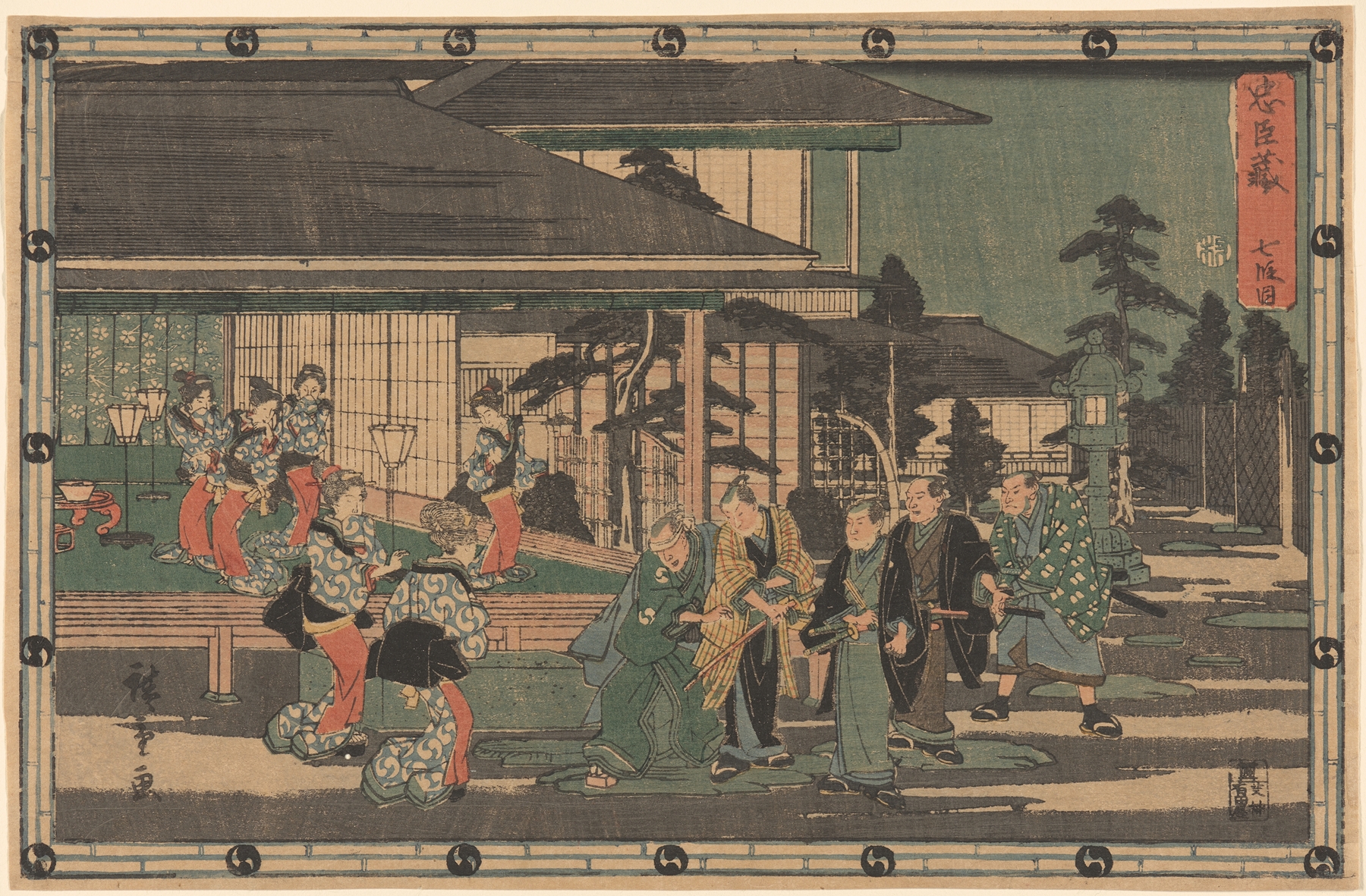
I.
Seven Samurai is celebrating its 70th anniversary. This is being marked with a 4K restoration of the film, which has already been screened in a few cinemas internationally. I hope there are Dutch arthouse cinemas (at least EYE, if nothing else) that can open a screening room for 3½ hours for this classic.
Ever since Peter Bogert wrote about it in his film newsletter last May, I’ve been keen to watch Seven Samurai again. That was a while ago, but back in my teenage years it was definitely one of the films that blew me away and sparked my love for the medium. Having spent a free Saturday afternoon watching it, I’ve come to the same conclusion again: Seven Samurai remains one of the best films ever made.
The film is about a small village of poor farmers. Bandits have their eyes on their harvest and are threatening to raid the farmers as soon as the crops are brought in. Because the farmers would then lose everything, they set out to find help. And to do so, they must assemble a team of seven samurai warriors who are willing to help them for a pittance. Before you know it, as a viewer you are swept up in a grand story that is skilfully told on a small scale by master director Akira Kurosawa.
Two things struck me this time. Firstly, everything in this film is alive: not just the characters, but also the camerawork and the setting. Even the wind is animated. Secondly, I always thought the seven ronin were the great heroes of this story. In a sense, of course, they are. But one might wonder who Kambei Shimada is referring to when he says: ‘We have ultimately lost this battle again’: the fallen or the survivors? In Kurosawa’s films, the futility of warfare is often touched upon. A samurai lives for battle; what is left to live for once the battle is over?
---II.
As a photography enthusiast with an iPhone, I’ve been a fan of Halide for years. The camera app gives you more control over what you capture. With the phone’s standard camera, a magical Apple filter is automatically applied, which corrects imperfections. This means, for example, you’re less affected by backlighting. The software makes bright light less intense and boosts the light in the shadows.
The creators of Halide are clever, including in their marketing. At a time when every other app is adding artificial intelligence, Halide has opted for the opposite with Process Zero. Simply put, this feature disables all the algorithmic processing that Apple’s camera app performs automatically. The Anti-Intelligent Camera.
“The iPhone’s algorithms have become increasingly sophisticated over the years,” write the developers. “But we believe our approach is the only reliable way to give users total control over shutter speed and other exposure settings.”
There are some limitations, however. With this feature, only the 12-megapixel resolution remains, and there is slightly more noise in the photos. It is precisely within this limitation that the space for beauty emerges.
III.
On The Late Night Show, Nick Cave and Stephen Colbert spend 22 minutes (where do you see that these days?) discussing, among other things, the impact of music, working with Johnny Cash and coping with loss.
Cave was asked to read an excerpt from his Q&A newsletter The Red Hand Files. He reads a fan’s question – asking whether he still has faith in humanity – and offers a beautiful answer. “It took a devastation to understand the idea of mortal value, and it took a devastation to find hope.” The full interview is on YouTube.
---PS.
He was 88 years old and had been ill for some time, but I still feel a sense of sadness as I write about the passing of actor Alain Delon. Le Samouraï is one of my favourite films. Delon plays the lonely mercenary Jef, who navigates a rainy, beige-and-blue Paris in a long coat. Those bright eyes, one of the most handsome actors on the silver screen. The very definition of ‘cool’. Delon’s private life always cast a shadow over his career, partly due to his links with the underworld, misogynistic remarks and violence. Yet in 2019 he received a well-deserved Honorary Palme d’Or at the Cannes Film Festival for the films he made. Festival director Thierry Frémaux would have none of the criticism: “It is a lifetime achievement award, not a Nobel Peace Prize”.
The Volkskrant has published a fine obituary. ‘Handsome as a god’, political provocateur; as an actor, Alain Delon (1935–2024) always remained unfathomable.
I’m pretty good at keeping Lowlands FOMO at bay, but it was a close call when I watched the 3voor12 recording of James Blake. He was performing at Lowlands as a replacement for The Smile, of whom he says he is a big fan. Apparently, he’s also a fan of that other band by Thom Yorke and Jonny Greenwood. Because he played a wonderful Radiohead cover. The Lowlands recording isn’t online (yet), but James apparently plays it more often, as he did here in Barcelona.
---The acclaimed HBO series How to with John Wilson has been nominated for two Emmy Awards. And although the third season was the final one, Wilson has still made a mini-episode for his Instagram page: How to win an Emmy. In it, he visits Michael Imperioli (Christopher in The Sopranos), who shows him his badly battered Emmy.
I’m playing Rise of the Ronin, as I fancied a samurai game after Seven Samurai. Rise of the Ronin is set later, in 1863. At a time when ships from the West are arriving and Japan is slowly opening up. Not everyone agrees with this, and the game is set against the backdrop of that political unrest. The story is told in a rather dry (even somewhat boring) way, but I’m having a great time ticking off all sorts of tasks and sub-missions. Particularly thanks to the timing-based combat system, which plays wonderfully.
---I’m reading Moonbound, the latest book by Robin Sloan. I’m really enjoying his sci-fi fantasy epic so far. Sloan is a brilliant writer who wraps you in a warm blanket and sweeps you away on a grand adventure featuring a boy in a world of wizards and talking swords.
Naomi watches the most disturbing images on the internet for Offlimits, so you don’t have to. I was invited along for an interview.
Sit back, relax and read Cory Doctorow’s speech at the Defcon 32 hacker conference in Las Vegas, which begins as follows:
> What the fuck happened to the old, good internet? > > I mean, sure, our bosses were a bit too keen on surveillance, and they were usually happy to share their data with the NSA, and whenever there was a toss-up between user security and growth, it was always YOLO time. > > But Google Search used to work. Facebook used to show you posts from people you followed. Uber used to be cheaper than a taxi and pay the driver more than a cabbie made. Amazon used to sell products, not Shein-grade self-destructing dropshipped rubbish from brands with names full of consonants. Apple used to defend your privacy, rather than spying on you with your no-modifications-allowed iPhone. > > There was a time when searching for an album on Spotify would actually get you that album – not a playlist of insipid AI-generated covers with the same name and artwork. > > Microsoft used to sell you software – sure, it was buggy – but now they just let you access apps in the cloud, so they can watch how you use those apps and strip the features you use the most out of the basic tier and turn them into an upcharge. > > What – and I cannot stress this enough – the fuck happened?! > >
** Freely adapted from Willem - Voor wat je lief is.*
I’d really appreciate it if you’d subscribe to this newsletter. Every Sunday, I’ll send you a new edition free of charge. And do share it with a friend!