85. Interlude
I.
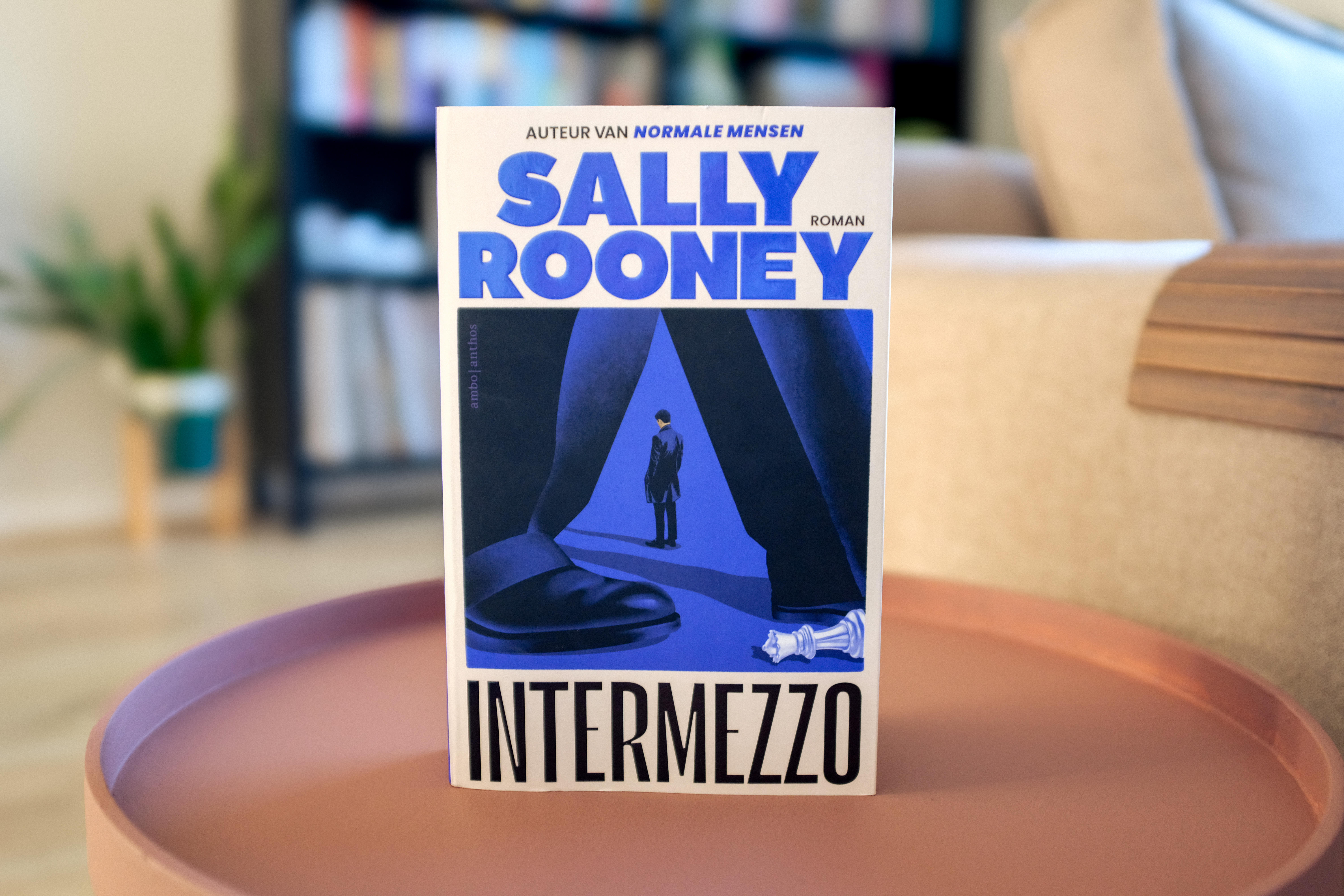
Intermezzo is Sally Rooney’s best book to date. Let’s get that out of the way first. The book tells the story of two brothers trying to pick up the pieces after their father’s death. Both also have turbulent love lives. Peter (32) still frequently seeks out his great love Sylvia, even though they have split up, whilst also sharing a bed with Naomi, a student ten years his junior, who largely lives off his money.
Peter’s younger brother Ivan (22) is a high-level chess player and one day meets 36-year-old Margaret, who is going through a divorce from an alcoholic husband. They fall in love, and this turns everything upside down for the withdrawn Ivan (but also for Margaret).
In the novel, Rooney depicts a handful of characters and their relationships, which become increasingly tangled. Love is, after all, complicated, especially when you add shame, age differences and grief to the mix.
Rooney is a sharp writer who knows exactly what she’s doing. This time, she actually gives the main characters their own distinct voices by tailoring her writing style to them. If you follow Ivan, you’ll read thoughtful, drawn-out sentences. Peter’s life is a lot more hectic, so Rooney sometimes doesn’t even finish her sentences. In a few words, brushstrokes, you tumble through his mind.
Rooney is sometimes criticised for her stories meandering a bit, for not much happening. Yet she masterfully draws you in, particularly through the characters’ conversations and the drama that builds up around them. As a result, the story may seem to meander, until you suddenly find yourself in the middle of a torrent. As a reader, you get swept up in it without realising it, and that is incredibly skilful.
Ever since her debut Normal People, a new book by Sally Rooney has generated huge hype and guaranteed sales success. You might be cynical about that, but if she keeps writing books like Intermezzo, I’ll be buying them the day they hit the shelves.
II.
I am named after Rutger Hauer. That creates a curious bond, much like people with whom you happen to share a birthday. Incidentally, I could also have been called Floris, as a knight of that name apparently made an impression on my parents.
The documentary Rutger Hauer - Like Tears in Rain has recently been added to NPO Start. Made by his goddaughter Sanna Fabery de Jonge. The film shows how Hauer built his career in the Netherlands and then made his breakthrough in Hollywood. The Amsterdam native was constantly seeking adventure and freedom, but always did so with his anchor in mind: his beloved Ineke in Friesland, to whom he kept returning whenever he could between filming.
Hauer had the looks to go far, though he remained an outsider in Hollywood. Actress Miranda Richardson describes him as “a terrifying, lovable god”. People could be quite taken aback by his no-nonsense attitude. Hauer didn’t need to make friends in the film world, though he did keep a few. Whoopie Goldberg and Mickey Rourke, for example, speak in the documentary.
As does Paul Verhoeven, who calls him the most important actor the Netherlands has ever had. He looks back with regret on the film Flesh and Blood, which Hauer actually wanted to be part of, but Verhoeven held him to his contract. In hindsight, it did his career no favours. “That film didn’t help him,” says Verhoeven. “It might even have worked against him. He shouldn’t have made it. Really.” The two eventually made up, but never worked together again.
Anyone can act, says Hauer. You have to work like a beast, that’s all there is to it. The film builds up to Hauer’s improvised speech as the android Roy Batty in Blade Runner. He had wonderful ideas about how he wanted to shape that role, namely by infusing it with poetry and sexuality. “Things that belong more to humans than to batteries.”
III.
More horror!
I always thought Carrie was a grim, scary film, but it turns out to be primarily a sad coming-of-age story about (the loss of) trust, innocence and love. Carrie’s mother has gone off the deep end with religious fanaticism, resulting in Carrie being raised in a bubble. At school, she is severely bullied because of this. To make matters worse, she discovers she has telepathic powers. An ultimate humiliation ultimately transforms Carrie into a horror icon in this cult classic. A beautifully shot film, too!
*Trick 'r Treat* is an omnibus film in which you follow a number of people on Halloween night. These are short films in their own right, but the stories do overlap a little. Whatever you do, don’t carve a Jack-o’-lantern before midnight. An entertaining film. ---PS.
My favourite gadget of the year has a successor. Though you don’t need to switch straight away if you’ve only just got the previous version. The Boox Palma 2 (a phone-sized e-reader) has a newer version of Android, a faster processor and a fingerprint scanner. It costs the same as its predecessor: 300 euros.
Can an AI character be blamed for the death of a teenager? The New York Times explores this question using a harrowing example. A very compelling story.
The album Song For Our Daughter was already so beautiful, and four years later Laura Marling has released another gem. Patterns in Repeat is often nothing more than Marling with a guitar or piano (and the occasional horn or string) and the songs wrap around you like a warm blanket.
---Netflix is rolling in money, so it says ‘yes’ to every idea and scraps projects that ultimately don’t work out. The New York Times describes this in detail in the article How Everyone Got Lost in Netflix’s Endless Library. Worse than this approach is the emptiness of the films and series (the content, I might almost say) that remains. The visuals always look solid, famous actors star in them, but where is the inspiration and when does it ever really pack a punch? These days we talk about AI slop; AI-generated images devoid of meaning that, taken together, form a meaningless grey mush. Netflix is well on its way to earning such a ‘slump’ label too.
But there is a ray of hope on Netflix. If you switch the language to English for a moment, you can watch Dragon Ball Daima, the final work by the artist Akira Toriyama, who passed away earlier this year. It is a direct sequel to the hit anime Dragon Ball Z and if you read this piece by Bas Vroegop in NRC, you’ll immediately want to watch it.
---I’d really appreciate it if you’d subscribe to this newsletter. I send it out every Sunday. Tips and feedback are always welcome!