
97. Catching the big fish
I.
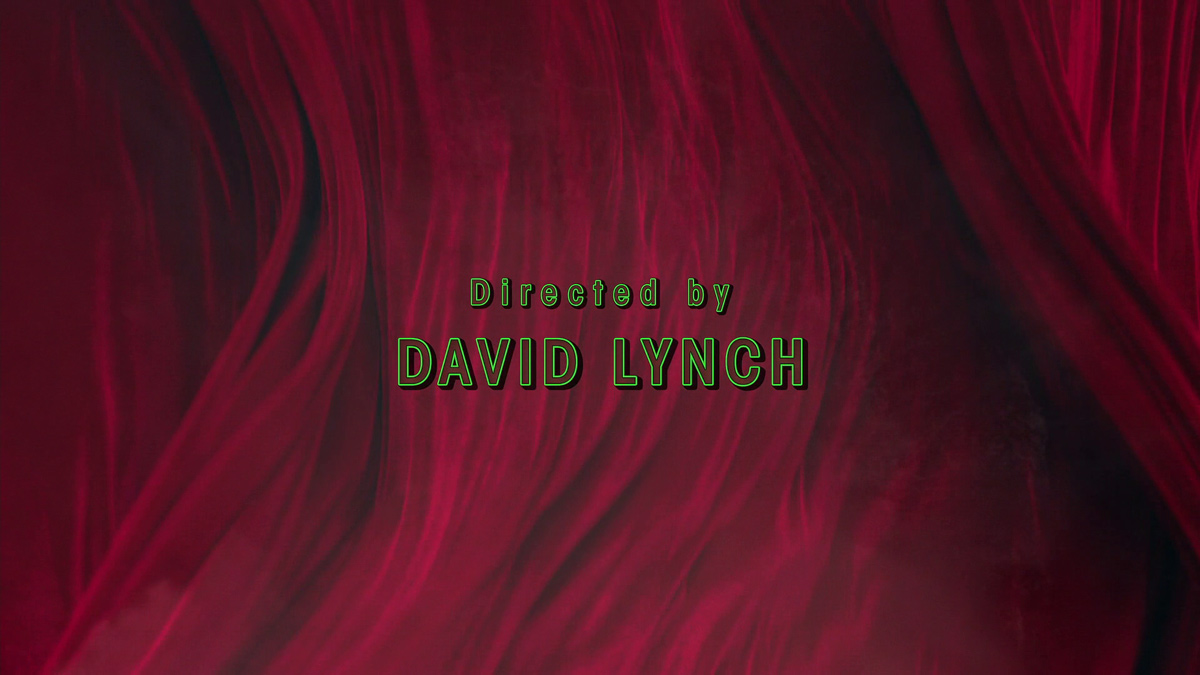
David Lynch is no longer with us. It took me by surprise; you cannot underestimate just how unique his voice was in the world of television and film. He revealed the beauty of decay and the decay of beauty. You can lose yourself in his nightmares and cling to the intangible.
You either love Lynch’s work or you’re not open to it. There is no middle ground. In Catching The Big Fish, his autobiographical self-help book, Lynch writes about why it is absurd that, as a director, he should have to explain what his films are about. “People sometimes struggle to understand a film,” he writes. “But I think they understand more than they realise. Because we are all blessed with intuition – we have the gift of sensing things.”
Lynch’s films can feel abstract, but according to the filmmaker himself, it is not necessary to be able to explain them. “People long to make intellectual sense of it, to put it into words. If they can’t, it feels frustrating. But they can find an explanation within themselves, if they allow it.”
David Lynch was spiritual. YouTube is teeming with videos in which you can hear him speaking passionately about creativity and finding ideas. I can recommend looking for them; it is endlessly inspiring. According to him, ideas are everywhere, like fish in the sea; you just need to know how to catch them.
He was an artist in the purest sense. In behind-the-scenes footage on the set of Twin Peaks: The Return he gets involved in how dark the black on screen should be. With great passion, he explains to the painter why it is so important that it is dark enough. Everything counts in Lynch’s work; dark is never just dark. In the book Lynch on Lynch, he explains that black contains depth. “You can go into it. Then you start to see what you’re afraid of. Then you see what you love, and it becomes like a dream.”
It was a dark day when Lynch passed away. I cannot describe the exact shade, but I can feel it.
PS. Following David Lynch’s death, I wrote [this obituary for NU.nl](https://www.nu.nl/film/6342610/david-lynch-was-a-unique-artist-who-excelled-in-dreams-and-darkness.html).II.
On a cold and dark weekend day, I went to see Nosferatu by director Robert Eggers. His earlier works, The Witch and The Lighthouse, are not to be missed. His latest film is a retelling of Bram Stoker’s book Dracula, in the style of the 1922 film Nosferatu, eine Symphonie des Grauens. This is a true retelling that remains very faithful to its sources. If you’ve ever heard or seen the story of Dracula, this version won’t surprise you.
Eggers does, however, opt somewhat more for the folkloric portrayal of the vampire from Nosferatu, as the demon who brings a deadly plague to every place he visits. It is therefore as Elise van Dam writes in Het Parool: “The fact that you can nevertheless see a reflection of the Covid pandemic in his Nosferatu is precisely what makes these kinds of repeatedly retold stories so powerful: they act as a prism. Every era in which they are retold casts its own light through it, causing it to refract in a slightly different way.”
Do go and see Nosferatu for the way the Gothic horror is brought to life on screen. When the doors of Count Orlok’s castle swing open for the first time and you see the silhouette of the vampire standing in the distance, a shiver runs down your spine.
---PS.
This week’s prize for The Most Worthless Use of AI goes to… fashion magazine Harper’s Bazaar. Thomas Heerma van Voss noticed that Harper’s Bazaar had included his novel Het archief in a list of the five best Dutch books. He must have felt somewhat honoured, until he read a description that bore no resemblance whatsoever to the content of his book. This had to be the work of ChatGPT. Harper’s Bazaar buried its head in the sand, but amended the text without further correction. “These are all steps that further erode the truth,” writes Heerma van Voss about the incident. “A process that is already having terrible consequences worldwide. And so people stumble ever further, heading for ruin.”
This website collects photos of American bowling alleys. The photographer is Kevin Hong, who also bowls himself. Over the years, he has photographed 140 bowling alleys in 25 US states and a few in Canada.
I wasn’t familiar with the Amsterdam-based artist Cero Ismael, but I came across this video of his new track DRIVING ROUND LOOKING FOR UNKNOWN and was immediately intrigued. What a wonderfully bizarre piece of work.
---For anyone wishing to delve into the history of Nokia, there is now the Nokia Design Archive. An extremely detailed overview of Nokia phones through the years, curated by Finland’s Aalto University. Featuring information, images and videos from 1990 to 2017. A niche within a niche and quite overwhelming, but it’s great that this exists.
Nick Cave is joining British fashion designer Bella Freud on the sofa for her podcast Fashion Neurosis. It’s always a pleasure to listen to Cave. This time, they spend around 80 minutes discussing clothing, chaos as the enemy of creativity, swimming in cold natural waters and much more.
---Thanks for reading. Have you subscribed yet?