
ABBA Voyage: Back in time with the concert of the future
Two thoughts keep alternating in my head:
- This is absolutely impressive.
- I wish I were a bigger ABBA fan.
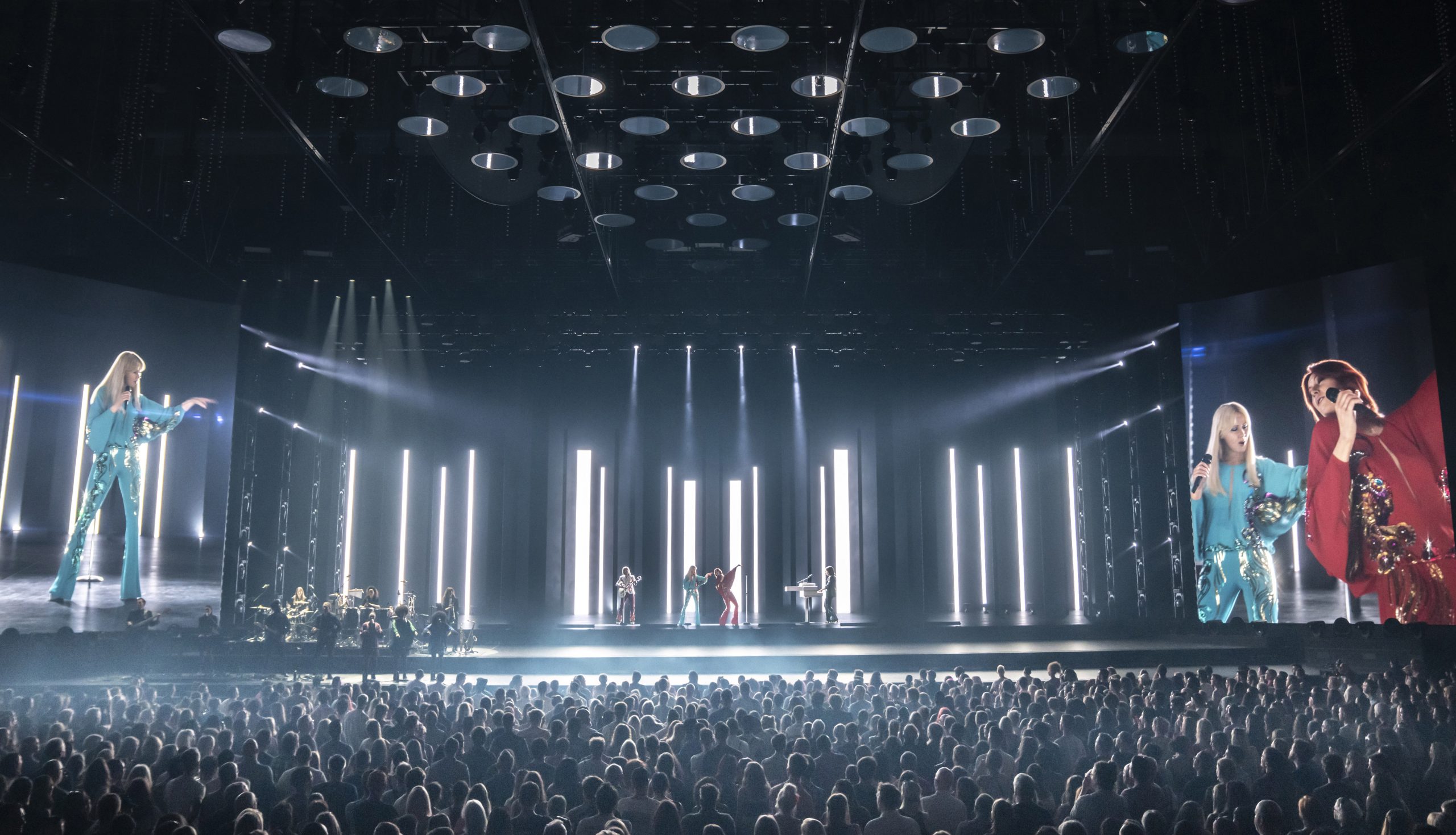
ABBA Voyage is a series of concerts in the ABBA Arena, built specifically for this purpose just outside central London. There’s a show every day, sometimes even two. The real ABBA aren’t performing. The quartet disappeared from the stage after 1982. In London, you watch holograms of the band. The members have immortalised themselves as virtual avatars (they call them ABBAtars, get it?). So they’re computer-generated images. And they look lifelike.
For the first few minutes, I watch the virtual band with utter amazement. After blinking four, five, six times, I still don’t understand how this is possible. As far as I’m concerned, ABBA are really up there on stage. Sleeves flutter along their arms as they wave, the glittering outfits reflect the lights, and when spotlights come from behind, you can see the shadows of their legs through the dresses.
From Tupac to André Hazes
It’s convincing, I’d say. ABBA isn’t the first hologram concert, either. The band joins a long line of performing holograms. Rapper Tupac Shakur’s virtual performance is one of the best known. In 2012, people were in shock when Snoop Dogg pulled him onto the stage during a performance at the Coachella festival. Tupac had already been dead for sixteen years by then.
It was truly a moment to remember. Tupac’s hologram rises from the stage floor, addresses the audience and then performs with Snoop Dogg. The two even interact with each other a little. After a few songs, Tupac suddenly turns into stardust and vanishes into thin air. Gone he is again. It is mind-blowing (or hologram-blowing) to watch and, according to many, deeply moving. In comments under the YouTube videos, viewers struggle to find the words to describe the goosebumps they’ve got.
You can read the same comments under videos of André Hazes, who [performed as a hologram](https://www.youtube.com/watch?v=yObELVtu860) during the Holland Zingt Hazes concert series (according to the website, “the place where Hazes is still the boss”). Towering above everything and everyone in the Ziggo Dome at the top of a grand stage staircase, the singer—who died in 2004—looms large. To stir up even more emotion, he also sings a duet with his son André. In 2020, the (improved) hologram returns for [a duet with daughter Roxeanne](https://www.youtube.com/watch?v=I5XF4Q0TkjQ).In a way, it is fitting that Tupac and André Hazes look like ghostly apparitions. Their bodies are translucent and an eerie blue haze hangs over them. It is clearly not real, and yet everyone believes they are there.
The spirit of Pepper
Now I must nitpick for a moment. Everyone (myself included) calls these apparitions holograms. But they aren’t actually that. We are looking at an illusion called Pepper’s Ghost. Real holograms are, in fact, fully three-dimensional images created using lasers. In the case of Pepper’s Ghost, a 3D image is projected onto a flat, i.e. 2D, (transparent) screen.
This technique has been around for 161 years. In 1862, London professor Henry Pepper projected an image onto a transparent glass plate, making it look as though a ghost was standing on stage. Since then, the technique has been seen in many places. In the Netherlands too, as these kinds of ghosts have been floating about for ages in the Haunted Castle at Efteling.
And so you can use it to conjure up deceased superstars. After Tupac at Coachella, the floodgates seemed to open. A whole string of artists followed, appearing on stage as ‘holograms’ after their deaths: Frank Zappa, Roy Orbison, Ronnie James Dio, Maria Callas, Michael Jackson and Whitney Houston.
Light and magic
ABBA now joins that list. The difference is that all the ABBA members are still alive. The advantage of this is that the septuagenarians themselves had complete control over the performance of their ABBAtars.
To achieve this, the quartet were fitted with a special suit, which allowed the computer to record all their movements and facial expressions. It was then up to the animators at Industrial Light & Magic (originally founded by director George Lucas for the visual effects in Star Wars) to transform the band members into virtual characters. Who, incidentally, look decades younger.
Industrial Light & Magic has, incidentally, done this before. The character Grand Moff Tarkin in Star Wars: Rogue One (2016), for example, is entirely digital, though he is based on actor Peter Cushing, who played the role in 1977 but died in 1994. It looks incredibly lifelike. And the digital rejuvenation process was applied, for example, to Princess Leia (played by the late Carrie Fisher).
In any case, Star Wars is the first thing that springs to mind when I think of a hologram. You can see a hologram as early as the first film, A New Hope (1977). A ‘real’ one, at that, in 3D. When Luke Skywalker takes his robot R2D2 to Obi-Wan Kenobi, the robot projects a virtual Princess Leia who begs the old Jedi for help. It became an iconic film scene.
In Star Wars, characters constantly appear as holograms. Whereas we video-call and see each other in 2D on the screen, in Star Wars people appear as 3D light sources during a meeting. Tech companies have been trying to turn this science fiction idea into reality for years. Augmented reality already makes it possible to a certain extent. There are glasses that project images onto the lenses, making it seem to the wearer as though a virtual object or person is actually present in the environment.
The hologram is inextricably linked to science fiction. It is an image of the future. In Blade Runner 2049, holograms have become life partners. In Her, we see how a hologram from a game fills the living room, making it seem to the main character Theodore (Joaquin Phoenix) as if he is completely immersed in it. In the game Cyberpunk 2077, giant holographic fish swim above the city and holograms are used as a sort of meat substitute in strip clubs.
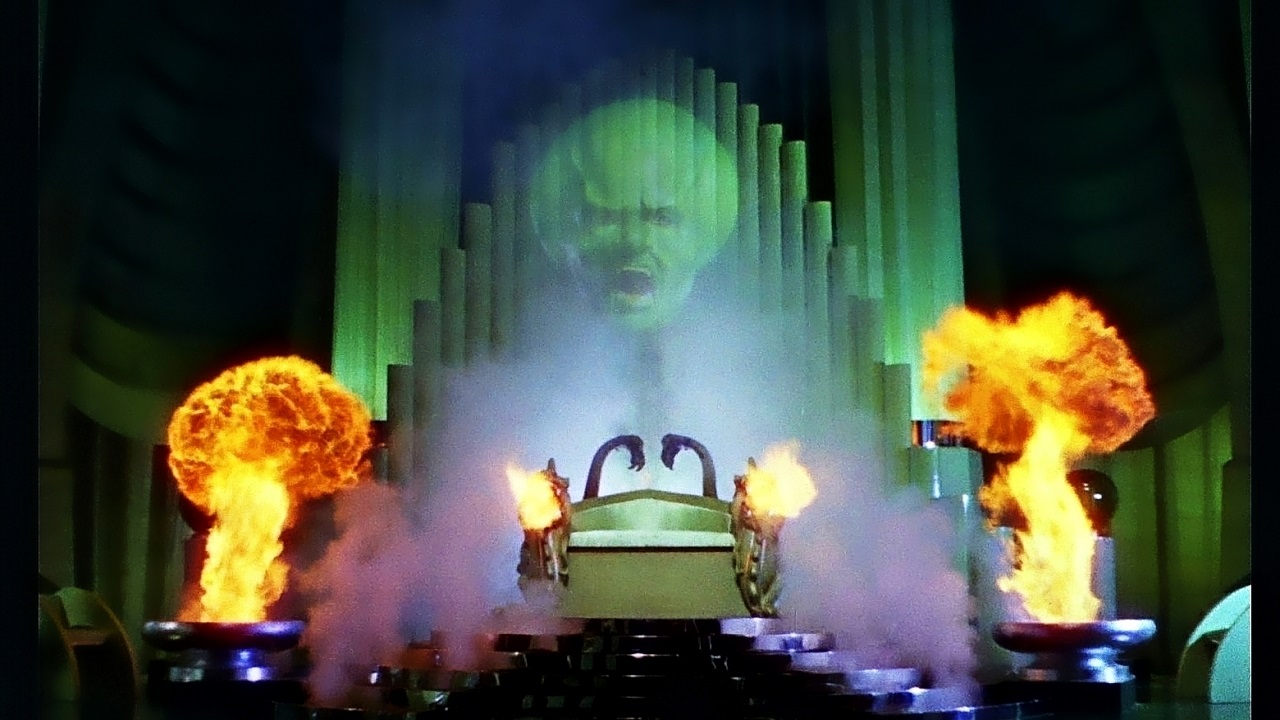
But holograms also play a role in older films. For example, in the 1939 film adaptation of The Wizard of Oz. At the end of their journey, Dorothy and her friends finally find the wizard they have been searching for throughout the film. The Wizard appears to be an imposing figure. A green face and a booming voice. The projection appears amidst smoke and fire. Until the little dog Toto runs towards a curtain and thereby exposes the man operating the hologram. “Don’t pay any attention to the man behind the curtain,” he shouts through the microphone. But by then, the illusion has already been broken.
Anyway, back to ABBA. Back to the seventies. On the night of the concert, many people have turned up in full style (read: glitter). The audience is predominantly British, grey-haired and hysterical. We, level-headed Dutchies, are more restrained. Although my girlfriend is wearing a glittery top.
There are lots of mums with children. I can see why. This evening is a perfect opportunity to show your children a bit of your youth. A short distance away, the band is simply performing, as if time has stood still.
That’s certainly the case for the first few songs, when they recreate a real concert as much as possible. There’s even a live band. A little way behind them, ABBA are on stage. They’re dancing, having fun together and singing towards the audience. Sometimes they even manage a few words. A great deal of attention has been paid to the lighting of the ABBAtars, to make them as realistic as possible. It’s also clever how the virtual lights blend seamlessly into the physical lights in the auditorium. This creates a sense of depth that doesn’t actually exist.
Huge screens beside the stage show close-ups of Agnetha, Björn, Benny and Anni-Frid, from various angles too. Yet the holograms are actually completely flat, so that shouldn’t be possible at all. Every trick in the book is pulled out to create a concert that’s as realistic as possible. We’re all falling for it.
The illusion lasts longest when you simply look at the stage. However well it’s made, the CGI animation becomes visible in the close-ups. And then it becomes the uncanny valley: you can see people, but they’re just not quite human. You can tell by the eyes lacking a sparkle and the mouths that don’t quite move naturally.
ABBA as a video game
Sometimes the ABBAtars disappear and a huge screen fills the entire stage. Close-ups of band members slide over and past one another as we listen to the next hit. The performance is now a giant music video.
These are the moments when the concert loses its live feel. This happens especially when we don’t see ABBA at all during a few songs. They are replaced by animated clips about an explorer visiting all sorts of locations. In search of an ABBA crystal, or something like that. No idea, really, what it has to do with the rest of the concert.
The rest of the audience doesn’t seem to mind much. In any case, a large part of the audience seems to have already forgotten after ten minutes just how fantastic the technology behind the show is. Everyone is dancing and singing as if they were at a disco with friends whilst ABBA is on TV.
Later, the band members appear on stage in a sort of Tron-style outfit. They’re set against a futuristic computer-generated backdrop with streaks of light flashing from left to right. The fact that they’re realistic holograms hardly matters anymore, as they disappear into a tsunami of CGI. The performance feels like a tech demo; it’s a real show of muscle from Industrial Light & Magic. Look what we can do. Look how far we’ve come with this.
And rightly so, when you consider that this show cost 175 million dollars to make. We’ve certainly come a long way from the cartoonish avatars of Tupac and André Hazes. “Experience a concert like no other,” says the ABBA Voyage website. And that’s true. You’ve never seen anything like it.
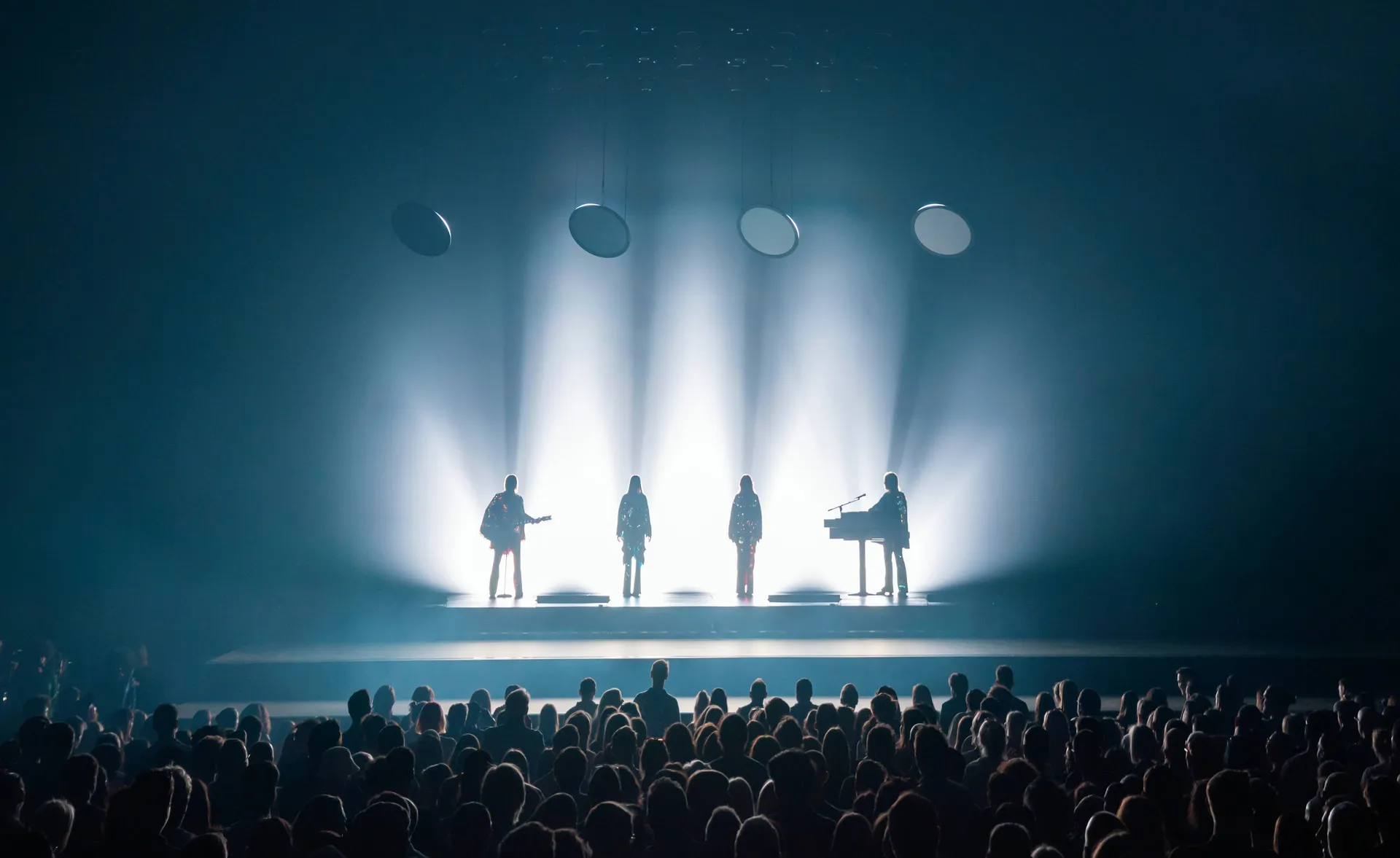
For me, the most convincing moments are when ABBA Voyage goes for a realistic performance. When the band members are singing against a dark backdrop, with no distractions around them. Then it’s as if you’re stepping into a time machine and emerging forty years earlier.
At the moments when ABBA Voyage tries too hard and goes all out with all the bells and whistles, the show goes off the rails. Then it’s more of an attraction than a concert and it becomes fake. You might not see the man behind the curtain, but you do become very aware that there is a curtain there.
‘If only I were a bigger ABBA fan,’ I wrote at the start of this piece. Because then I wouldn’t have given a damn about the illusion being regularly shattered. I can see that in the people around me, who are having the night of their lives. They’ve mainly come to sing along to the hits, shoulder to shoulder in glitter, and to feel the songs right down to their toes. You’ll never get any closer to an ABBA concert than this.