118. How everything changes
I.
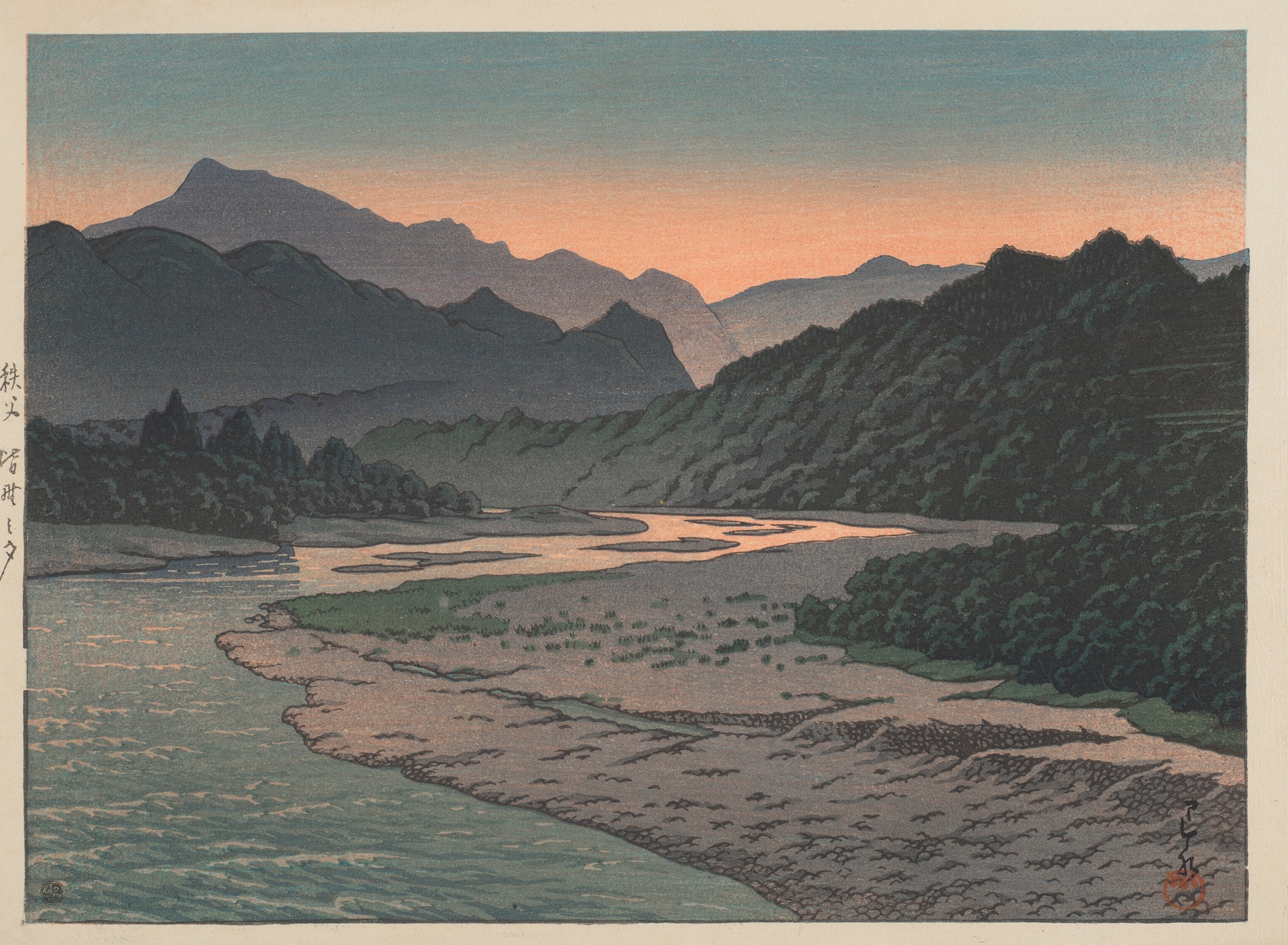
In 2021, photographer and blogger Craig Mod laces up his boots and sets off on a walking tour of nearly 500 kilometres across Japan’s Kii Peninsula. Those who know Mod are aware that this is what he does: walking immense distances whilst creating enviably beautiful texts and images.
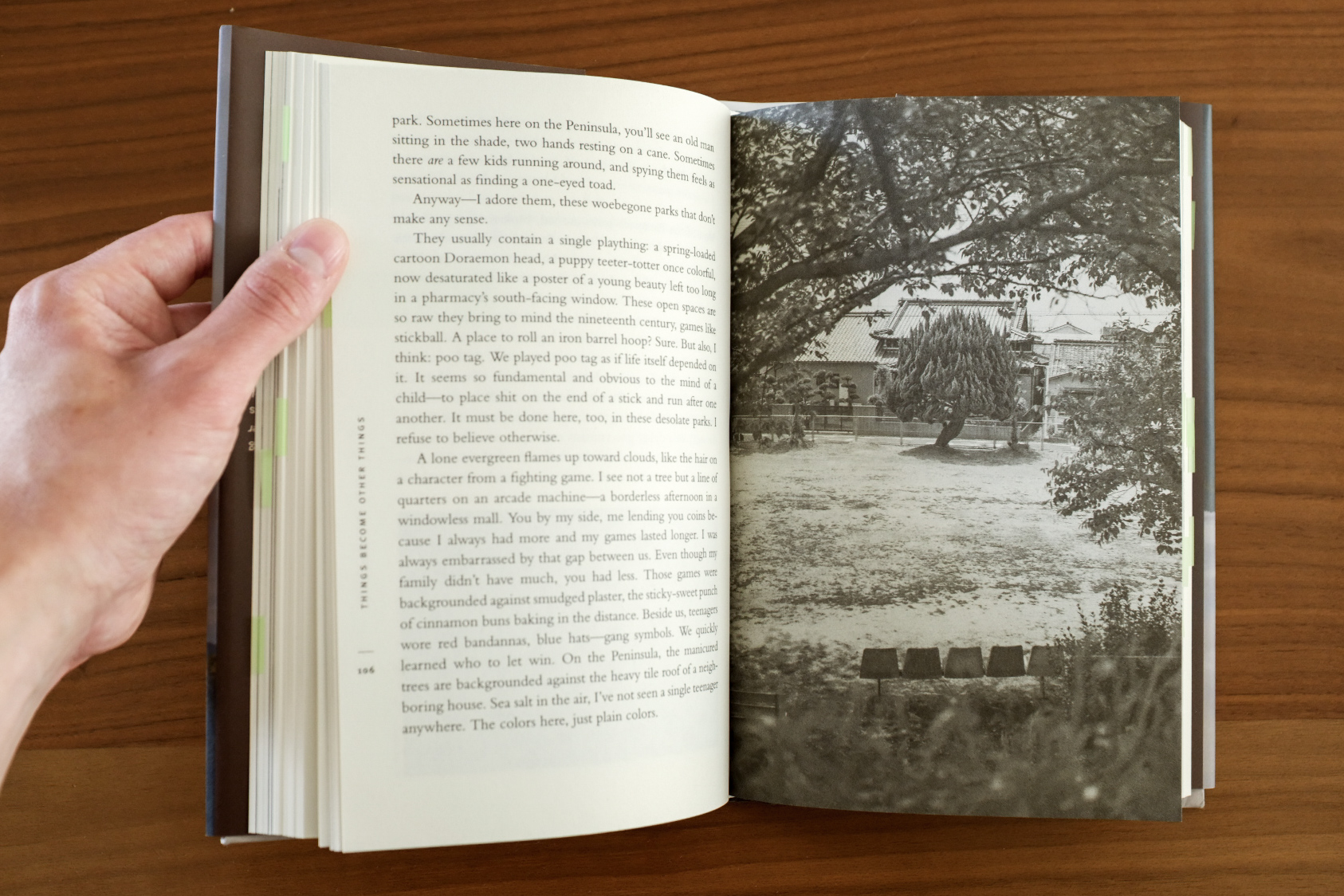
In his book Things Become Other Things, he writes about this himself: “I photograph the people I meet, the things I see, the banality of life. I dictate my observations and thoughts into an audio recording, talking to myself like the bag lady who roamed our suburbs, who walked past our houses. Every evening it takes me three or four or five hours to sort the photos, write up my notes, do the laundry, talk to innkeepers, build up an archive. Where does it all go? Here, you’re holding it now.”
The book is a collection of vignettes of Mod’s experiences in Japan; his writing is addressed to his childhood friend Bryan, who died at a young age. Walking is, after all, meditative and reflective in nature, and thus a perfect activity for recalling and processing memories. The subtitle ‘a walking memoir’ is well chosen. Mod not only takes you across the peninsula, but also reveals a great deal about himself.
He does so unsparingly, without embellishment. One of the most beautiful scenes in the book is about how, as a child, he always turned down his grandfather’s offer to go for a walk together. He asked every time, but Mod never went along. Fear, he writes, that is what stopped him from granting his grandfather that pleasure. Much later in life, Mod visits his grandfather again; they eat in a restaurant and, in the car on the way home, Mod takes his hand. “Later, back home, I heard him telling my mother, ‘Craig held my hand.’ He was crying. This silly thing, holding an old man’s hand. I knew he wouldn’t be around much longer (and he wasn’t).”
It gradually becomes clear that Mod didn’t grow up in the easiest of neighbourhoods. That it’s not as straightforward as it might seem that he has achieved what he has. In a brief aside, he describes how you lose childhood friends, how paths diverge; one leads to happiness, the other to the abyss. Mod makes room for these kinds of themes, but alternates them with fart jokes and light-hearted encounters, ensuring it doesn’t become a heavy book.
Things Become Other Things is a delight, if only for sentences like this: “The meat machine my consciousness inhabits feels well-oiled, irrepressible, and unyielding to these puny mountains.” And I haven’t even mentioned the beautiful black-and-white photographs that adorn the book.
II.
At the back of his book, Craig Mod writes about the typefaces he uses. That makes me happy. Rob van Barneveld does the same in his new booklet De Gouden Poes, which I bought from him on Saturday during the MUS in Utrecht. At the back there is a short ‘making of’ section in which he describes which pens and pencils he used. Van Barneveld has been forcing himself to draw by hand more often lately. “I’ve put my iPad away to force myself to do it,” he says.
De Gouden Poes is a children’s comic book set in Utrecht, about a wizard who lives in the Dom with his cat. A little gnome knocks over a pot of magic potion (it’s always those little gnomes) and as a result the cat turns into gold, after which he goes on adventures around the city. Told with a delightfully dry sense of humour and beautifully published as a small press edition.
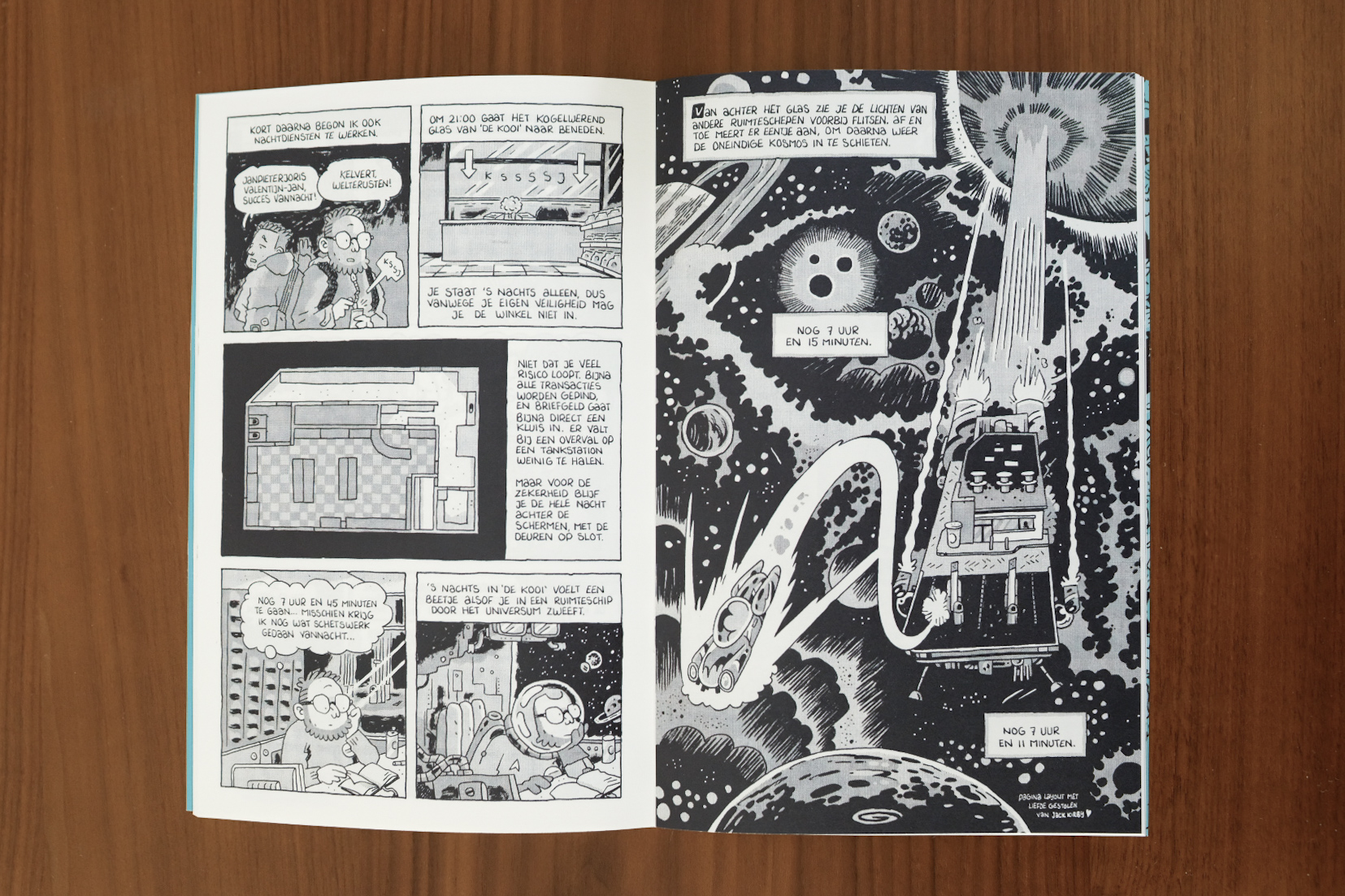
At the same MUS in Utrecht, I bought the new book by Bob op ‘t Land: The Very Best Baby Ever, about the birth of his first child. I consider Op ‘t Land one of the greatest comic talents in the Netherlands, with a style entirely his own (and now, for the first time, a book published by a publisher). His self-published autobiographical comic series Plumbum is also brilliant. The first issue is about a part-time job at a petrol station; a very humorous and personal story.
That issue also features a page he drew as a tribute to Marvel legend Jack Kirby. Op ‘t Land is a huge fan of the work Kirby did for Fantastic Four. “Some of his panels are almost abstract art,” he says. A new volume of Plumbum is due to be published (hopefully, subject to change) at the end of this year.
III.
Three seasons of my beloved series Twin Peaks have been available on the streaming service Mubi since this week. Unfortunately, only the film Fire Walk With Me, which bridges the second and third seasons (The Return), is missing. This is also the case on other services.
There’s been a bit of a stir in the Twin Peaks universe over the past few days anyway, as co-creator Mark Frost has appeared in a number of interviews. Speaking to NME, he revealed that he and David Lynch had been discussing a new sequel to the series. Nothing had been put down on paper yet, and Frost didn’t press ahead because Lynch’s health was deteriorating. “But it was in the air,” says Frost.
Lynch’s passing does not, however, mean that nothing new will ever appear in relation to Twin Peaks. “Who knows?” Frost tells The Sunday Times (https://archive.is/isbSE). “I can’t imagine doing the show without him, but perhaps there are other ways.”
Frost has already written two beautifully published books about Twin Peaks, so a new book would make sense. “I’m certainly thinking about it,” he tells The Standard. “But I want to do it in a respectful way, now that David is no longer with us. I’m not just going to do whatever I want; we’ve set certain boundaries for what is and isn’t allowed.”
- - -PS.
Louis Theroux’s brilliant documentary The Settlers is available on NPO Start. In it, Theroux returns to the West Bank to seek out Israeli settlers and talk to them about their plans to move to Gaza. A group of people look at the smouldering remains of a piece of land that has been bombed to the ground whilst they discuss building their homes there. Theroux is unrivalled in his ability to make films of this kind. Let the madness speak for itself. The documentary has a perfect ending with a metaphor that sums up (the inequality of) the entire conflict.
- - -When Hideo Kojima was seriously affected by the coronavirus, he thought he would never be able to make games again. But he recovered, and this month his latest game is being released: Death Stranding 2. I’m looking forward to it. Kojima is one of my favourite game developers, mainly thanks to the Metal Gear Solid series, but the first Death Stranding eventually won me over too.
This interview with GQ is brilliant. It’s about art, film and succession. Although: “I won’t pass the baton. I’d rather smash the baton… [Laughs.] I don’t need to hand ‘Hideo Kojima’ over to anyone else. If I pass the baton to my employees and tell them to make the same things I do, the company won’t be successful and will go bankrupt.”
Bauhaus Clock is a Mac screensaver that costs $19, but it does give you a lovely clock on your screen.
I went to see Cat Power perform at TivoliVredenburg, where she played the famous Bob Dylan set from 1966, where, after an acoustic set, he ‘went electric’. Afterwards, I heard two people saying to each other that they thought the first half was “really good”, but the second “absolutely terrible”. It’s lovely that this performance still evokes exactly the same emotions as it did seventy years ago, when Dylan experienced the same thing. That pair completely missed the irony. (I thoroughly enjoyed it!)
New album from David Byrne on the way. Who is the Sky? is due out on 5 September. Everybody Laughs is the first single and it sounds lovely and cheerful. On 15 and 16 February, Byrne will be playing at AFAS Live.
- - -You’ve just read blog №118, written during the week of 9 June to 15 June 2025. Subscribe to my free newsletter to receive this blog in your inbox every Sunday.