
143. Virtual garden
I.
Luis Mendo creates his own online world, which he calls Mundo Mendo. On his website, he writes (for paying members) illustrated stories about life. He describes it himself as “a place for fans who want to support my work and a safe space where I can share what I really want to create”. A blog like an garden. He decides which vegetables to plant, how to care to them and where to let them run wild.
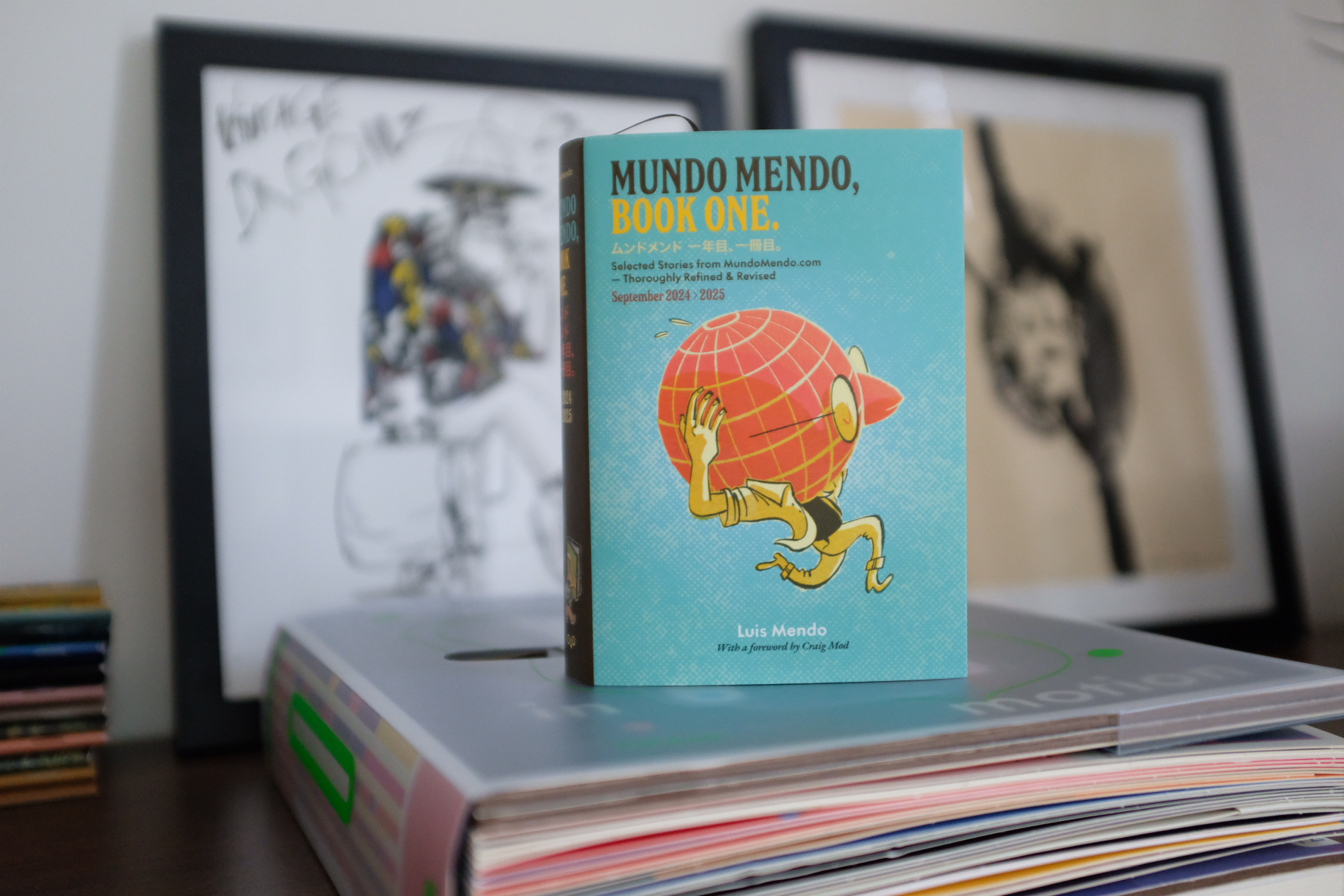
After a year of Mundo Mendo, Mendo collected his best stories in a book that non-members can also buy. It is a beautifully published, compact collection of the illustrator’s personal reflections. The stories often deal with creativity and autonomy. “The experiments and tryouts that you do for yourself today are what eventually you will get asked (and paid) to do tomorrow”, writes Mendo.
Mundo Mendo, Book One is, as far as I’m concerned, a celebration of human creativity, something a computer can’t match. You follow an illustrator as he builds his own little Gaulish village, whilst generative AI threatens to wipe out his profession. Mendo counters this with something radically human. He explains the importance of communication between the lines and not revealing everything in art. We fill in the gaps ourselves: “The real fireworks happen in our brains”.
Imagination is the part of humanity that AI cannot access. “I can’t be bothered to fight the paper versus screen fight, but I will always defend the human versus the machine,” writes Mendo. “Stealing work from creatives is already bad enough, but robbing humans of well-told, original stories is terrible.”
I believe there will always be room for human stories. On the internet, where AI-slop and SEO-optimised websites are everywhere, this is becoming even more important. Later in the book, Mendo quotes writer Anu Atlaru: “AI will flood the zone with intelligence. But as intelligence gets cheaper, presence gets more expensive. Real, earned, interpersonal trust will become the rarest currency (…) When tech is everywhere, people are the new edge.”
Cultivate your own virtual garden!
II.
He has immense talent, Cameron Winter. He is the singer of Geese, the band with whom he released the fantastic album Getting Killed this year. Even before Geese had properly broken through, Winter had already made a world-class solo album in 2024. He performed that solo work this week in the Ronda at TivoliVredenburg.
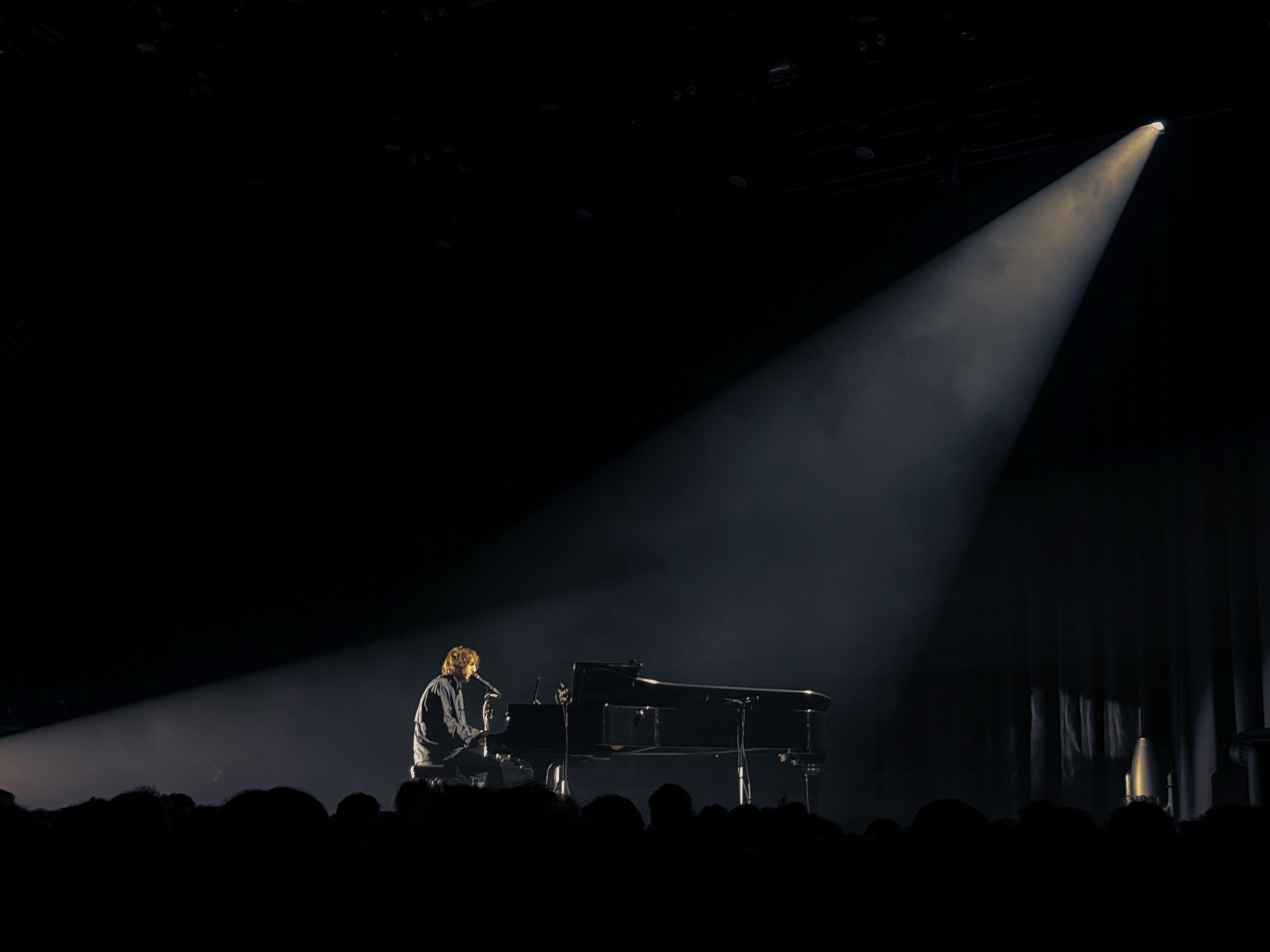
Winter plays his songs at the piano. Half the audience is looking at his back, the other half sees the side of his face. The lighting is dim and a machine is blowing smoke across the stage. If the audience weren’t standing, everyone would be sitting on the edge of their seats to catch a glimpse of the singer and take in every note of the music. You could hear a pin drop for over an hour.
It’s astonishing that this lad is only 23. The talent is undeniably evident. What control over his voice, instrument and audience. He stretches out the end of (my favourite song) $0 endlessly, playing the final notes ever so softly and slightly higher. No one dares to clap until he takes his fingers off the keys. Winter is an enigma, which gives him an irresistible appeal. In interviews he makes things up, and his lyrics don’t make much sense.
Winter plays with confidence, but is a bit shy towards the audience. He hardly says a word. At the end, he thanks the audience and is gone. No encore. When the lights come on, I’m immediately left wanting more. Now it’s a case of waiting until March, when he’ll be playing with Geese at Paradiso. It’s sold out, but I’d say: do whatever it takes to be there.
PS.
Los Campesinos! has shared an overview of the revenue generated by streaming services. Over the course of a year, the band’s music was streamed 9.3 million times across various services. That generated €36,600. Most people listen on Spotify, but that also generates by far the least revenue per stream. Tidal pays the best.
Read this brilliant article by Emily Sneddon on typeface design. Fran Sans is based on the lettering used on San Francisco’s public transport. “What caught my eye was how the displays look mechanical and yet distinctly personal. Constructed on a 3×5 grid, the characters are made up of geometric modules: squares, quarter-circles, and angled forms. Combined, these modules create imperfect, almost primitive letterforms, revealing a utility and charm that feels distinctly like the San Francisco I’ve come to know.”
The website of The Lighthouse Directory is reminiscent of the internet of over twenty years ago. It is a wonderfully comprehensive overview of nearly 25,000 lighthouses all over the world. According to the administrators, the initiative was founded in 1999, “as a resource for research and study regarding lighthouses and efforts to preserve them”. A niche to get endlessly lost in, if you ask me.
Timothée Chalamet and Adam Sandler both have new films out (Marty Supreme and Jay Kelly, respectively). To mark the occasion, Vanity Fair has put the two on stage to watch scenes from each other’s work. This results in a warm and convivial half-hour in which they exchange compliments.
Red Hot Chili Peppers bassist Flea is working on a solo album. It’s going to be a jazz record. The first single A Plea definitely leaves you wanting more (though I think it would have been better if it were entirely instrumental).
In Detroit, a statue of RoboCop has been erected. The statue is three metres tall, weighs 2.5 tonnes and is made of bronze.
You have just read blog post No. 143, written during the week of 1 to 7 December 2025. Subscribe to my newsletter and you’ll receive it free of charge in your inbox every Sunday.