123. Struggling to escape
I.
I’ve been thinking lately about why I started watching WWE shows. Since the start of this year, all the shows (old and new) from the American company World Wrestling Entertainment have been on Netflix. That means hours and hours of pro-wrestling every week. Muscle-bound blokes in bizarre outfits whipping the crowd into a frenzy and hurling each other through tables. My girlfriend looks at me in amazement when WWE RAW is on the telly.
Yet it’s not really surprising that this bug has got me. I compare it to the Marvel superheroes. Just like in those comics and films, the characters are recognisable, there are clear heroes and villains, and they go through storylines that can last for months or years. Some wrestlers even wear masks — just like the superheroes.
In the United States, WWE has been huge for years. There are arenas full of people watching and cheering on their favourites. They have names like Cody Rhodes, Drew McIntyre (the most Scottish man ever), CM Punk, Jey Uso, Rey Mysterio and Rhea Rhipley. The wrestlers sell their own action figures and have their own entrance music. At the annual Wrestlemania event last time, not only was Slayer’s guitarist on stage, but rapper Travis Scott (whose song Fein has been christened the official Wrestlemania anthem) also joined in the ring.
The weekly shows last about two hours, half of which is filled with bluster and poor acting. The fights and storylines are largely scripted; you sometimes see blows landing hard when it’s clear they’ve missed. None of it matters. It’s a joy every time to witness the chaos that ensues in (and outside) the ring. That madness, magnified in true American style, is a real treat.
II.
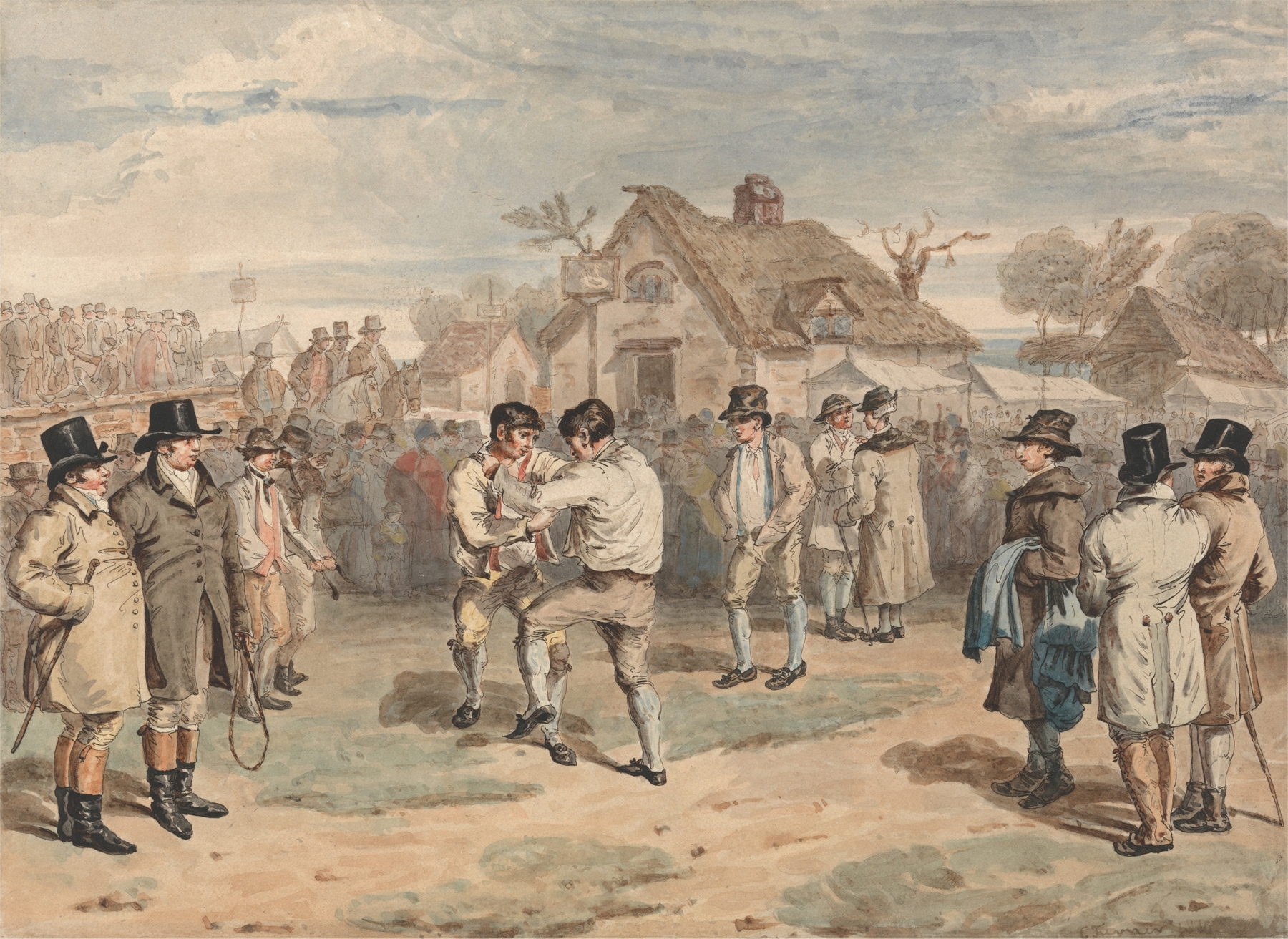
The WWE shows are bizarrely produced charades. An industry worth millions. But the wrestlers have to work hard for it. That’s not what the shows focus on, of course, but you can see it if you look closer to home. Because wrestling happens in the Netherlands too. The Pro Wrestling Holland (PWH) caravan tours the country with its own wrestling stars. You can watch the matches (with commentary) on YouTube.
On 2Doc I found the documentary Ring of Dreams, which is about PWH. A man called Tengkwa is the leader; he founded PWH in 2006. In the film, he never takes off his mask. We see him sitting in his flat, together with three cats. He stands on his head, does a load of washing and plays on an arcade machine. In daily life, he works as a receptionist at a company. It’s clear: at work he plays a role; in wrestling, he finds himself. “Reality is simply a matter of perspective,” he says in the opening minutes of the film. “Once you understand that, anything is possible.”
Many of the show wrestlers live for the ring. At PWH, many people sign up wanting to become wrestlers, but the majority of them drop out of their own accord. Even at a lower level of WWE, an almost boundless dedication to the sport is essential. The training is gruelling; in the documentary, aspiring talents are pushed to the point of nausea. Whilst watching Ring of Dreams, you find yourself wondering whether it’s all worth it. What do they actually get in return?
- - -III.
Just as it is for Tengkwa, wrestling is also an escape for Randy “The Ram” Robinson in the film The Wrestler. Mickey Rourke plays an ageing wrestler who, after a heart attack, is forced to take a step back. He then realises he has little to live for outside the ring. He has no friends and ruined his relationship with his daughter years ago. Robinson regularly visits the stripper Cassidy, but it is a confusing friendship built on payments and lap dances.
The fights in The Wrestler go a fair bit further than what you usually see on television. Barbed wire, staple guns, shards of glass; Robinson gets thoroughly beaten up. All for the show (and the money), because after the match the wrestlers sit down together for a friendly beer.
While watching The Wrestler, I was frequently reminded of The Whale. Both are films by director Darren Aronofsky about broken individuals who are no longer able to match their former successes. They have strained family relationships and increasingly live in a world of their own. I think The Wrestler is better because it’s more realistic and feels more grounded.
Of course, Robinson can’t seem to settle down outside the ring. So heart problems or not, he can’t help himself. “The world doesn’t care about me at all,” he says. In competition, he comes alive. “The only place I feel pain is out there.”
- - -PS.
Read on 404 Media, something I also believe in: “It is true that AI is changing the internet and is threatening journalists and media outlets. But the only AI-related business strategy that makes any sense whatsoever is one where media companies and journalists go to great pains to show their audiences that they are human beings, and that the work they are doing is worth supporting because it is human work that is vital to their audiences.”
Clipse (Pusha-T and Malice, with Pharrell on production) are back after years of absence with the outstanding hip-hop album Let God Sort Em Out. The rapping brothers recently performed a Tiny Desk Concert.
- - -Wilco frontman Jeff Tweedy is releasing a three-part album in September entitled Twilight Override. He has already included four of the thirty (!) tracks in a compilation EP on Spotify. I have a soft spot for Tweedy’s music, whether it’s with his band or as a solo artist. One Tiny Flower is my current favourite.
Don’t wait too long if you want to see Jeff Tweedy in the Main Hall at TivoliVredenburg (18 February ‘26). There are still a few tickets left.
Nice idea. Instead of an experiment to swear off social media altogether: print out your feeds for a month. A maximum of twenty pages a day. Tiffany did it; she gave up endless scrolling and actually quite liked it. It just costs a bit more (effort, money, ink, paper). “My friend’s thirst traps deserve the respect of a hardback book.”
A lovely video from the YouTube channel Nerdwriter. An essay on the artists who, in the sixteenth century, became increasingly interested in capturing nature. With a special focus on Joris Hoefnagel, who painted insects as if they were jewels.
- - -You’ve just read blog post №123, written during the week of 14–20 July 2025. Subscribe to my free newsletter to receive this blog in your inbox every Sunday.