
160. Keeping afloat
I.
You know how it goes. You watch a few adventure videos on YouTube and the algorithm does the rest. That’s how I ended up watching The Voyage of the Sarimanok from 1986 this week.
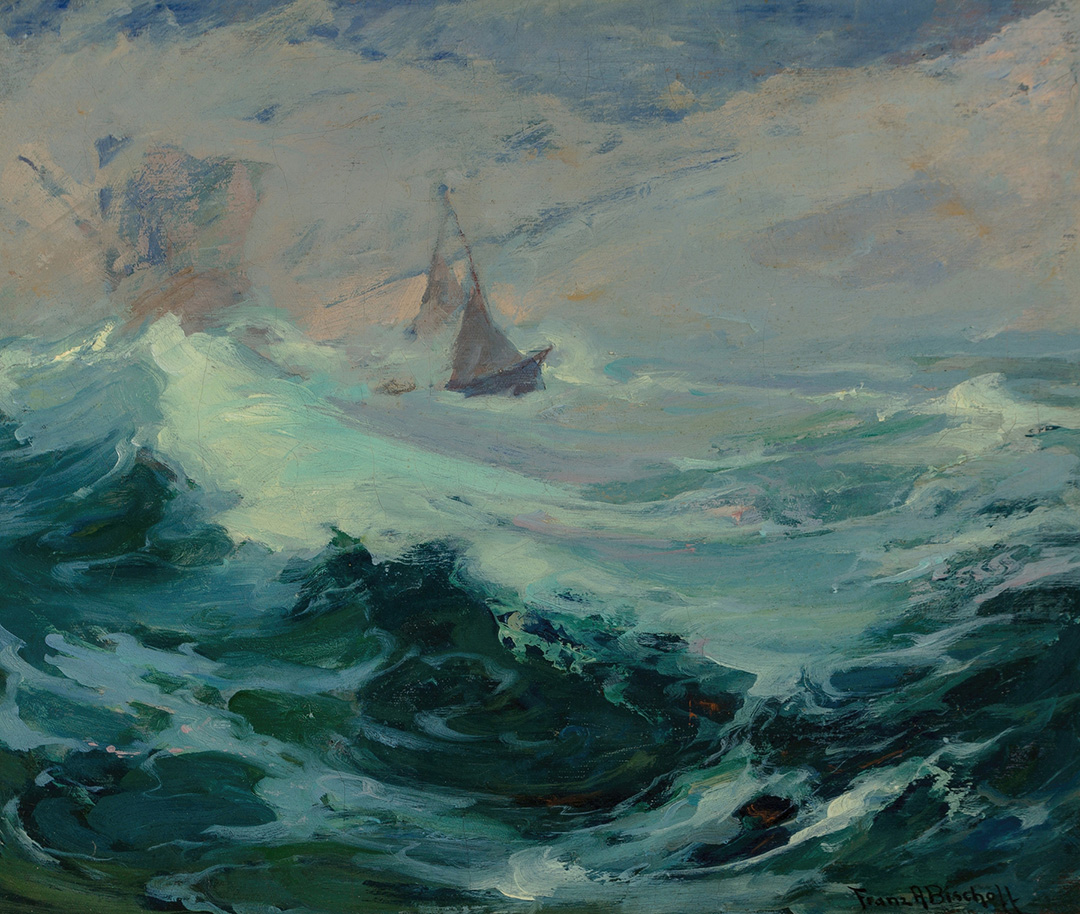
The opening grabbed me completely. We see a close-up of Bob Hobman wondering aloud what will give out first: the crew or the ship. “Probably neither, but my patience is gone.”
A weathered face, a yellow raincoat. A beautiful contrast with the deep blue turbulent ocean behind him.
This Bob Hobman assembled, in the 1980s, a crew of six people mad enough to cross the Indian Ocean on a primitive indigenous trimaran. The journey went from Bali to Madagascar. Hobman wanted to prove that the population of Madagascar had once sailed directly from Indonesia.
Watching the film, you can see that the journey is indeed possible — and that says everything. Starting it in the first place is pure madness. There are violent storms, a critically ill crew member and the boat constantly demands repairs. After 65 days they arrive. With considerable physical and mental battle scars.
Very little information can be found about the voyage. It turns out that Hobman wrote an account years later, in 2018, under the title Sarimanok. I immediately added it to my reading list after watching this nightmare at sea.
II.
People are travelling to the moon again. They won’t be landing, but they’ll loop around it and then return to earth.
It is world news in the way it was more than fifty years ago, and yet I hear fewer people talking about it than I expected. Perhaps because enough is already happening in the world, which was magnificently photographed by NASA astronaut Reid Wiseman aboard the Orion capsule.
A space journey. For me it will remain a childhood dream, but for André Kuipers it became reality. He visited the International Space Station twice. This week he told me how, as a child, he watched the Apollo missions and knew: that’s what I want to do too. It was only when Wubbo Ockels was launched on a rocket that Kuipers dared to hope rather than just dream. Not only Americans and Russians — Dutch people could go to space too.
Kuipers briefly dreamed of the moon, but it remained just a dream. “When Obama announced he wanted to return to the moon, I did think: if they hurry, maybe I can still join. That’s no longer in the cards.”
The United States wants to land astronauts on the moon in a few years. There is some urgency. Just as in the 1960s, a new space race is underway. China wants to land on the moon in 2030.
It won’t just be a victory for the Americans if they succeed. The solar panels of the Orion capsule, which carries astronauts through space, are manufactured in Leiden. A few weeks ago I was given a look around. The panels for a future mission were ready. With a group of journalists, I watched as they slowly unfolded, the way they will do in space in a few years.
I took a moment to take in the reflection of myself in the black solar cells. I was allowed to briefly imagine how this faint reflection will, aboard Artemis IV in a few years, drift through space towards the moon.
III.
I am still bravely ploughing through Eindeloos vertier (the Dutch translation of Infinite Jest) by David Foster Wallace. A little over a month ago, the bookseller advised me: “Keep breathing. Let it wash over you gently.”
I think back to that often. Halfway through the book, I can conclude that I am greatly enjoying it and that it is sometimes impenetrable. The endlessly long sentences packed with incomprehensible terms, invented words and abbreviations are quite demanding. Then I read a chapter about a father trying to repair a squeaky bed and I’m doubled over with laughter.
Reading Infinite Jest feels like being handed a shapeless lump of stone, from which you must chip away pieces yourself to discover the underlying beauty. Keep going. Keep breathing. That this book asks a great deal of its reader is simply part of the deal.
“In reality the book is a whirlpool of language you are swept into, submerged and brought back up, but you never reach a bank or shore to quietly catch your breath”, I read in an essay by writer P.F. Thomése. “You are trapped in this expanding consciousness, in this vocabulary cut loose from all its anchors.”
I’ll keep afloat and surely make it to shore eventually.
PS.
Don’t forget to watch a skate video occasionally — pearls are still being produced. This is a very fine one from Element and Thrasher.
Low-quality photos are totally hip, I realised when I saw someone at Geese photographing with a Nintendo 3DS. I write about it on my blog at NU.nl.
Blogger Anil Dash declares the end times for the open internet. “The hectobillionaires have begun their final assault on the last, best parts of what’s still open, and likely won’t rest until they’ve either brought all of the independent and noncommercial parts of the Internet under their control, or destroyed them.”
Ruben Bos made a paper version of the online game Wordle. He writes about it in his newsletter and on this site you can have downloadable PDFs generated.
Unpause has a fine article about The Legend of Zelda: Wind Waker — and especially its calming character. The game forces the player to slow down. Exactly what we need in this era of always being switched on for new stimuli and notifications and replies and tasks. “You get into a rhythm and you can’t stop DOING THINGS”, writes Peter Nilsson about that constant multitasking. “I have a thing about open tabs in my head anyway, so every little request that comes in, I prefer to deal with right away. I’m genuinely working on this. I try to ask myself with everything: ‘Does this need to happen NOW?’ The answer is almost always no, but that means: living with an open tab, because at some point it’ll still have to be done. Always that having to. Sick to death of that having to.”
You just read blog №160, written in the week of 30 March to 5 April 2026. Subscribe to my newsletter and receive it in your inbox every Sunday for free.