
161. Chasing dreams
I.
Werner Herzog appears on screen ahead of the screening of his new documentary Ghost Elephants. “Don’t expect a nature documentary”, he warns in advance. “There are almost no animals in it.”
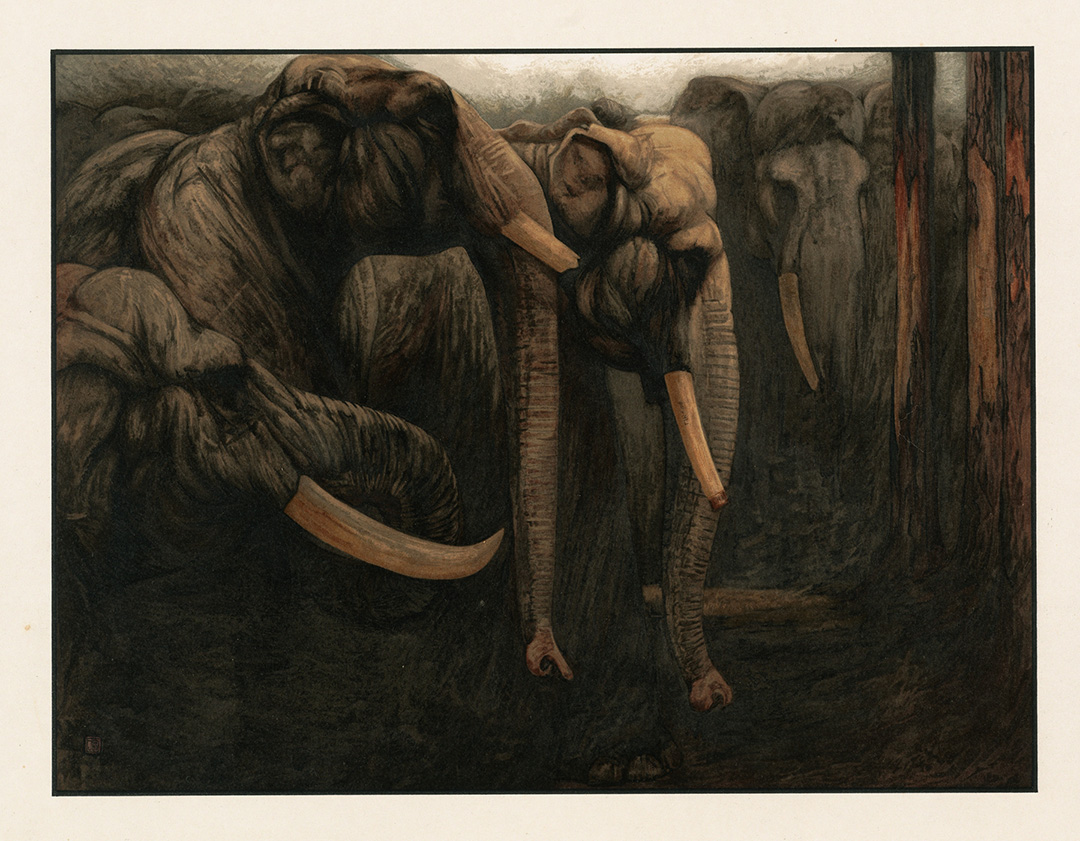
The film is more about the preparation for a journey and the expedition itself. We follow zoologist Steve Boyes as he searches for ghost elephants. These would be enormous giants, larger than other elephants, living in the remote highlands of Angola.
These ghost elephants may be descended from Henry. That enormous elephant was shot by a Hungarian hunter in 1955 and donated to the Natural History Museum in Washington, where the mounted specimen still stands.
Herzog shows in his film how elephants were once hunted for sport and by poachers¹. But for Boyes’s expedition, he heads out not with rifles but with cameras. Nobody knows whether the animals will show themselves at all. Wouldn’t it be more beautiful if the existence or non-existence of the ghost elephants remained a fantasy, Herzog wonders. Which tells you immediately that the outcome doesn’t interest him much.
For him, the search for the elephants is once again a story about extraordinary dreamers who want to go further than other people. In that sense, Steve Boyes and his trackers fit seamlessly into the oeuvre of Herzog, who has always been fascinated by these idiosyncratic outsiders. That is what makes every documentary by the director so worthwhile².
Herzog lets himself be delightfully sidetracked by peripheral matters once again. There are images of a venomous spider with several small spiders on its back, which has little to do with the search for elephants. “The spider was weird enough but the next morning I believed I was still dreaming of demons”, says Herzog, while we watch a man dancing with a gigantic reptile.
These moments make the film. How Boyes drives like a madman through the jungle, how his crew carries motorcycles across unruly rivers because cars can’t get through, and how they visit an African king (dressed entirely in leopard print, seated on a proper throne while the room around him is otherwise quite modest). It is a blessing that at 83 Herzog is still telling stories like this. Cherish this filmmaker with everything you have.
II.
It seemed worth talking about Noah Kalina for a moment. In the early days of YouTube he scored a mega-hit with his ‘everyday’ video. For six years he took a daily selfie. He strung the photos together so you can watch him age in just under six minutes. The video has now been watched 27 million times. (He still takes selfies.)
Kalina is a photographer. He is fascinated by the passage of time, but also makes extraordinary nature photos and portraits. His website has an archive. His work has appeared in Esquire and Le Monde. Recently he published nostalgic Pizza Hut photos in The New York Times.
For a while now I have been watching his The Hotline Show on YouTube every week. These are pleasantly idiosyncratic videos in which he answers questions from callers. The questions can be about anything (though they’re usually about photography).
Sometimes it’s about the usefulness of tripods, sometimes you get a mini-lecture on photos with cut-out holes. Meanwhile you see Kalina pottering around in the garden or fiddling about in his studio. It helps that his videos are well lit, that the image is sharp, that there are beautiful drone shots in them, that the woods in his backyard are so lovely and that he is never in a hurry. This makes his videos always feel like a moment of calm in the week.
But the best part is Kalina’s own tone. The photographer is an idiosyncratic man who lives remotely and has quietly created a small world for himself there. His studio alone already looks like a dream. And in life, few things beat a good studio.
PS.
At the end of 1968, astronaut William Anders took the photo Earthrise during the Apollo 8 moon mission. In the photo you see the earth rising with the lunar surface in the foreground. A world-famous photo — the story behind the image can be seen in the video below. This week, astronauts aboard Artemis II made a new version: Earthset. The setting of the earth. Fitting enough for our times.
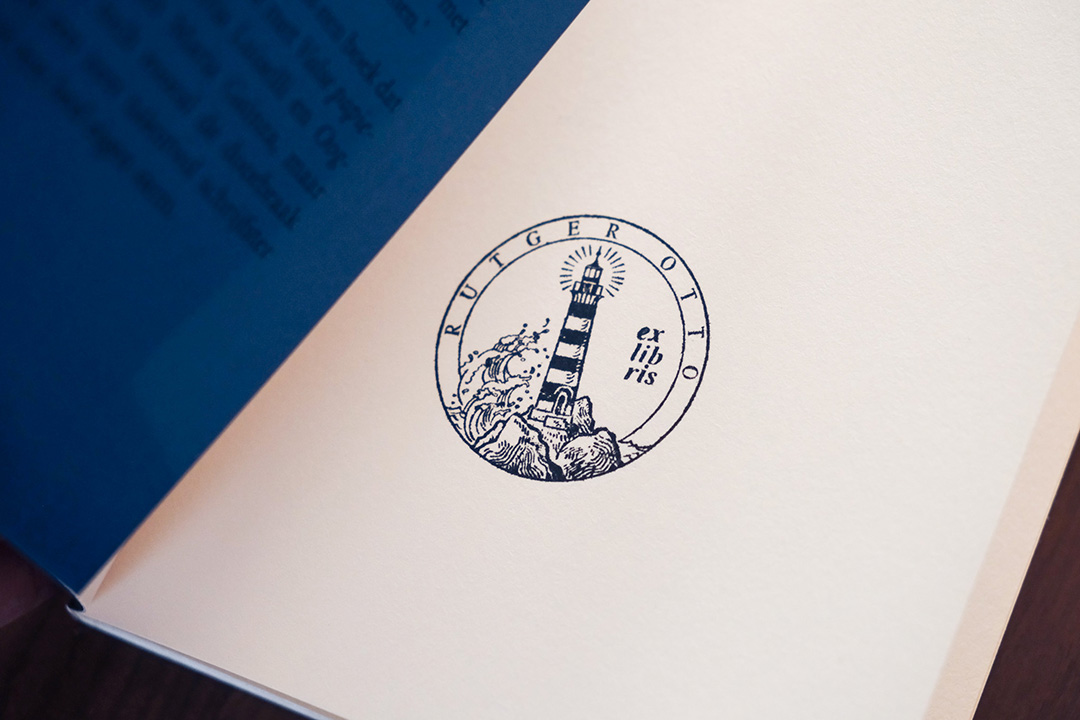
On Aftermath I read a blog by Gita Jackson about her ex libris stamp. “Every new book I buy now feels more acutely mine. I have a library, not just a series of piles of unread books. And if I ever get rid of these books, they’ll have a history—they came from my collection and now belong to someone else’s.” I have such a stamp too, a gift from my girlfriend. With my name around a lighthouse. There is something official about dedicating your books (and notebooks) this way.
The kind of question you can ponder endlessly: to what extent did The Beatles and Bob Dylan influence each other? Journalist Jim Windolf makes an attempt to answer in his book Where the Music Had to Go. I already enjoyed this preview in The New York Times.
Siri Beerends and Lisa Doeland nail it in De Groene on the desire to outsource supposedly boring tasks to AI so we supposedly have more time for other things. “It is high time to reassess the importance of repetition. That is how we all learned to read, write and do arithmetic — repetition, repetition, repetition. You can’t outsource that, you have to do it. As the editorial team of literary magazine De Gids notes in the introduction to a recent special issue on repetition: ‘Life is held together by repetition.’ But those repetitions are never identical. As we repeat, things shift and something changes. ‘Only against the backdrop of repetition can something new emerge.’”
The concert Thom Yorke gave two years ago in the garden of the Sydney Opera House is on YouTube. After the beautiful, acoustic version of Let Down I am already undone. Nothing beats Radiohead.
You just read blog №161, written in the week of 6 to 12 April 2026. Subscribe to my newsletter and receive it in your inbox every Sunday for free.