166. Hennie's amusement park stayed closed
I.
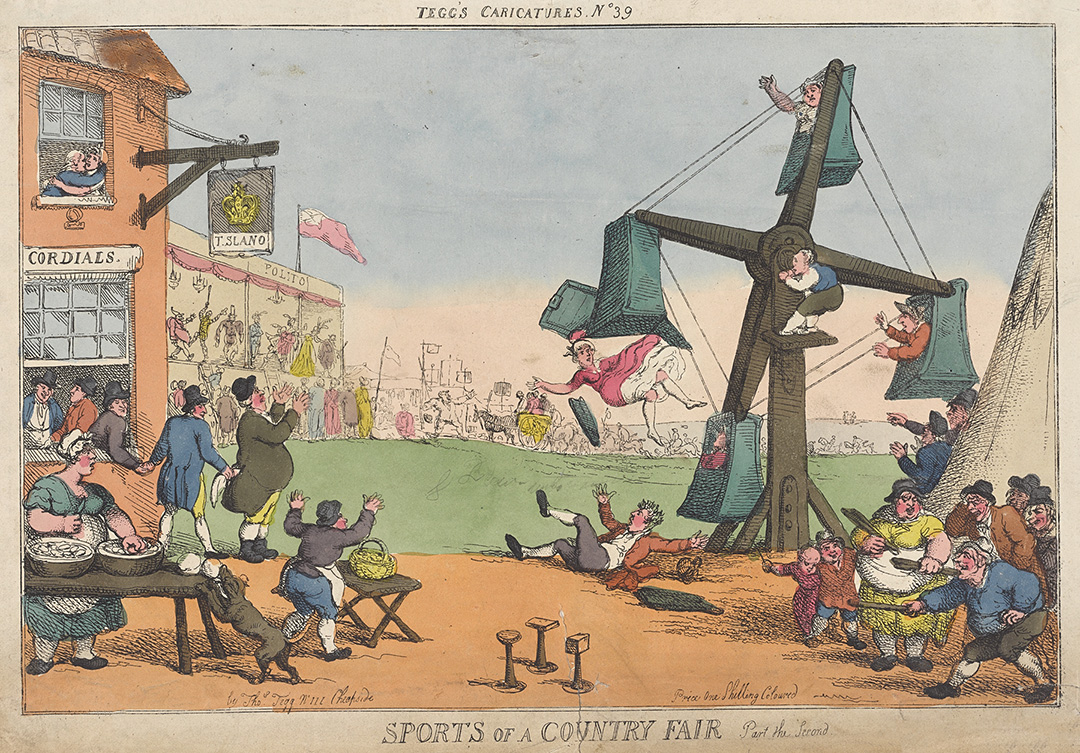
A friend told me earlier this year that he’d been to Rivoli in Rotterdam. I’d never heard of it. “It’s an amusement park built from junk that will never open,” he said. “I got a guided tour from a YouTuber who said he’s been working at the park for nine years.”
This YouTuber made no videos about it, but had built a roller coaster with two others in three weeks. Unhindered by any knowledge of how such a thing should be done. Just a bit of trial and error. Maybe it’s just as well the park never opened.
The public broadcaster aired Pretpark Hennie this week, the documentary recently made about the Rivoli debacle (available on NPO Doc). Entrepreneur and multi-millionaire Hennie van der Most bought a plot of land from a former waste processor in Rotterdam and wanted to build an amusement park there. That was his great dream. The park was meant to be the crowning achievement that the ageing Van der Most would leave to the Netherlands.
The businessman invested 62 million euros of his own money into the park, which he (visibly) designed himself. Van der Most bought discarded goods to build the fairground. A swing ship, old iron for attractions, you name it. He stored it all in Germany, where he had everything restored.
Twelve years after purchasing the land, only a handful of attractions are finished. The film makes it painfully clear fairly quickly that the whole park will never be completed. The municipality of Rotterdam sets deadline after deadline, Van der Most keeps pumping money into it, but the end is not even remotely in sight. The park remains a ruin, attractions fall out of date over the years, and Van der Most keeps coming up with new ideas without finishing anything. An endless prayer.
Van der Most’s company was declared bankrupt this week. The businessman will likely lose everything. “In hindsight, I should never have done this,” he tells RTV Oost. “I could kick myself.”
The park has since been taken over by another megalomaniac millionaire: Wim Beelen. He sees great potential in the site, he tells het AD. “Van der Most accomplished a lot of things here quite impressively, you know. He just forgot one thing. Opening.”
Beelen then goes on to accuse Van der Most of theft and compares the entrepreneur to “the war in Iran”. He himself wants to moor a giant Noah’s Ark in the Maashaven. “The ark will be free for everyone to visit, because faith costs nothing. Living with God costs nothing, it’s only something you can receive. I wish that for everyone.”
II.
When we arrived in Tokyo two years ago and stood on a skyscraper, a Japanese man beckoned to us. He pointed into the distance: “Fuji.” He beamed, thinking he was doing us a favour by pointing out the mountain. And he was.
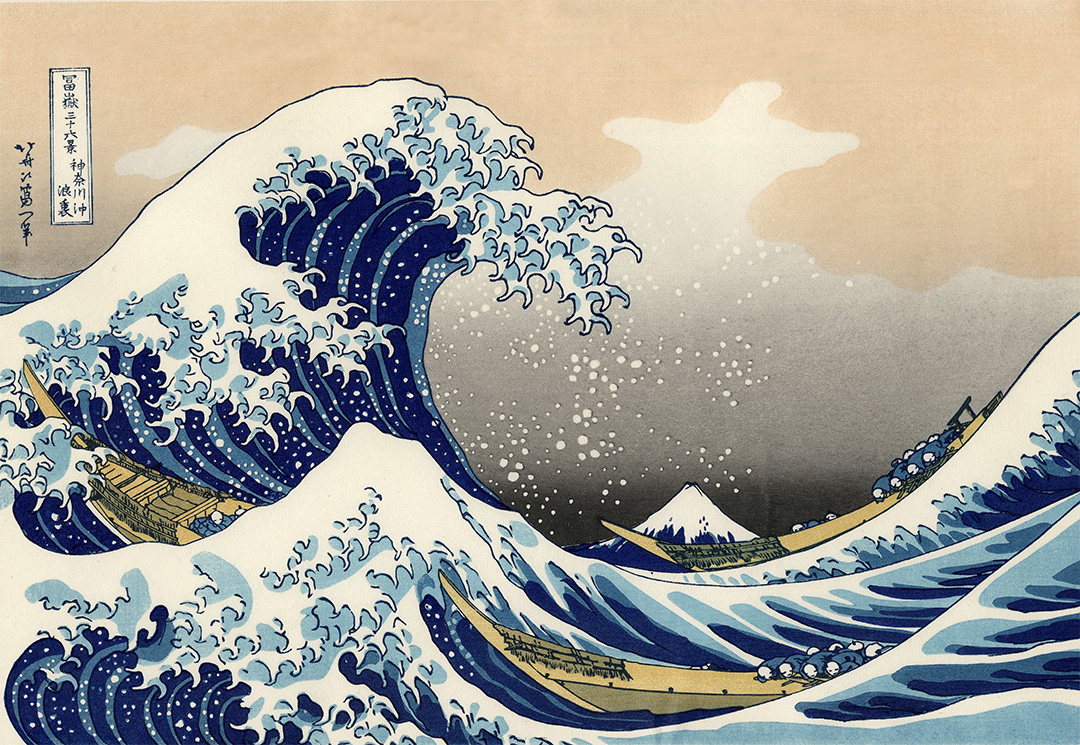
Everyone knows Fuji, the symbol of Japan. Everyone also knows De grote golf van Kanagawa, the most famous work by the Japanese artist Hokusai. On a stormy sea you see a gigantic wave threatening to swallow three rowing boats. In the background, tiny, stands the mountain. Fuji as a rock in the surf. Unshakeable.
This woodblock print by Hokusai is the first piece in the series Zesendertig gezichten op de berg Fuji. Countless lives played out with Fuji as their backdrop. If you have ever seen the volcano, you know how much power it radiates. It is a colossus, taller than all the mountains around it. A work of art of nature: almost perfectly symmetrical in form.
Hokusai made De grote golf van Kanagawa around his seventieth year. Earlier was not possible, because he had not yet had access to the deep blue he used to colour the wave. Prussian blue. A pigment from Berlin that reached Japan via a Dutch trading post.
On NPO Doc there is the documentary Hokusai - impressies van de rijzende zon. In it you follow the life story of the artist, who became famous early on for his illustrations for books and woodblock prints of theatre actors. Later he developed a greater eye for landscapes and cityscapes. Towards the end of his life, ghostly figures appeared in his work with increasing frequency.
Hokusai had devoted his life to art and never stopped learning. “Everything I have done before the age of seventy is hardly worth considering,” he said. “At seventy-five I will have learned something of the patterns of nature — of animals, plants, trees, fish and insects. When I am eighty, you will see real progress. At ninety I will be deeply penetrated into the mystery of life itself. At one hundred I will have become wonderfully skilled.”
If he reached 110, he believed he could make perfect art. “Everything I make — a dot, a line — will spring to life as never before.” He died twenty-one years too soon.
PS.
Roel Maalderink was invited to the award ceremony of the journalism prize De Tegel to roast the media world. His vox pop about surveys is especially fun. “What does a Jack Russell Terrier have to do with journalism?”
A colleague tipped me off that an older article of mine from NU.nl is being used in this year’s Dutch secondary school leaving exam. My text could thus make students fail or pass. I hope the latter! Want to try it yourself? The assignment is here and the questions are here. (I don’t have the answers.)
Spike Jonze made a promotional video with Zendaya for clothing brand On. I love it. Through this channel I would also like to beg Jonze to direct a feature film again some time soon.
Emily discovered as a child that her father had been recording her phone calls. “30 years later – I found a couple of the tapes. Here are a few excerpts. I still haven’t told my sister.”
Bert Natter won the Libris Literature Prize 2026 for his novel Aan het einde van de oorlog. And rightly so. Natter writes: “After the brief drumroll that Beyer, for lack of a drum, sang himself, she said my name and not only did feelings of joy, pride and gratitude wash over me, but a deeper emotion stirred too: it felt as though I had finally arrived somewhere, at a destination I had never tried to reach. I did not know how to describe what was happening to me until my good friend Jan Oegema helped me find the right word this morning: fulfilment.”
You read blog №166, written in the week of 11 to 17 May 2026. Subscribe to my newsletter and you’ll receive it every Sunday, free in your inbox.