
168. Along the Fishermen's Trail
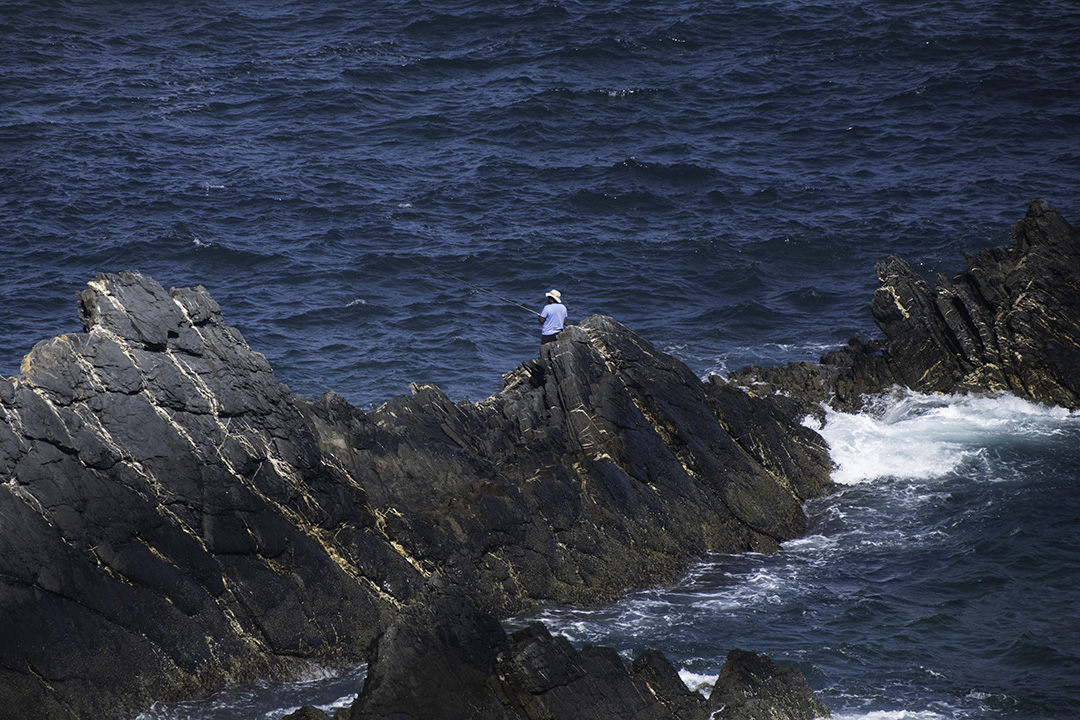
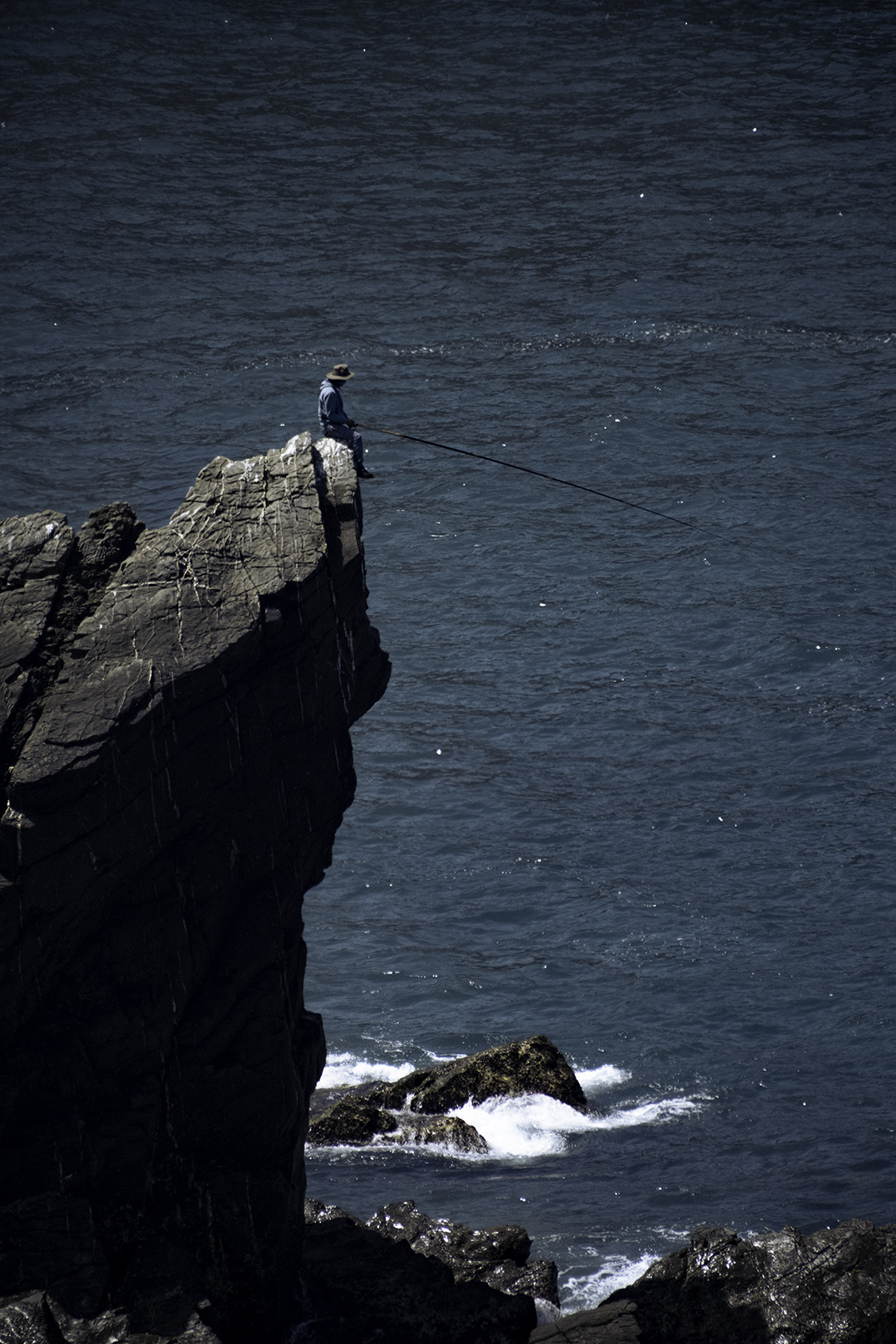
You have to keep your eyes open, but sometimes you can spot them: the fishermen on the Portuguese west coast. Far from the paths, so small they almost blend into the landscape, perched atop jagged cliffs while wild waves crash against the rocks around them.
The fish must taste very good indeed, to risk your life for them.
Together with my girlfriend I am hiking part of the Fishermen’s Trail, which runs along the coastline of the Algarve over old paths that local fishermen (still) use. In the end we take the four stages that most people walk: Porto Covo ⭢ Vila Nova de Milfontes (18.5 km) ⭢ Almograve (14 km) ⭢ Zambujeira do Mar (21 km) ⭢ Odeceixe (19 km).
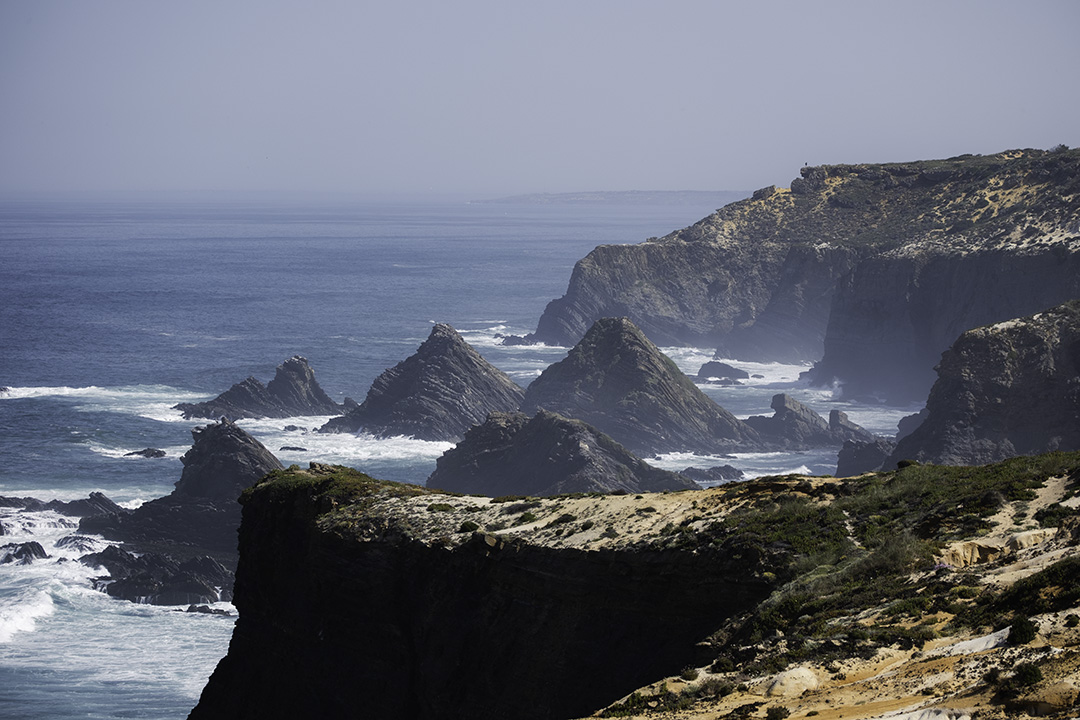
However many rugged cliffs I see, they never bore me for a moment.
Because we are walking from north to south, we keep the Atlantic Ocean to our right at all times. Getting lost is nearly impossible in that regard, and the trail is also excellently marked with green and blue stripes. At the moments when we leave the coast and head inland, we pass through forests and along rural gravel paths. There is the occasional duller stretch, but when the sound of the waves swells again and you reach the ocean, you forget it immediately.

Our first stage is immediately the hardest. It promises to be a hot day, so we set off early. We greet the first hiker coming towards us in the opposite direction. Half a minute later we hear a scream that cuts right through you.
We rush back and find that same hiker lying on the ground. He has slipped on a cluster of vicious rocks near the water and looks deathly pale. Barely a word comes out of him, but it is clear that he is in terrible pain in his arm. With some effort we help him back to the village we just left, while waiting for the emergency services.
“That’s definitely broken,” the hiker groans as the paramedics help remove his backpack. I will spare the details of what the young man says he feels, because it is not a pretty story. Days later we hear that his arm was indeed broken in several places. That means surgery.
After this false start (and for the hiker a dramatic end to his first solo hike) we continue on our way. Even the spectacular surroundings cannot immediately clear our heads (I can still hear the scream as I type this a week later), but eventually we enjoy the landscape and the hike.
It is indeed a hot day, but the wind along the coast makes the walk bearable. Less pleasant is the loose sand through which we have to trudge for kilometres. With every step I sink in and making any pace is impossible. Easy does it then. We are in no hurry anyway. That is the beauty of these hikes: each day you have just one goal, and that is to safely reach the next village. That works even at a slow pace.
Still, I am glad that only the first stage consists of so much loose sand. The days that follow feel considerably easier as a result, even if it is sometimes a slog.
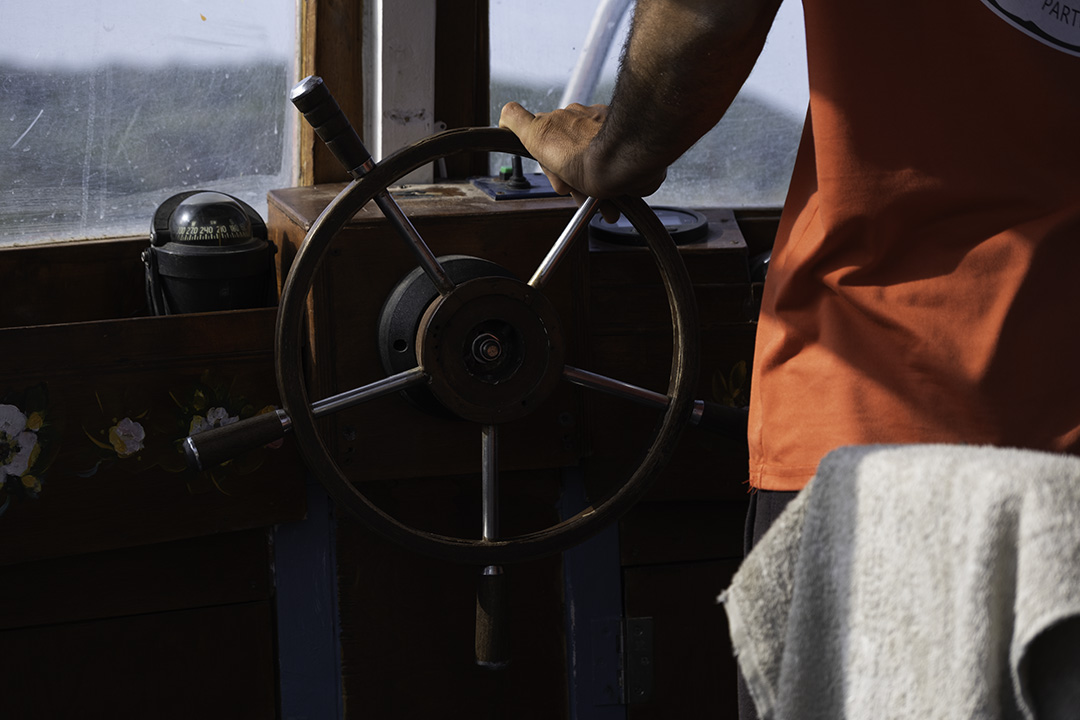
The second day towards Almograve is only 14 kilometres (because we cut off 4 km thanks to a ferry crossing). It is a wonderful recovery day so that we can then tackle 21 kilometres again with fresh energy.
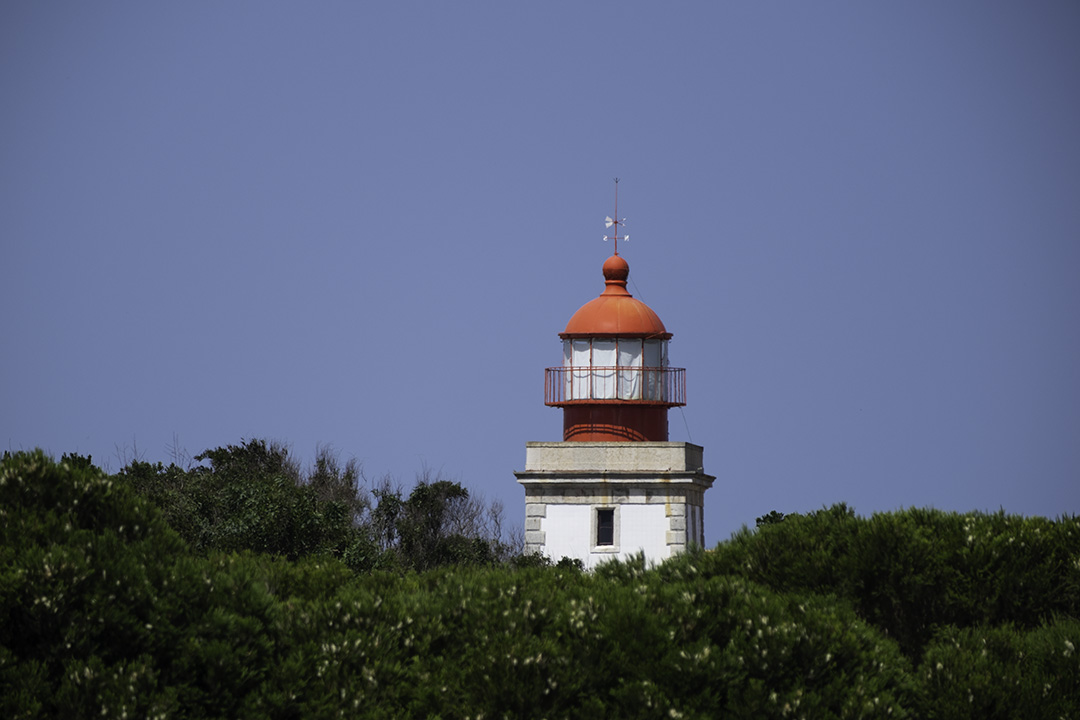
Meanwhile we keep spotting those fishermen. They sit in the most impossible places. On rocks that seem surrounded by water. And on small ledges on cliff faces that I cannot even imagine how they will ever get down from.
Online I can find little about these daredevils. Except that they probably use ropes and special clothing to descend the cliffs. The fishermen must know this terrain like the back of their hand, otherwise this is madness. We often see signs warning walkers about unstable cliffs, while further along we casually spot men standing there fishing.
Once we take a bit more of a risk ourselves. On a tapering rock we are able to get fairly close to a stork’s nest. Storks are common here along the coast. They build their nests in the most beautiful places: on the solitary rock stacks that jut out of the water like an arm and cradle the storks’ large nest in their palm.
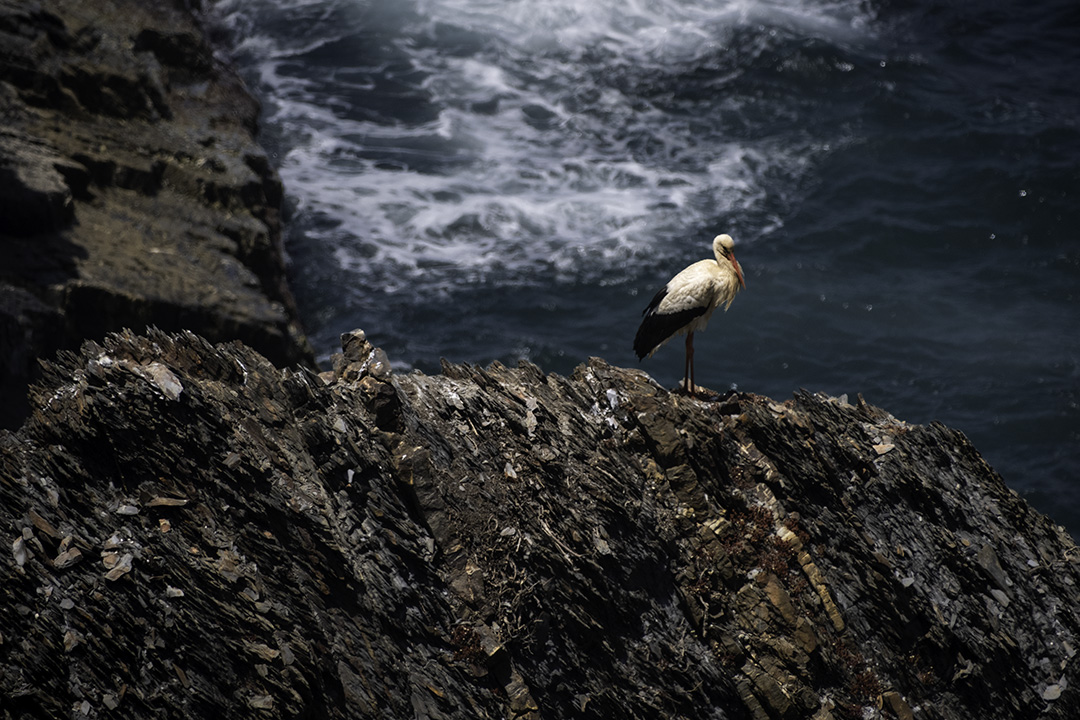
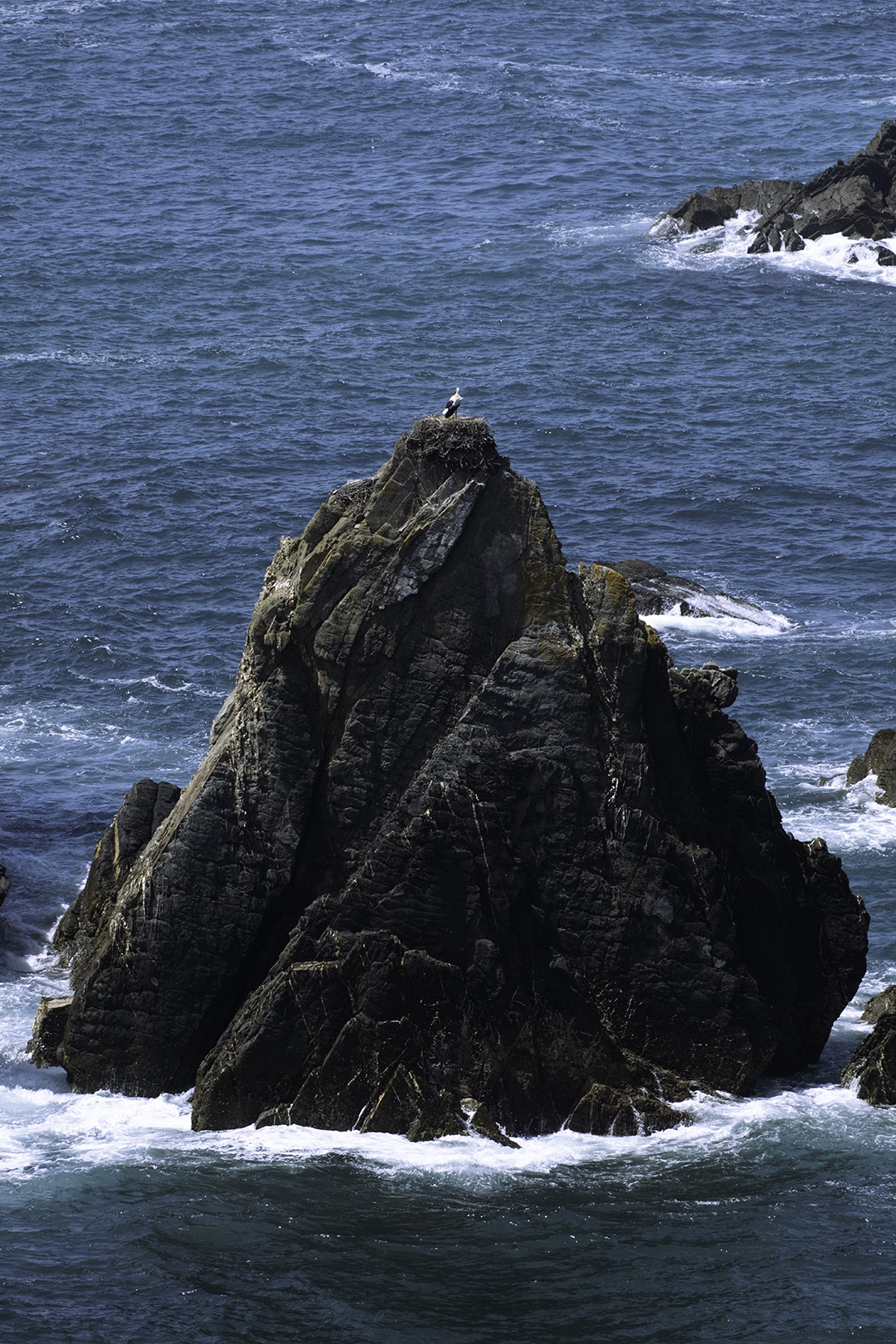
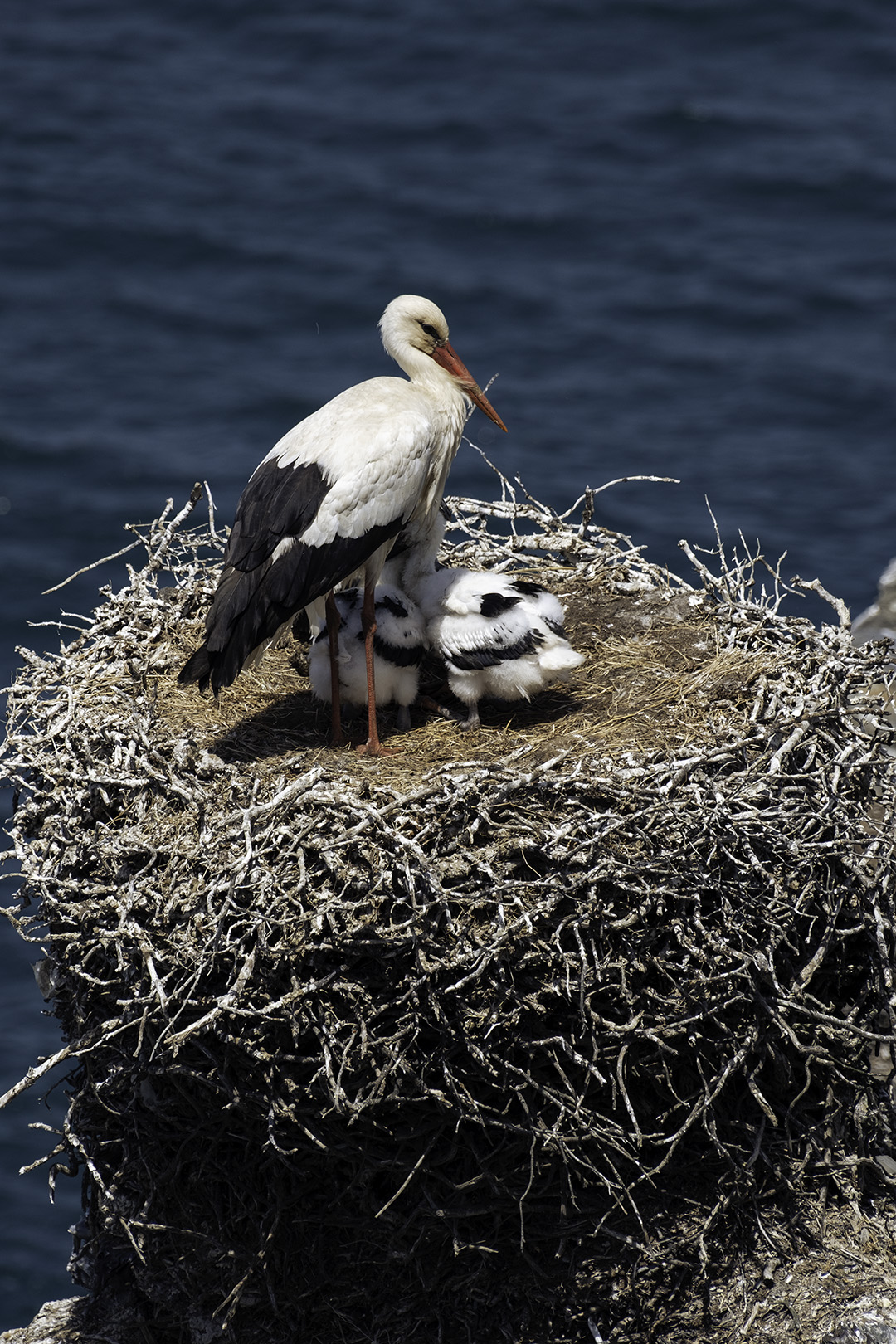
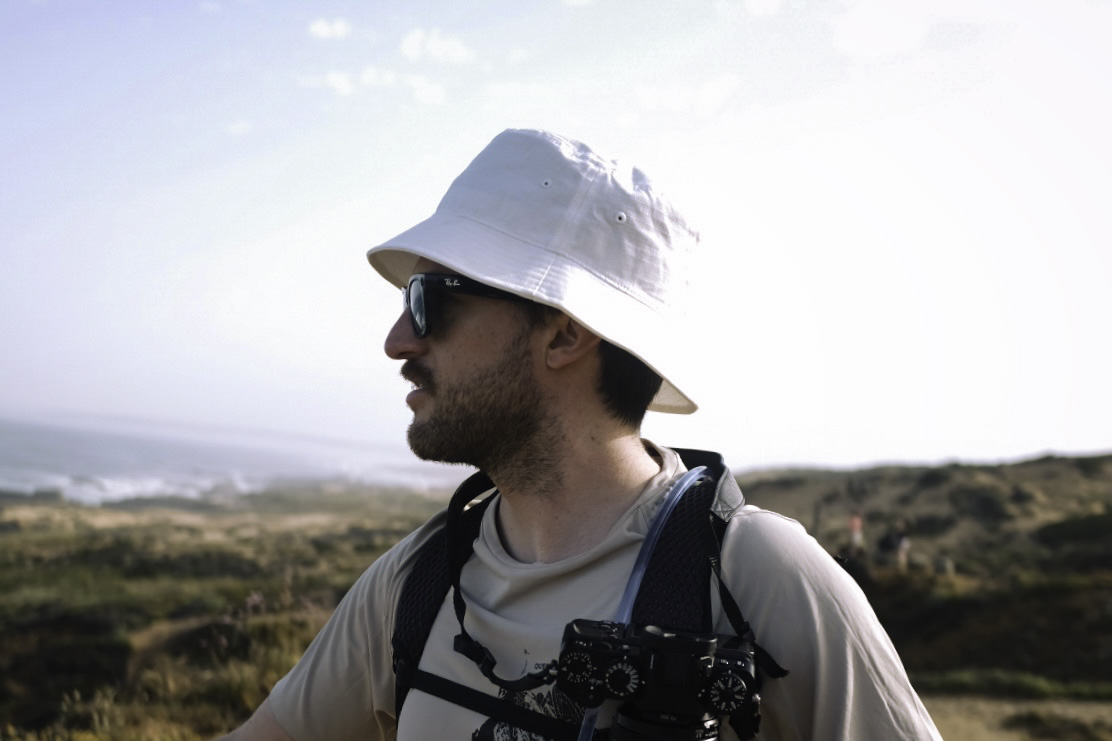
On that narrow cliff we feel the wind stronger than usual. I take off my fisherman’s hat (in Portugal I look like I am heading to an Oasis concert — and so fokking what mate) before it blows away. It is worth it: a little further along a stork sits calmly in its nest with two chicks.
Some hikers see the countless swallows swooping along the coast and through the villages as the symbol of this trail. But for me it is absolutely the storks. They are often sitting on their nests, but you also regularly see them gliding through the air. With those orange, pointed beaks on their black-and-white bodies and their ragged wings that seem to have fingers.
Of all the photos I took along this trail, I think half are of storks’ nests. I cannot get enough of them. It is beautiful to see how the birds raise their young in complete tranquillity along the most hazardous cliffs imaginable. Perhaps that is why those fishermen make such a striking image too: men calmly casting a line while a single wrong move could dash them against the rocks.
The most beautiful section of the Fishermen’s Trail for me is the one from Zambujeira to Odeceixe. The balance between coastline and forests is particularly good on this stretch. The hike is also slightly more technical, with steep climbs and descents. All the same, I would recommend this trail to everyone. Not difficult, and the views are breathtaking.
You read blog №168, written in the week of 25 to 31 May 2026. Subscribe to my newsletter and you’ll receive it every Sunday, free in your inbox.