
63. Japan (Part 2)
In Japan, every neighbourhood and city is different, but one thing is the same everywhere: the cuckoo sound that signals when pedestrians can cross the road. Cuckoo. Cuckoo. You hear it so often, I’m almost dreaming about it.
Everything here has its own unique sound or jingle. The stations, the supermarkets. The jingles are often catchy, like those of the FamilyMart supermarket and the Don Quijote variety store.
In Matsumoto, the loudspeakers at traffic lights really do echo through the streets. You can’t step outside without hearing the cuckooing and chirping.
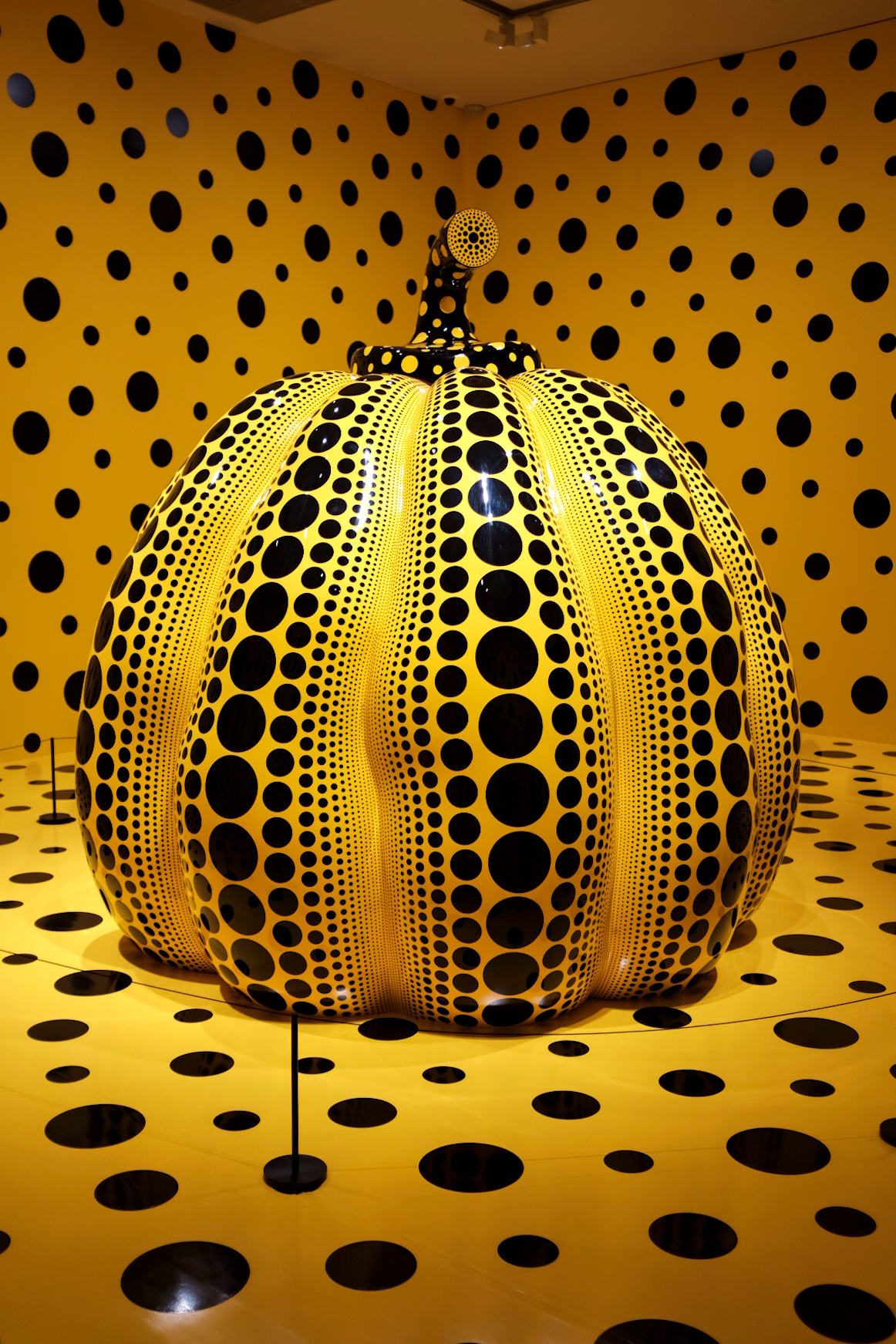
We’re only in this city for a short while, a stopover on our way to Kyoto. Here we visit the Matsumoto City Museum of Art, which houses art installations by the flamboyant artist Yayoi Kusama. She was born in this city 95 years ago. One of her best-known works is the enormous yellow pumpkin with black dots.
To my surprise, the museum happens to be hosting an exhibition on Black Jack, a manga series by Astro Boy creator Osamu Tezuka. There are rooms full of the artist’s original ink drawings. I see his incredibly precise line work, very subtle shading and the spots where Tezuka has corrected mistakes with Tipp-Ex. I can’t take my eyes off it.
A visit to a museum in Japan is also an exercise in extreme patience and respect. Everyone lines up neatly one behind the other in a long queue, and if you let yourself be carried along, you can view all the works one by one at your leisure. There’s no pushing in here. And there are no phone screens anywhere, as you’re kindly but firmly asked not to take photos. An exception is made only for the pumpkin. There’s even an encouragement from the attendant. “Here, take a picture!”
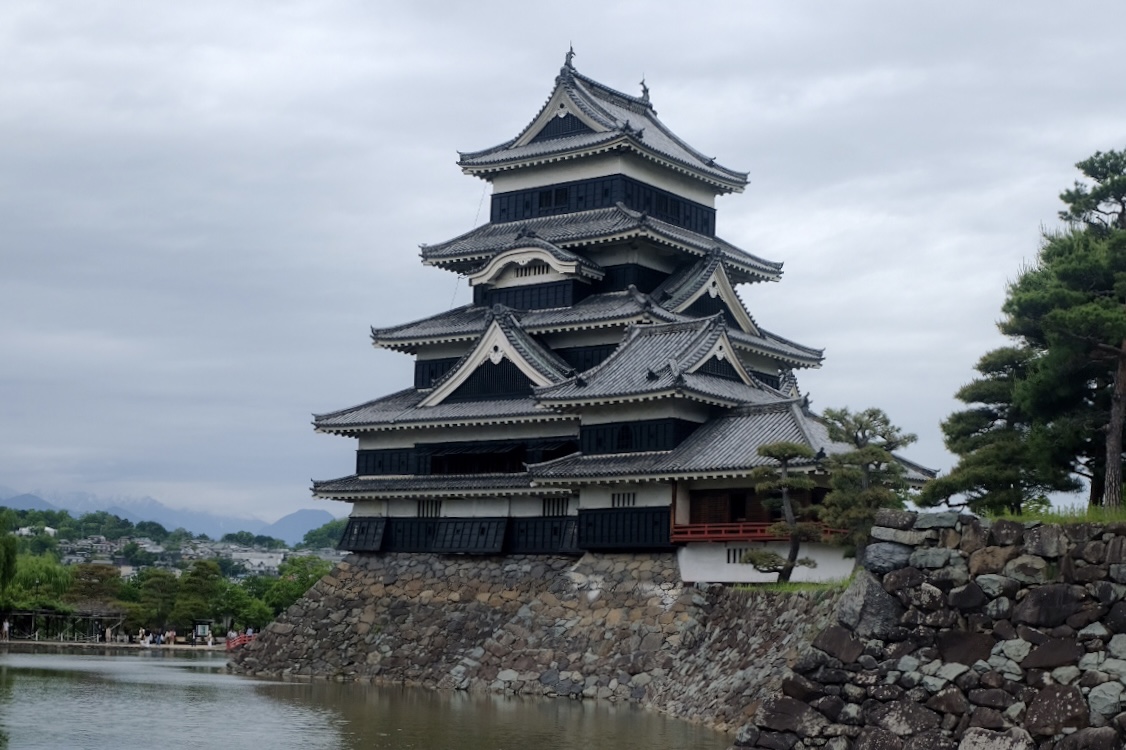
Matsumoto is best known for its imposing Matsumoto Castle. Built around 1500 and unique for its black outer walls, to which it owes its nickname, the Crow Castle. It is one of the oldest complete castles in the country, now overrun by tourists every day. I emphasise: overrun.
We too step inside – shoes off – and, along with hundreds of other people, are guided up and down steep, narrow staircases.
A few display cases show old guns and there are a few samurai armours, but all in all there is little to see. We get hardly a glimpse of what castle life was like in the late Middle Ages. You trudge along behind one another and attendants keep visitors strictly in line. You find yourself wondering: have we just stepped inside here only to join a queue to go back out again?
We’ll take two trains and then we’ll be in Kyoto. The first train takes two hours and the second half an hour, even though the distances aren’t that different. It mainly means that the Shinkansen goes incredibly fast (300 km per hour). It’s no wonder the trains on the high-speed network are called bullet trains. You can feel the speed in your ears as you shoot through the landscape.
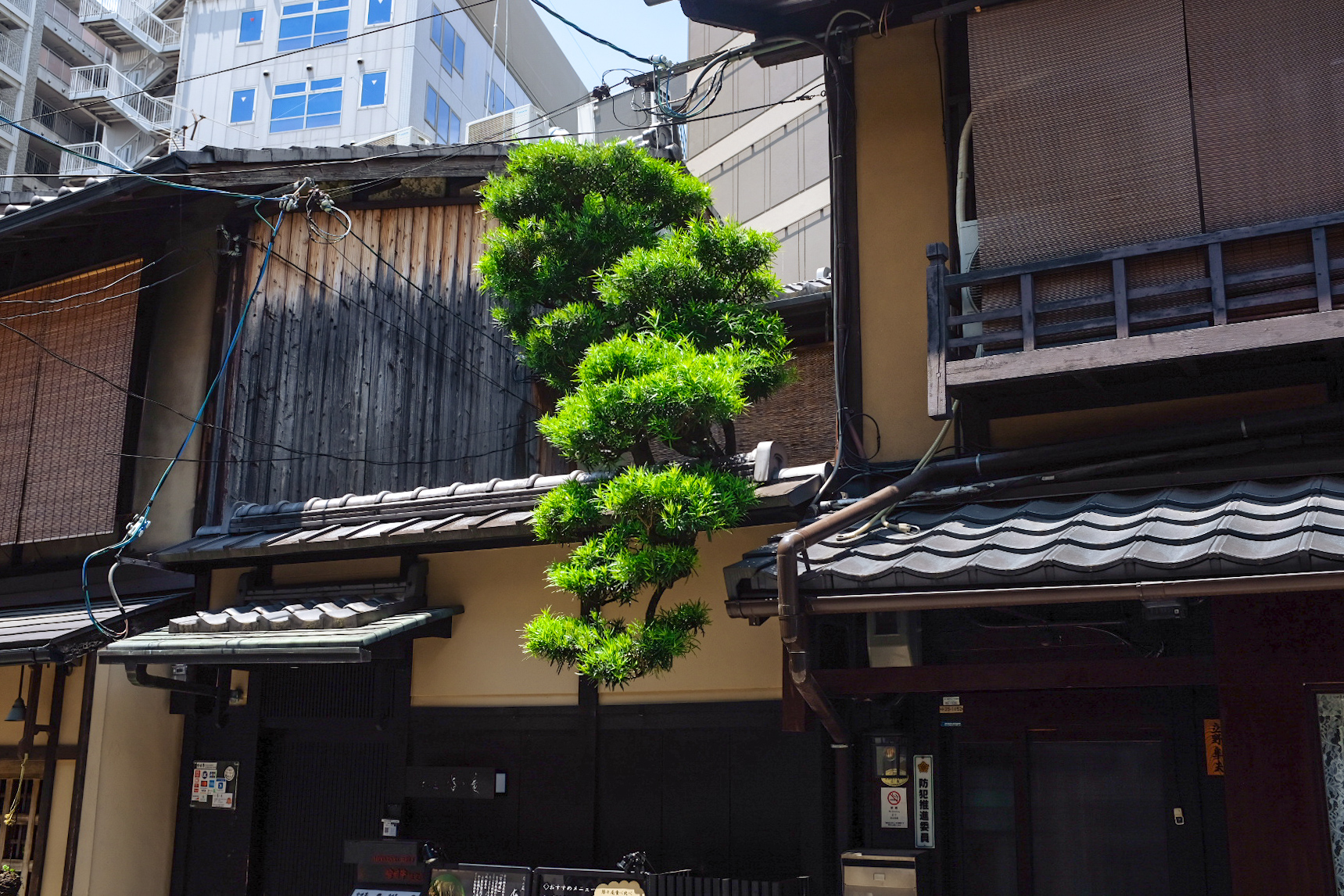
In Kyoto, you immediately notice how green the city is. There are trees everywhere. They even grow right through buildings. Or perhaps the buildings were built around them – that might make more sense, and so it may not be true. In any case, they aren’t being cut down just because someone needs 50 centimetres to build a little wall. A beautiful tree grows from every crack, without overgrowing the city.
All that greenery gives the city character. Not that it lacks that anyway. Because Kyoto was not bombed during the Second World War, many buildings have retained their classical style. Pointed roofs, low-rise buildings, lots of wood.
Tradition is fully exploited and commercialised here. We wander from temple to temple, each one more beautiful than the last. The place is teeming with people in kimonos. Most are tourists. There are real geishas in the city, entertainers with ghostly white faces, but you hardly ever see them in public. And if you do spot them, they seem to be in a hurry. They’d rather not have their photos taken either.
It’s a stark contrast to the tourists in hired kimonos who organise entire photo shoots in front of temples and pagodas. It looks rather awkward, as if tourists in Amsterdam were all walking around in clogs and traditional Zaandam costumes.
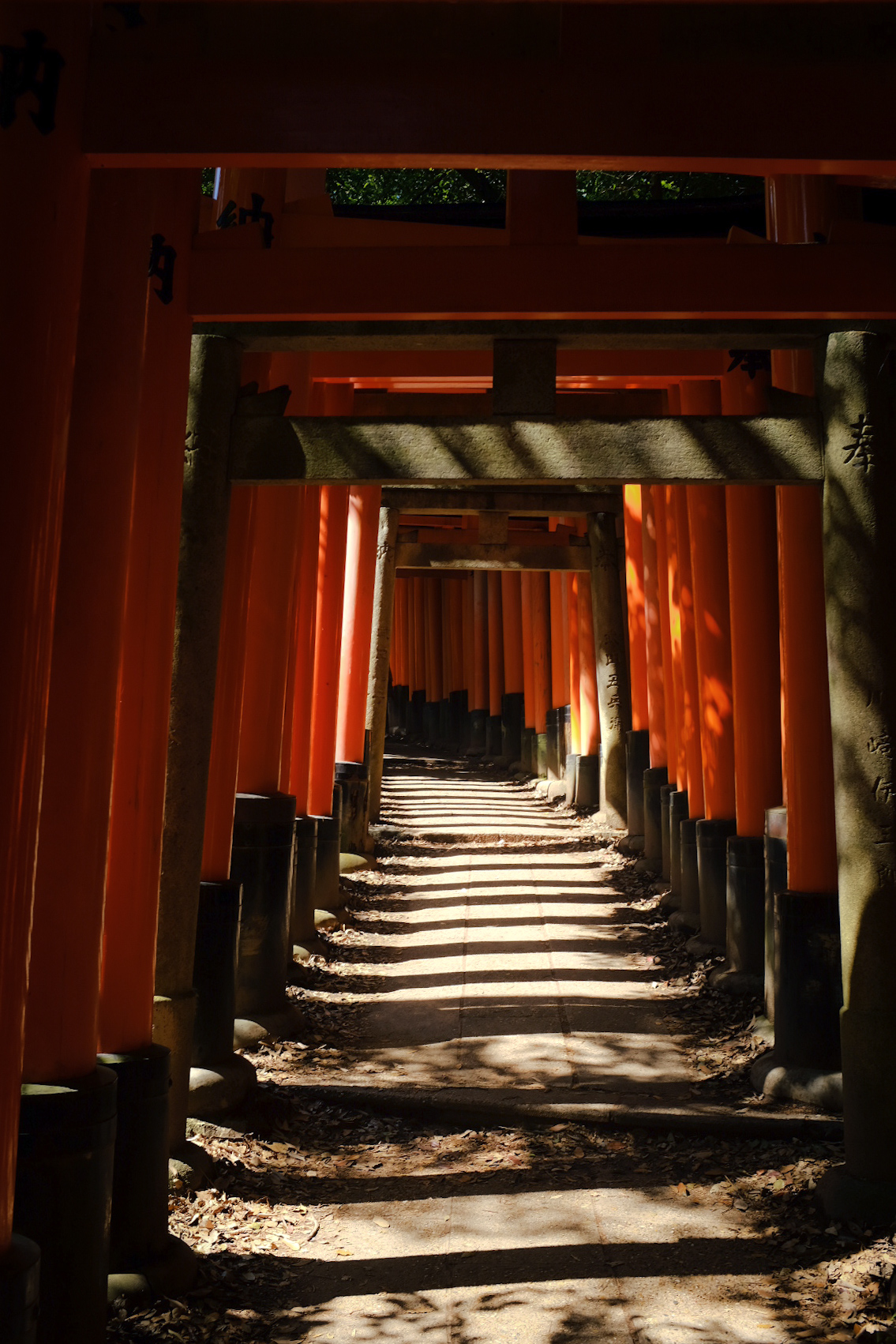
Fushimi Inari Taisha is one of Kyoto’s most famous temples, thanks to the more than ten thousand orange torii gates lining the paths to the summit. At the start of the route, you have to squeeze past groups of people taking selfies in the hustle and bustle; ten minutes further on, it’s already a lot quieter. Not everyone fancies climbing endless steps up and down. Lucky for us.
The gates are sponsored, and new and old ones are mixed together. Written in Japanese characters are the year of installation and a message. All these gates (torii) gathered together in that green forest, surrounded by moss-covered stone statues, create something you’ve never seen before and won’t see anywhere else. The sunlight filtering down through the leaves of the trees and through the gates gives the path a golden glow.
We walk a lot every day, hardly taking a day off. In Japan, you don’t just relax on a terrace, because terraces don’t exist. Just as lingering over a meal doesn’t exist. You eat, you pay and you’re off again.
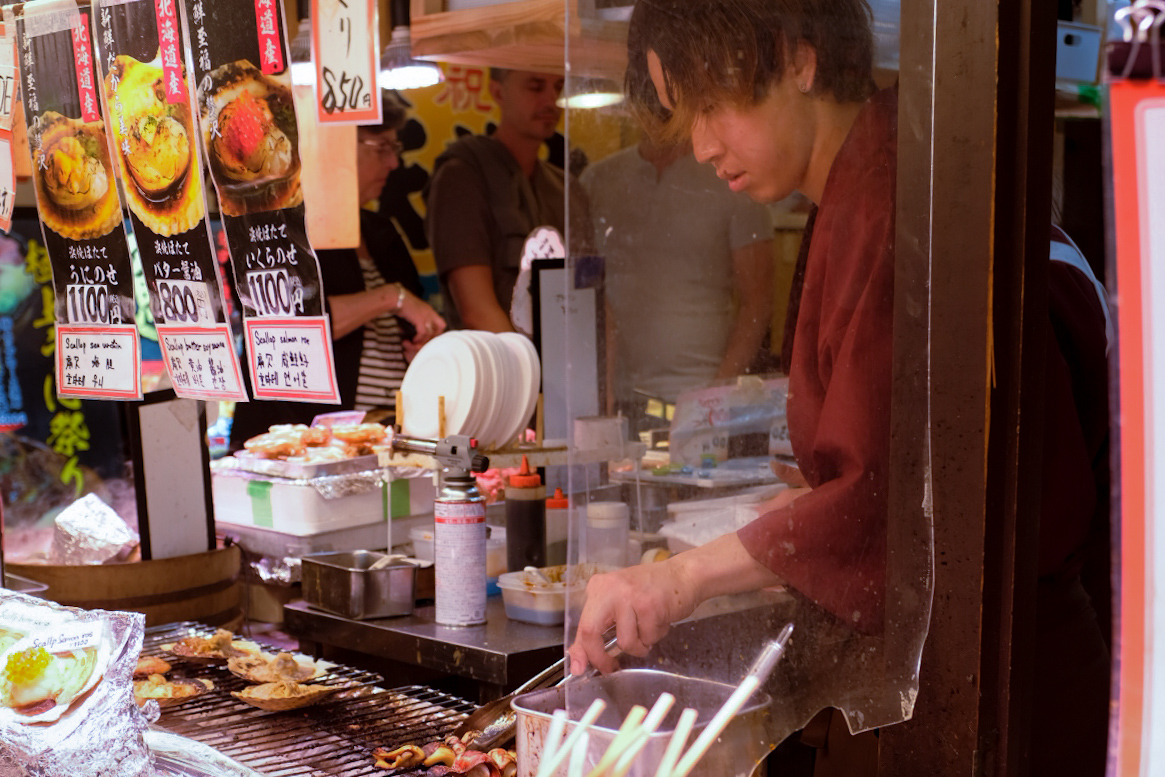
We often get a seat at the bar, right next to the kitchen. There are people sitting to our left and right as well. Yet you find yourself eating with surprising privacy. The chefs get on with their work (and do it superbly; the food is heavenly), and there are no waiters constantly asking if everything is to your liking. An advantage of the anti-foo culture: you’re left in peace. Only when you’re heading home does the whole team thank you for coming. Sometimes a host or hostess will wave you off.
On our last day in Kyoto, we take the tram to Arashiyama to see the bamboo forest. Our cash is still at the hotel, and we realise this after an hour’s walk, at a shrine where you have to pay an entrance fee. Cash only.
There are no ATMs nearby, but a woman running a small coffee shop a little way back along the route helps us out. We withdraw 1,000 yen and have two beers with it. They taste delicious in the heat and we knock them back so quickly that we continue on our way slightly tipsy.
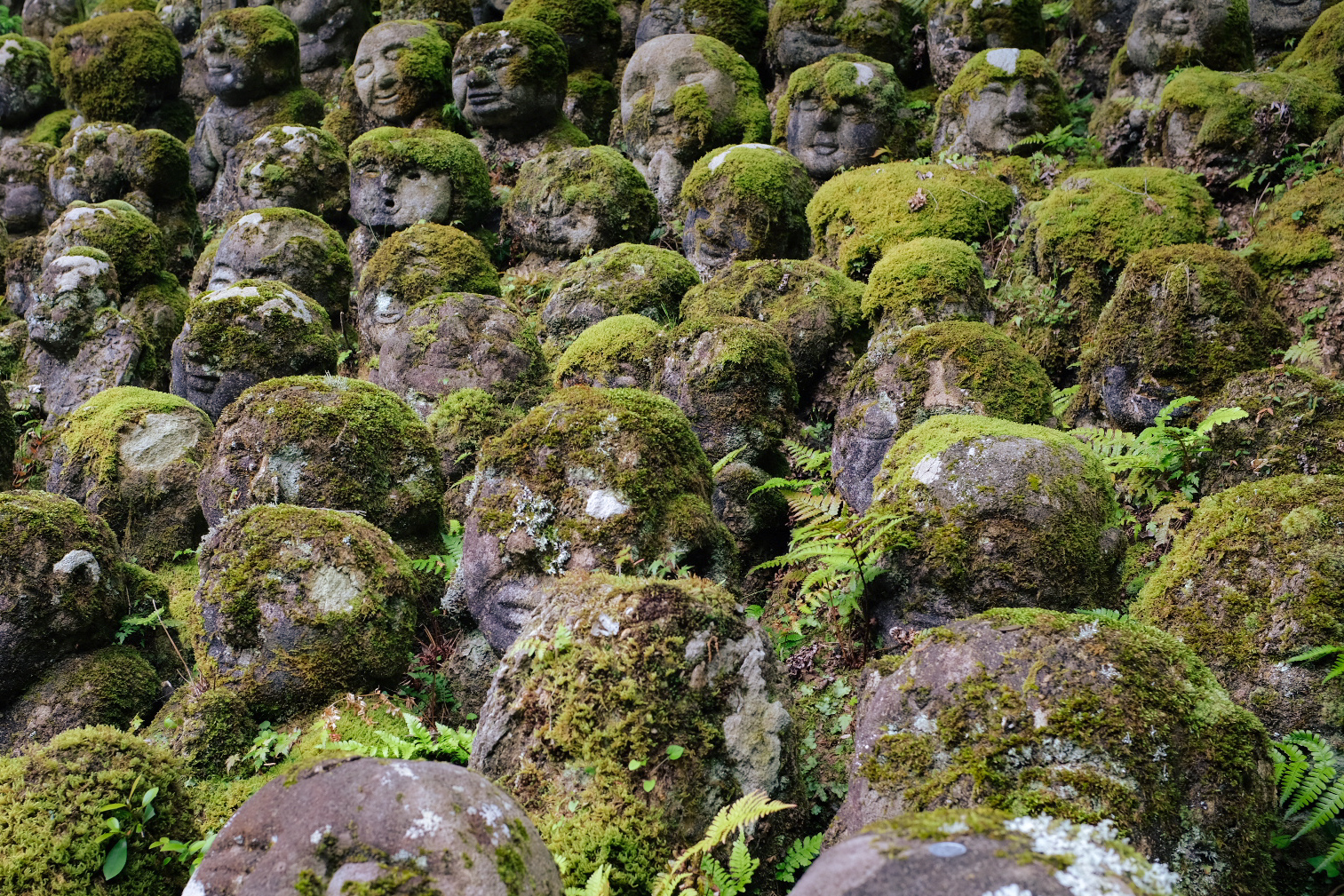
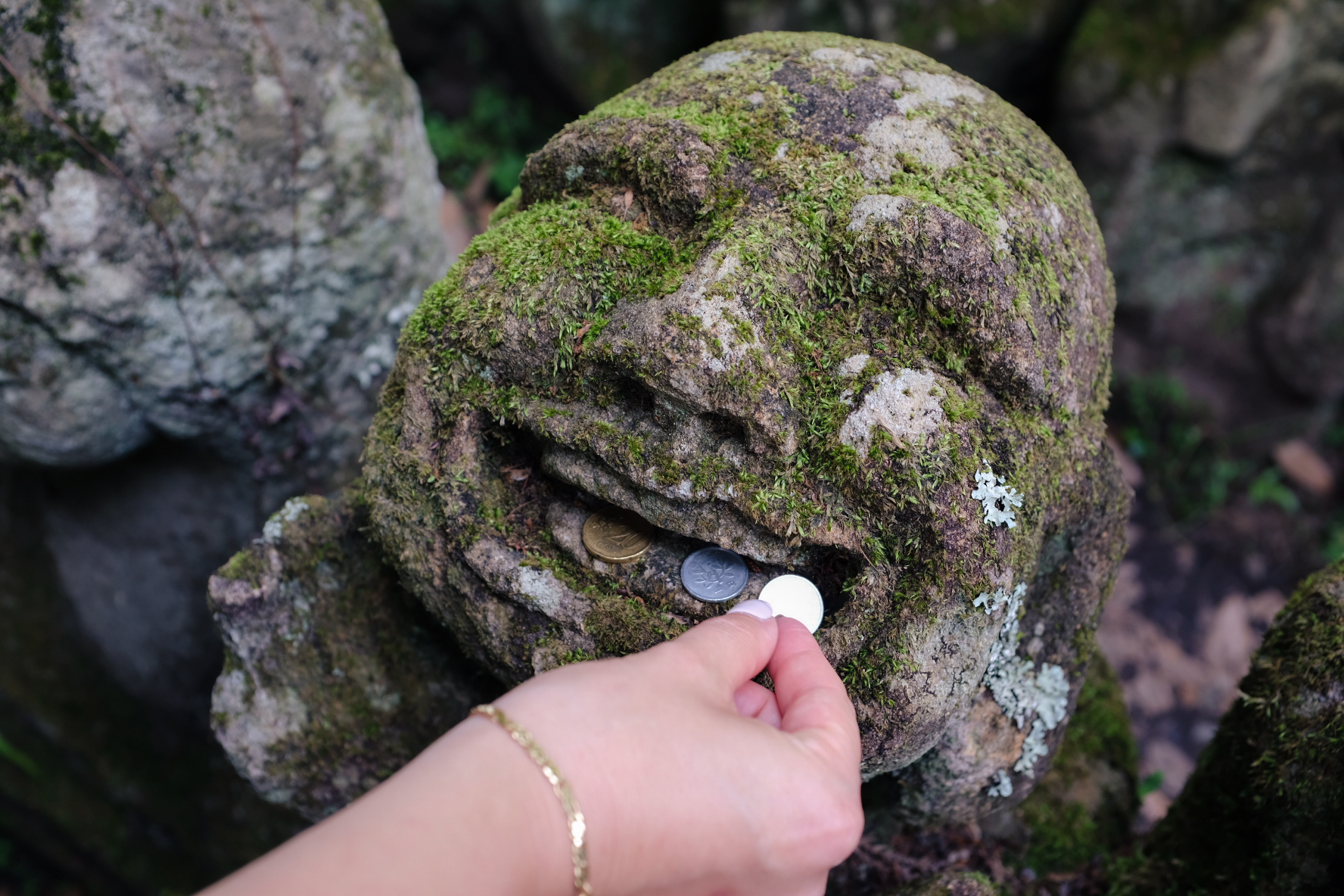
At the Otagi Nehbutsa Temple, there are 1,200 stone statues depicting the disciples of Buddha. The shrine was built in 766 but suffered several natural disasters over the years, meaning it had to be rebuilt in the second half of the last century.
Monk Kocho Nishimura took charge of the project in the 1950s, and the restoration work, which began in 1981, took another decade to reach its current state. During those years, the figurines were created by amateur sculptors who visited Nishimura (who was an artist as well as a monk) to learn the craft.
It is a remarkable sight, so many statues in the hills. All very expressive. Some are praying, others are laughing heartily. A short distance away from the hustle and bustle, this was one of my favourite shrines in Kyoto.
The bamboo forest we came to Arashiyama to see is a bit of a let-down. It’s quite something to see the bamboo reaching up to the sky, but ultimately the area is rather small and crowded.
And so ends our stay in Kyoto, a beautiful and quirky city – with a fine selection of local craft beers. Our visits to tourist attractions leave us feeling unsatisfied. Have we really seen enough of the real city? At the same time, I know that the hunger for more is always insatiable in Japan.
A day later, we set off for Osaka. No more temples for a while, although: Super Nintendo World is on the agenda.
Next week, the final part of our journey through Japan. If you don’t want to miss it, subscribe for free!